Garage Door Repair Built Around Spanish Fork's Housing Stock
Torsion spring and opener repair for Spanish Fork homes built 1975-2015. We know the hardware this housing stock carries and how our winters wear it out.
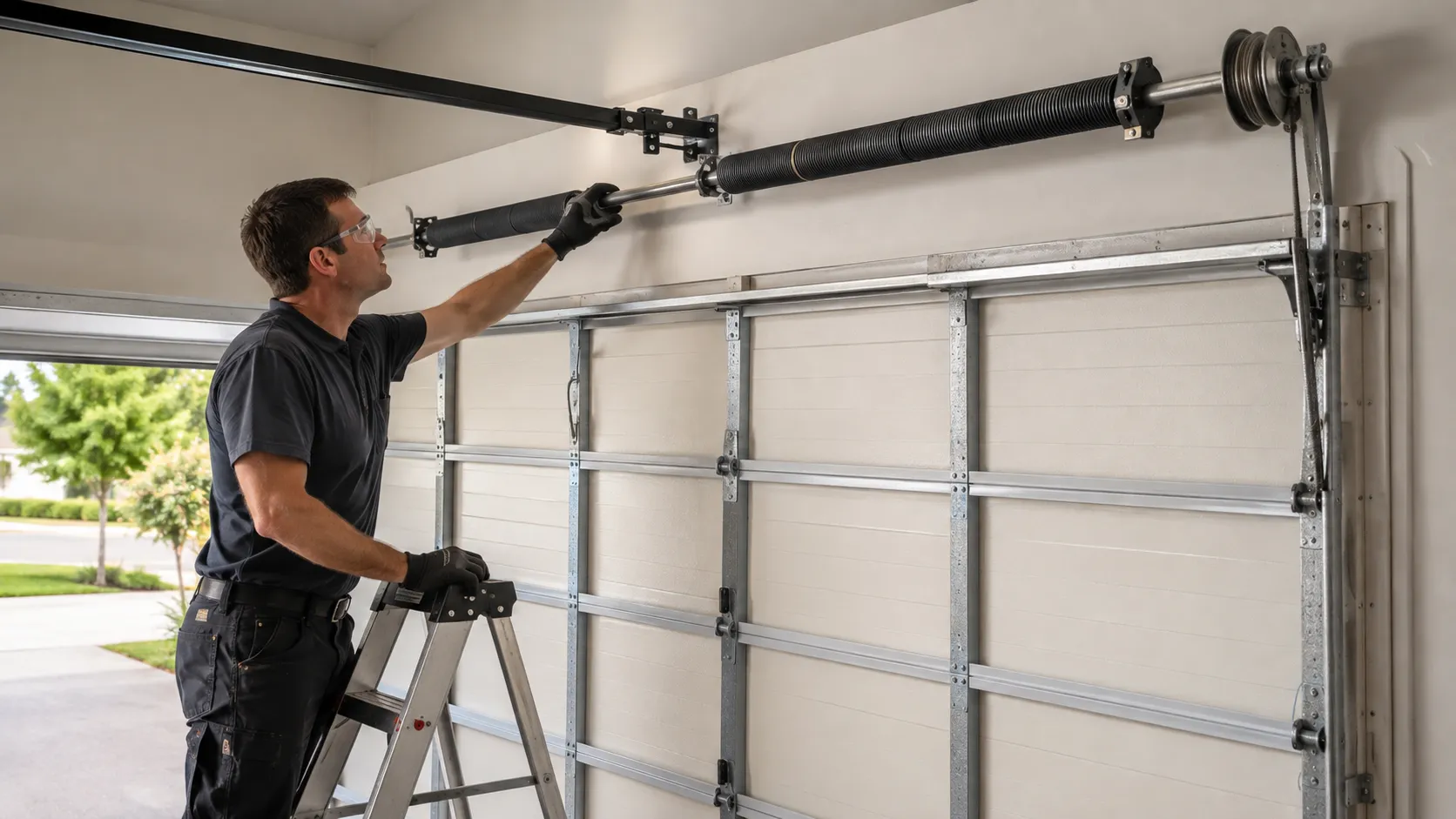
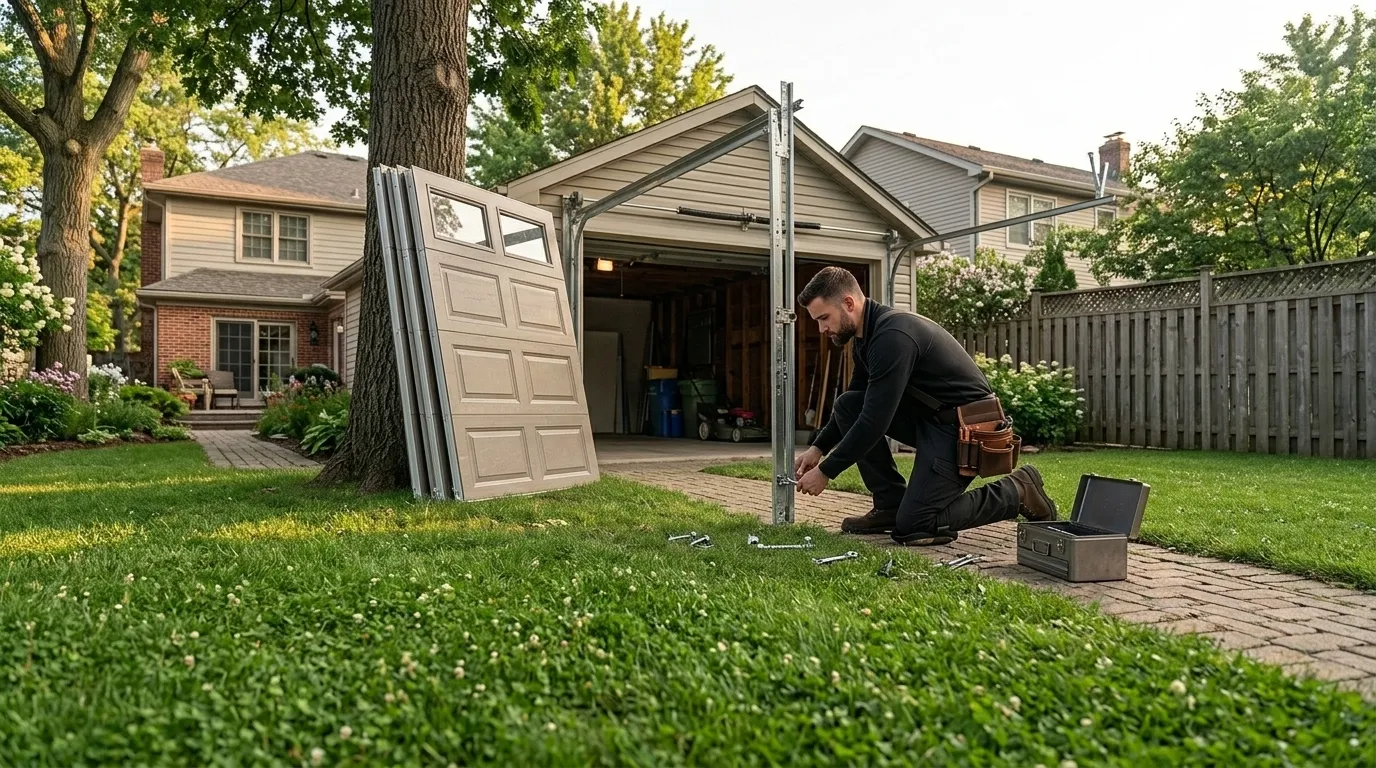
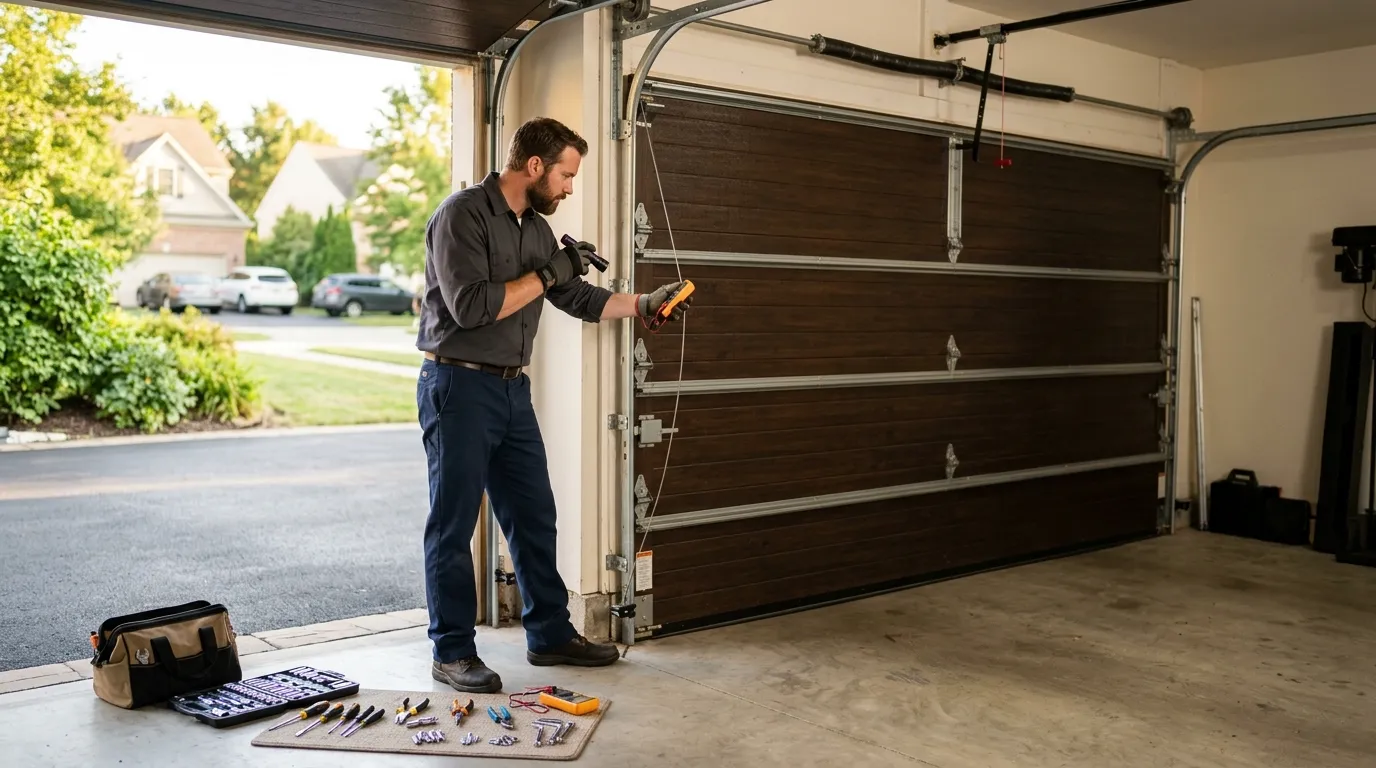
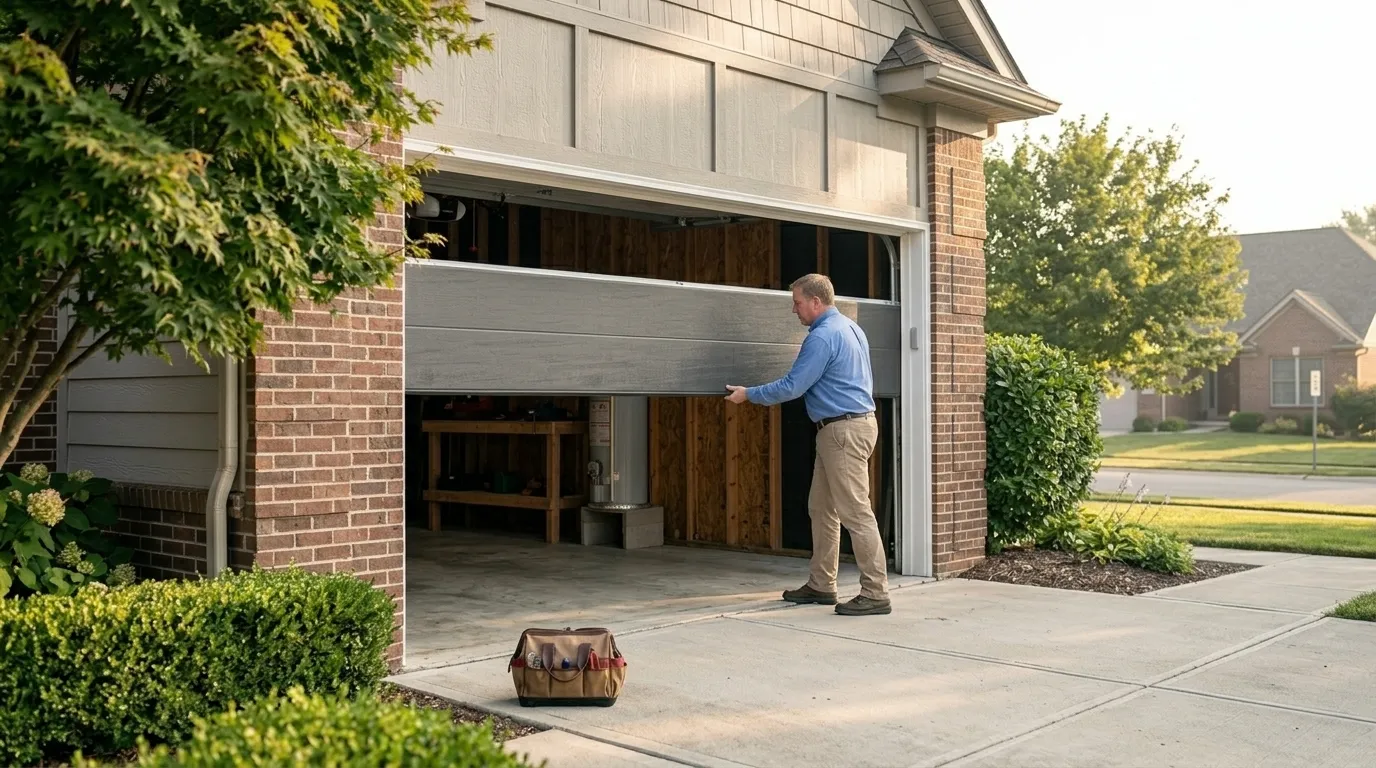
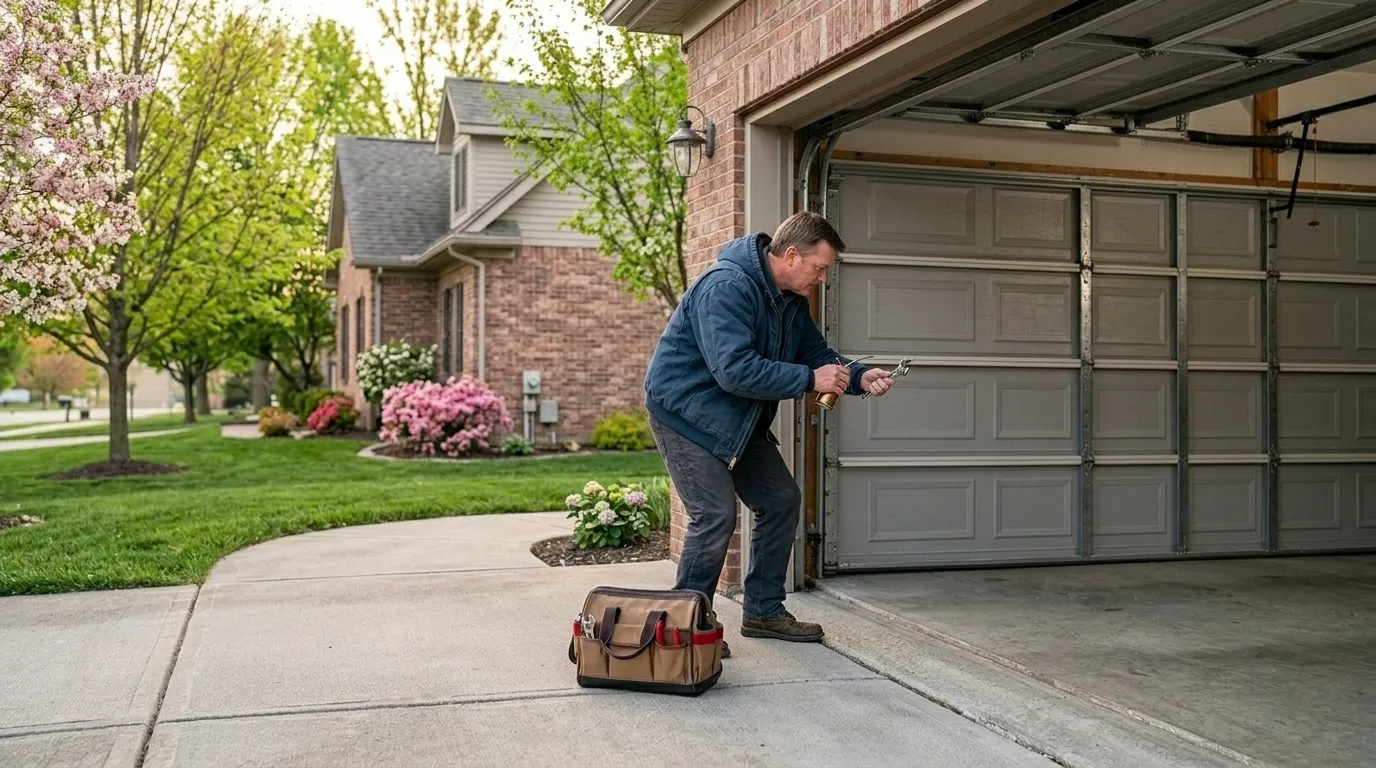
Most of the doors we work on in Spanish Fork came in with houses built between 1975 and 2015, with the median build year landing around 1998. That matters because the torsion spring, drum, and cable setup from that era is fairly standardized, and most of what we carry on the truck fits it without a special order. A repair call usually starts the same way: we check the spring wind, look at the cable ends for fraying, and run the opener through a full cycle to see where it's binding. On a broken torsion spring, that means unwinding the old one under control, matching wire size and wind direction, and setting the new spring to the door's actual weight rather than a stock number. On an opener that's straining, we check the drive gear and the travel limits before we touch the motor, because a lot of what looks like a dying opener is actually a spring that's lost tension and is making the motor do work it wasn't built for. We don't replace parts that don't need it. If a track is bent but the door still tracks true, we straighten it instead of swapping it, and we'll tell you when that's the case.
We cover Spanish Fork and the surrounding area out to Pleasant Grove.
What You Are Seeing
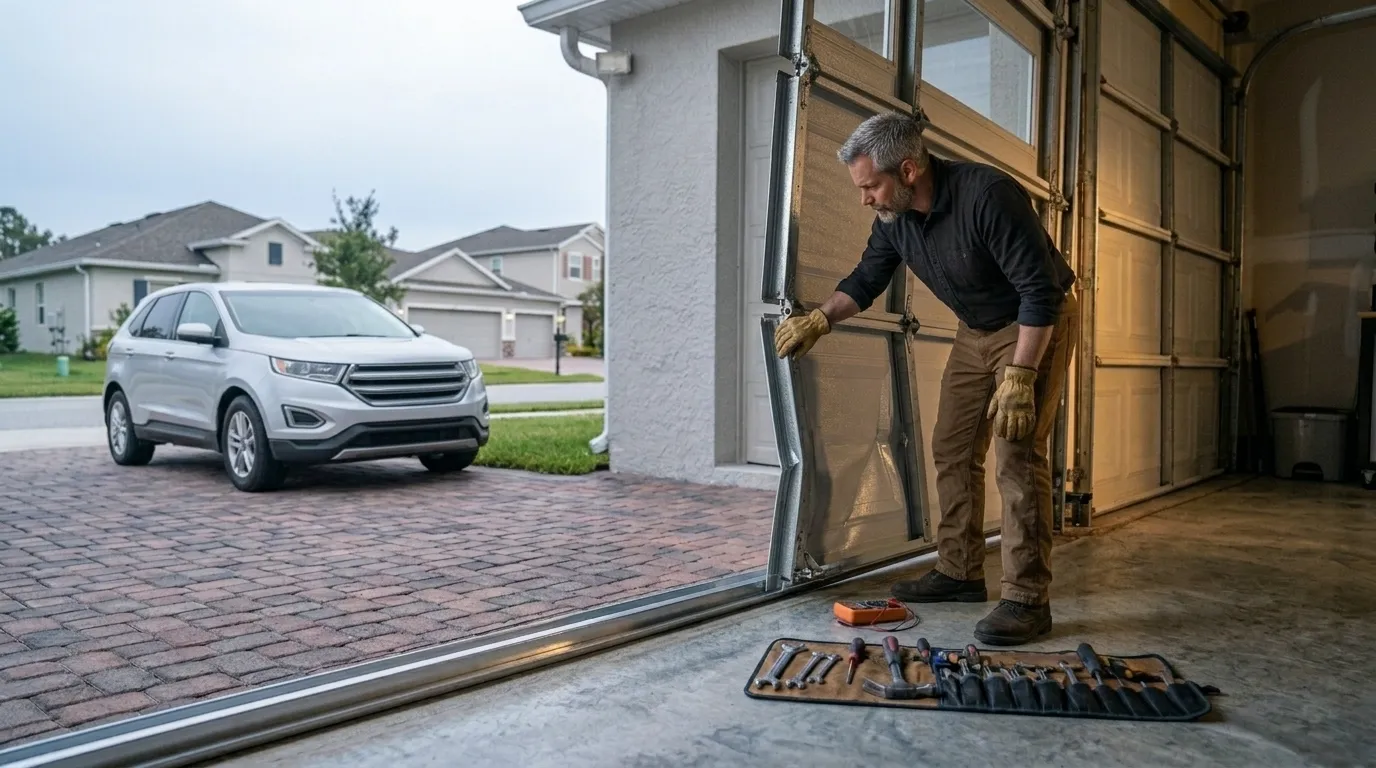
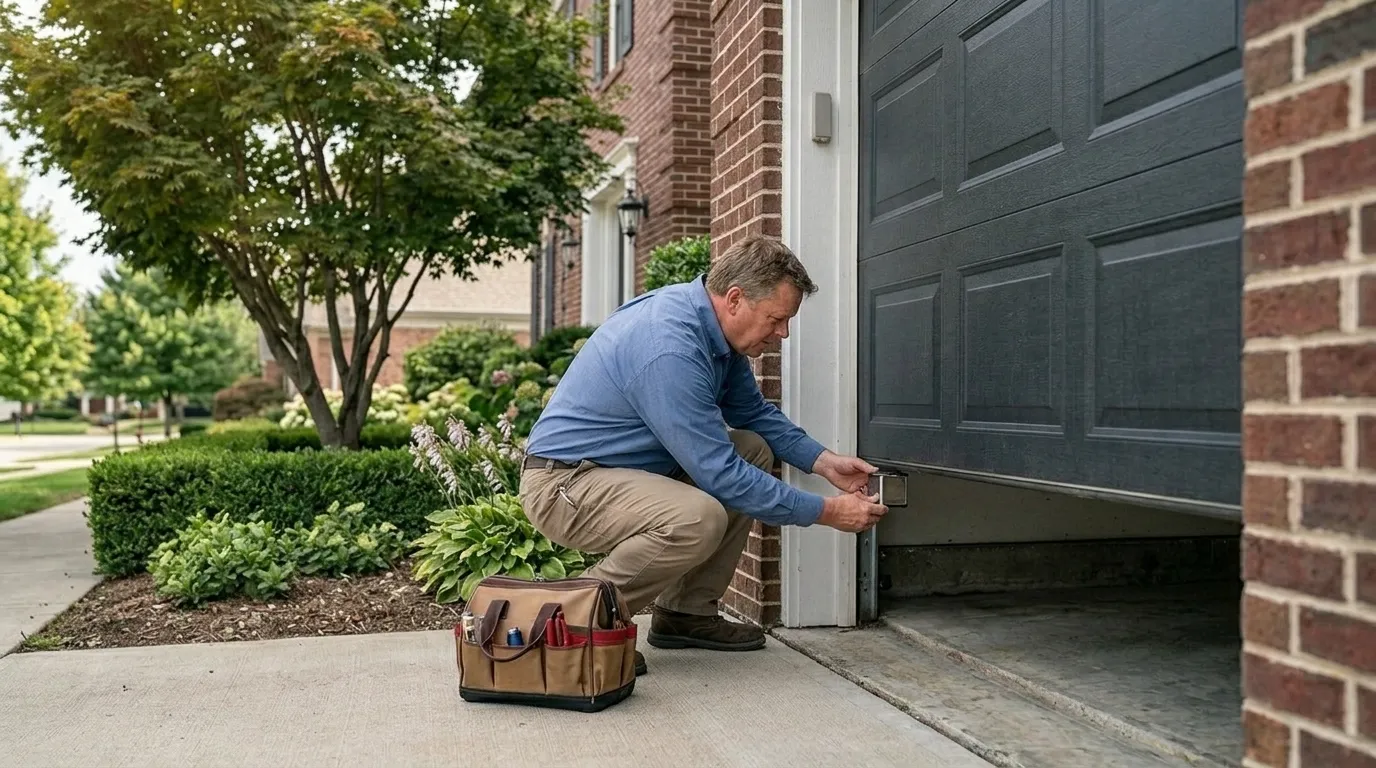
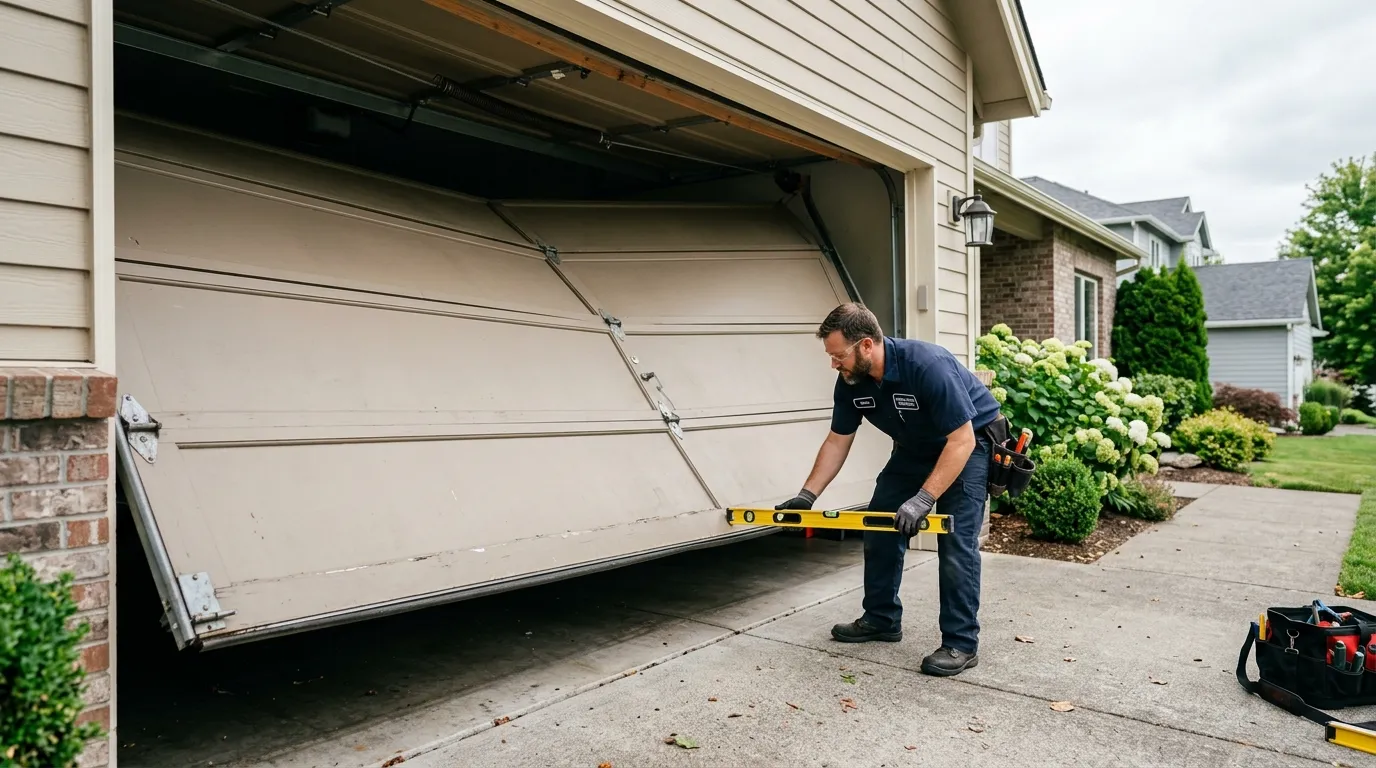
The most common call is a door that won't move and a loud bang that came from the garage sometime before that, which is almost always a torsion spring letting go. The second most common is a door that opens but sags on one side once it's partway up, which usually points to one spring or one cable doing more work than the other because the second one is close to failing. In winter, we get a third pattern that's specific to this valley: a door that opens fine at 2pm and then groans, hesitates, or stalls halfway up once the temperature drops after dark. That's steel spring wire and lift cable contracting in the cold, plus grease inside the opener and on the rollers thickening up, which adds resistance right at the moment the spring has the least margin. If your door has started needing a shove to get moving in the morning, or the opener sounds like it's working harder than it used to, that's the pattern showing up. A door that reverses on its own partway through a cycle usually means the safety sensors are misaligned, not that the springs are gone, so that one's worth a quick look before assuming the worst.
What It Costs
We're not going to give you a number here, because the honest range depends on spring size, whether it's a single or double door, and whether the cables or drums need replacing along with the spring. What we can tell you is what drives the cost up or down. A standard torsion spring swap on a door from the 1980s-90s stock common across this area is usually straightforward because the hardware is common and we stock it. Where it gets more expensive is when a homeowner has been running on a failing spring for months and the cable, drum, or track has worn unevenly trying to compensate. That's the honest limitation: if you call us after the door has been struggling for a while rather than right after it fails, the job is more likely to need extra parts, not because we're padding the invoice but because the extra wear already happened. We'll always look at the door in person and give you the actual number before we start, not a phone estimate we adjust once we're in your garage.
Why It Happens Here
Spanish Fork sits in a severe cold climate band, and that's the piece that makes spring failure here different from a mild-winter town with the same housing stock. Steel spring wire loses some of its flex as it gets cold, and a spring that's already fatigued from years of cycling is more likely to snap on a cold morning than a mild afternoon, which is why we see a jump in broken-spring calls through the winter months. Add in that most of the doors across the 15 named areas we cover, including Palmyra, Mapleton, and Springville, are sitting on housing built mostly in the 1980s and 90s, and you've got a large number of springs that are now old enough to be near the end of their cycle life at the same time the weather is working against them. It's not one bad batch of hardware. It's a lot of doors from the same building decades hitting the same cold snaps at roughly the same point in their lifespan. That's also why late fall is the best time to have a spring checked before it becomes a 6am failure in January.
How it works
From “it’s stuck” to “it’s fixed”
01
Tell us what’s wrong
Describe the symptom - won’t open, loud bang, opener runs but the door won’t move.
02
On-site diagnosis
A technician tests the door under power and by hand and finds what actually failed.
03
Clear, up-front plan
You get the fix that’s needed and what drives the cost - before any work starts.
04
Repaired & tested
The repair is done, the door is set true and tested, and the work area left clean.
Serving Spanish Fork, UT - tell us what your door’s doing and we’ll take it from there.
01Why did my garage door spring break in cold weather?
Cold makes steel spring wire less flexible, and a spring that's already worn from years of cycling is more likely to snap when it's cold than when it's warm. If your door is original to a house built in the 1980s or 90s, the spring is old enough that a hard freeze can be the final push on hardware that was already close to failing.
02Do you work on older openers, not just newer ones?
Yes. A lot of the homes we work on in Spanish Fork were built between 1975 and 2015, and the opener hardware from that whole span is common enough that we carry parts for most of it on the truck. If yours is old enough that parts have to be special-ordered, we'll tell you up front.
03How do I know if it's the spring or the opener?
If the door barely moves or won't budge and the opener motor sounds like it's straining, that's usually the spring, not the motor. Openers are built to lift a door that's properly balanced by its springs, not to do the spring's job. A quick balance check tells us which one is actually failing.
04Is it normal for the door to be slower in winter?
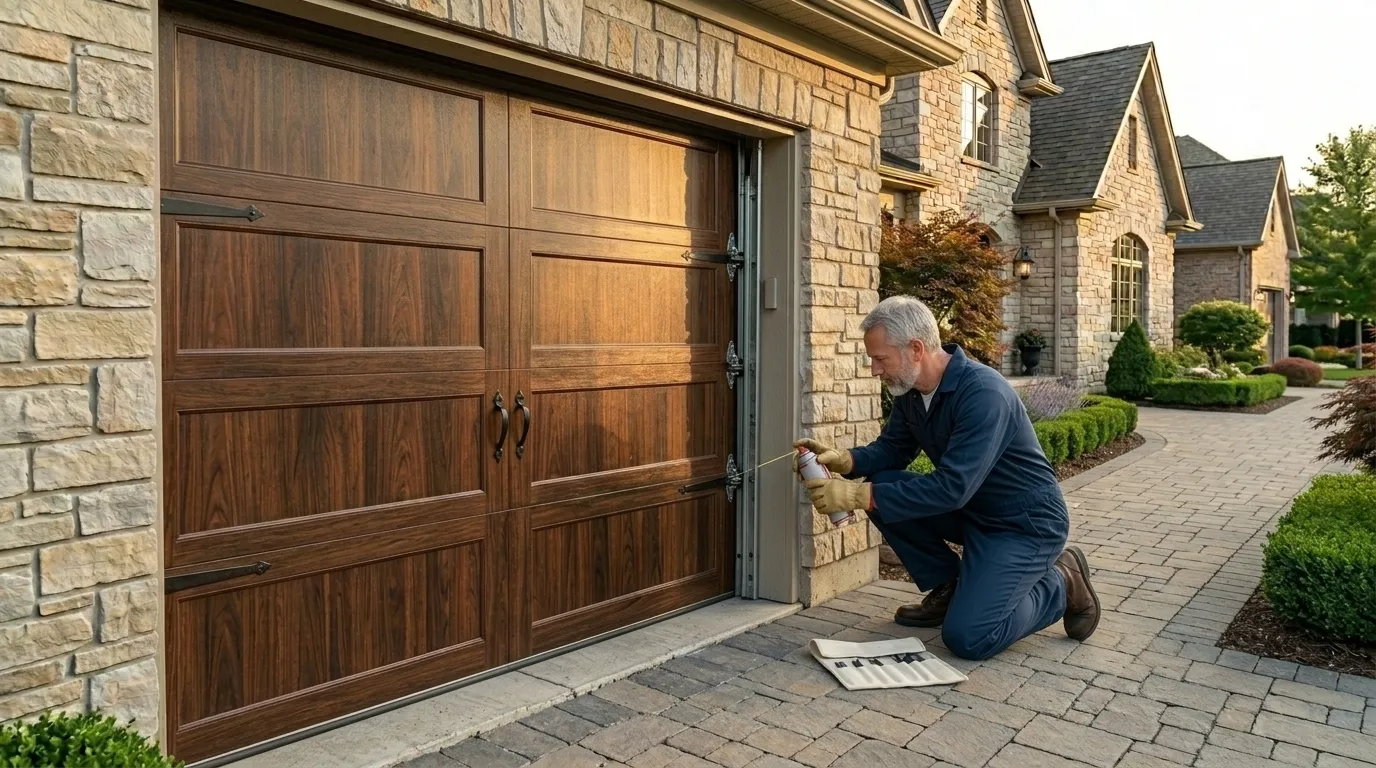
Some slowdown is normal because grease thickens and steel contracts slightly in the cold. But if it's gone from slower to actually stalling or needing a push to get moving, that's usually a spring losing tension, not just cold weather, and it's worth having checked before it fails outright.
Ready to get your garage door sorted?
Tell us what it’s doing and where you are in Spanish Fork - we’ll take it from there.