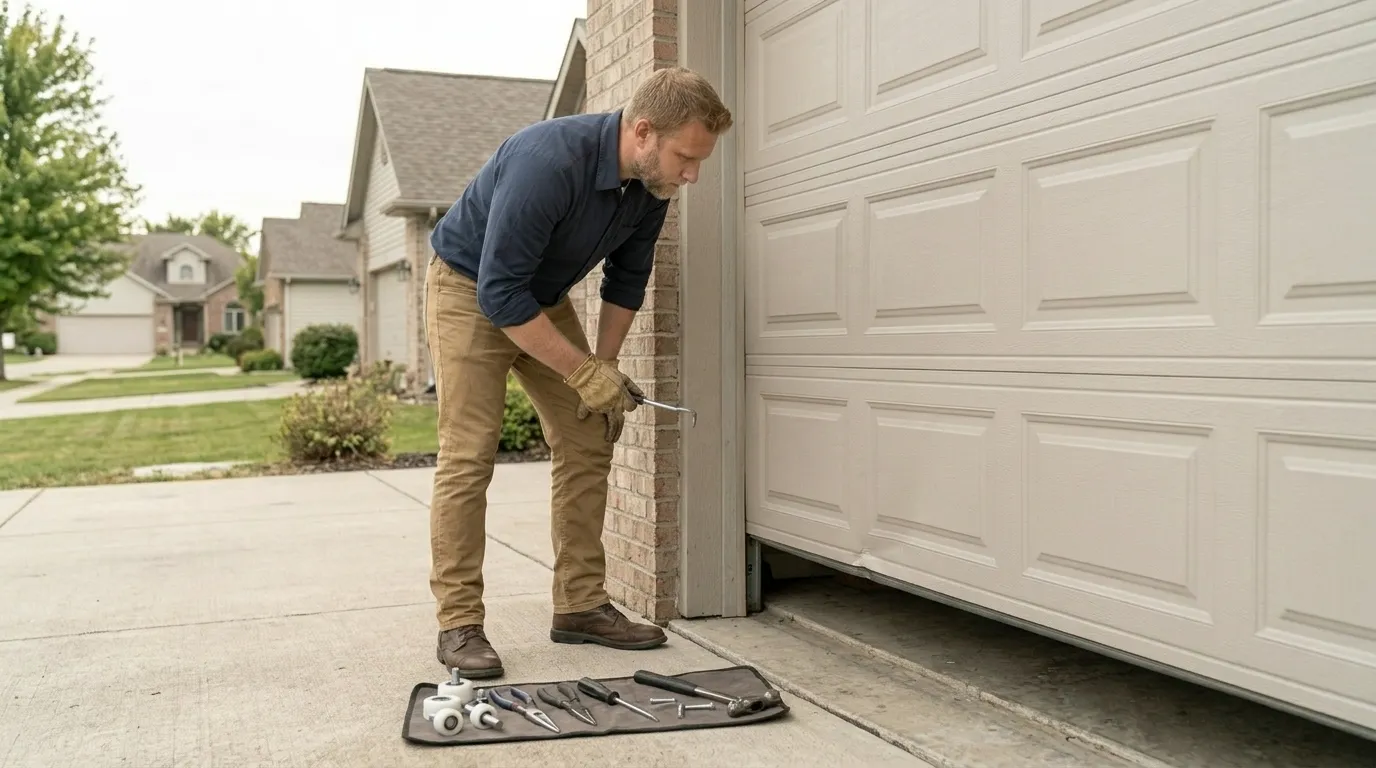
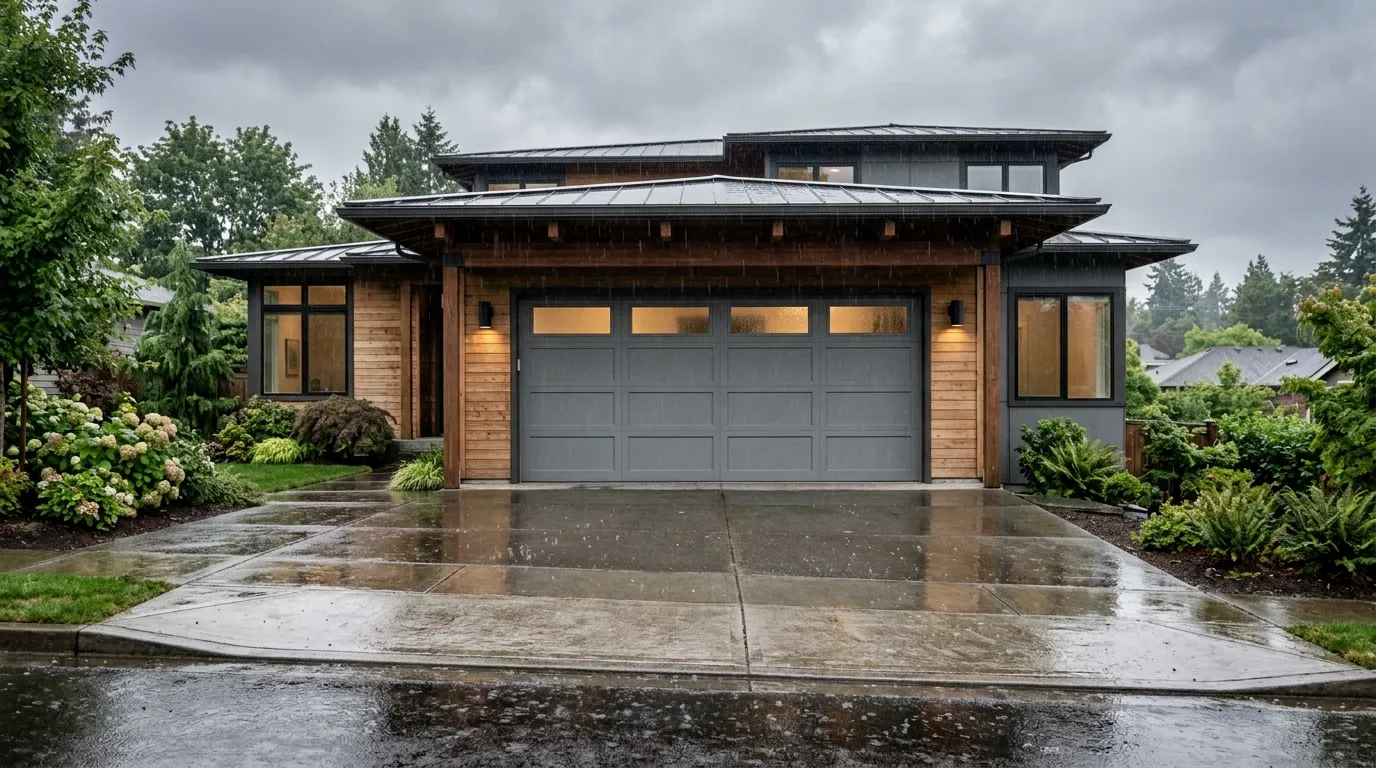
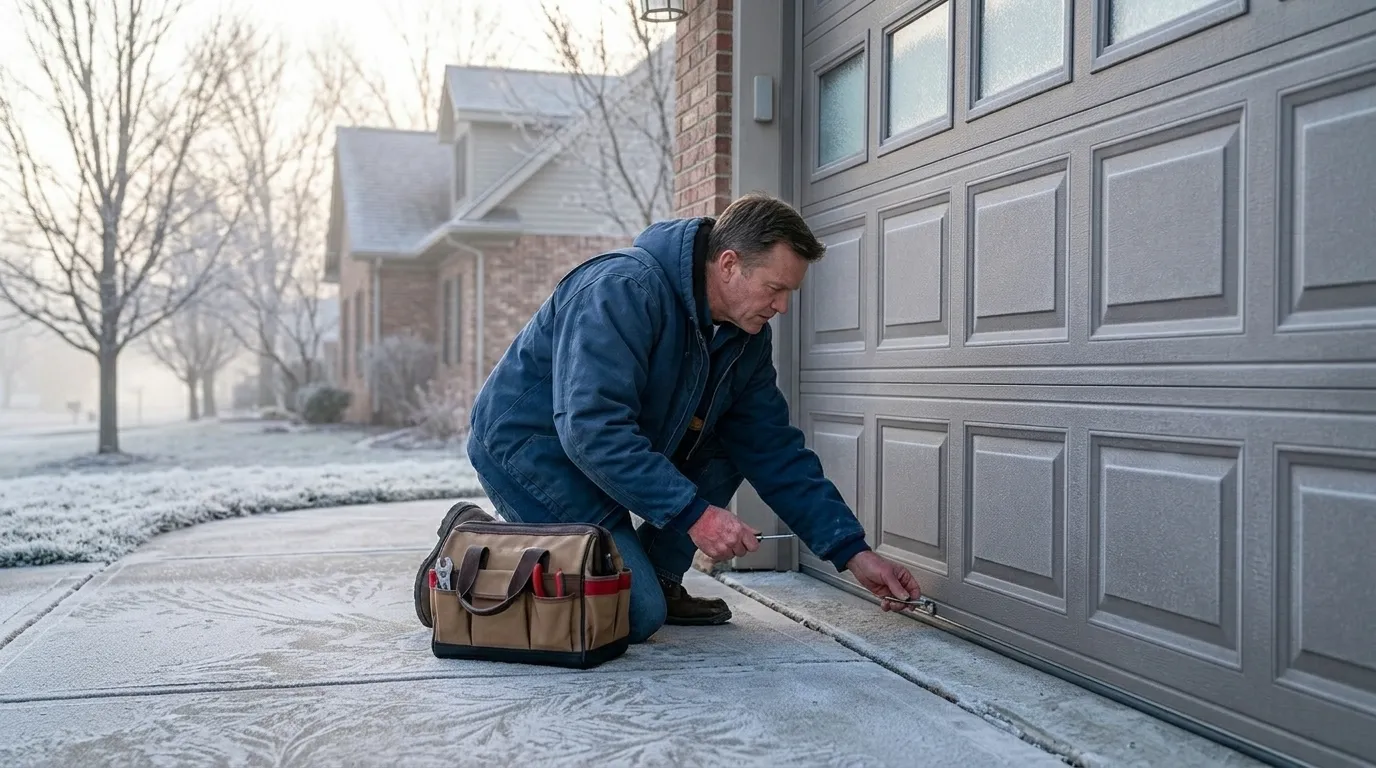
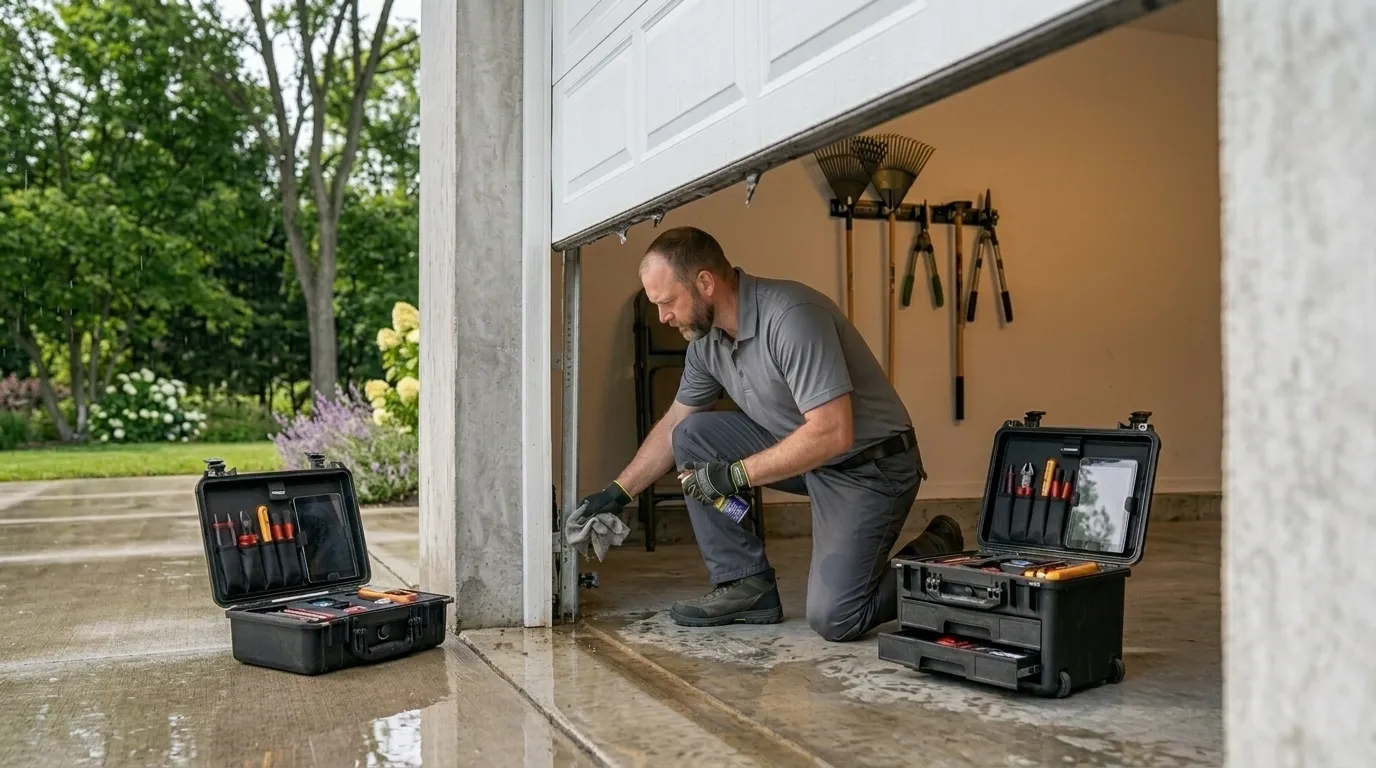
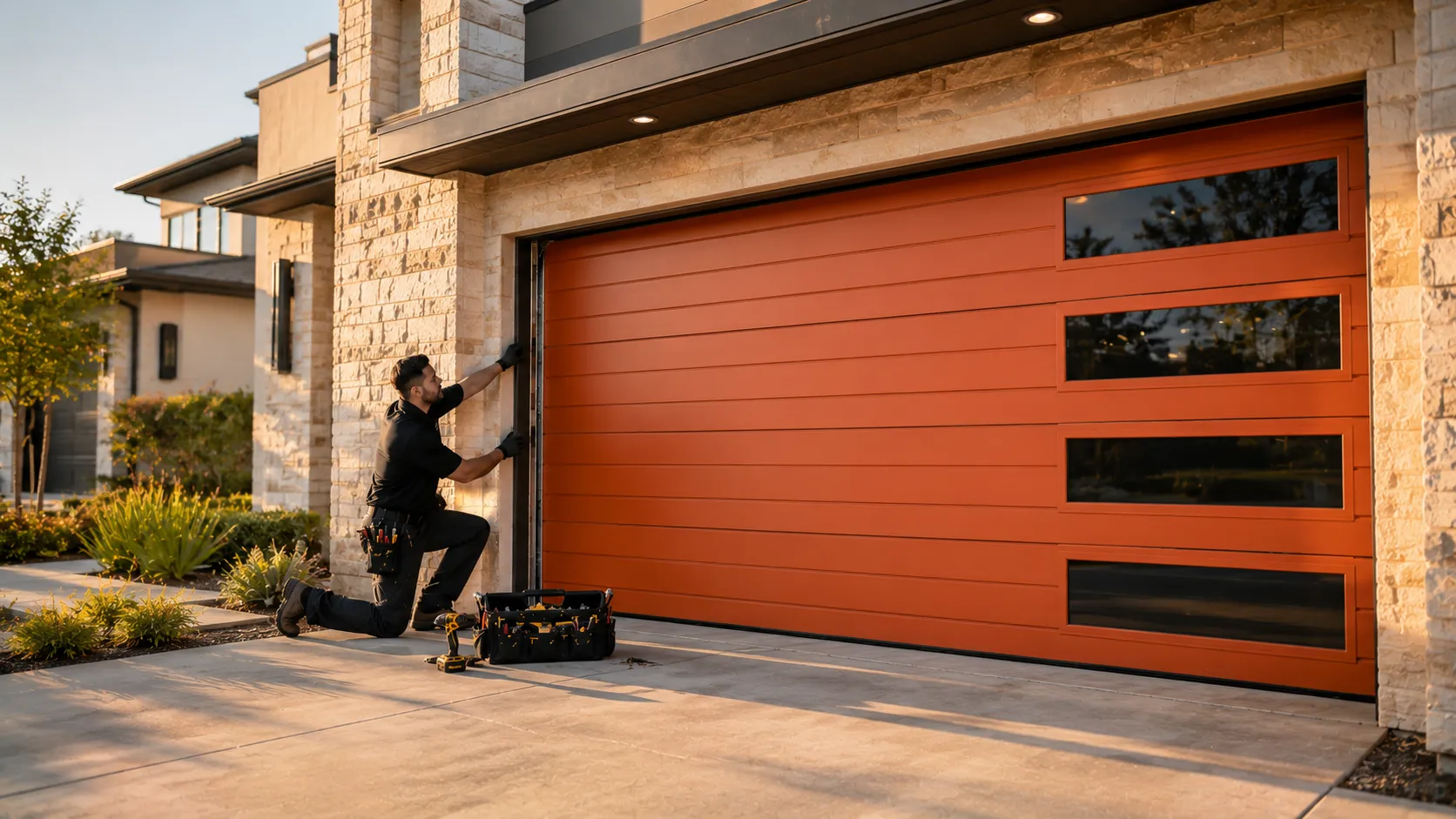
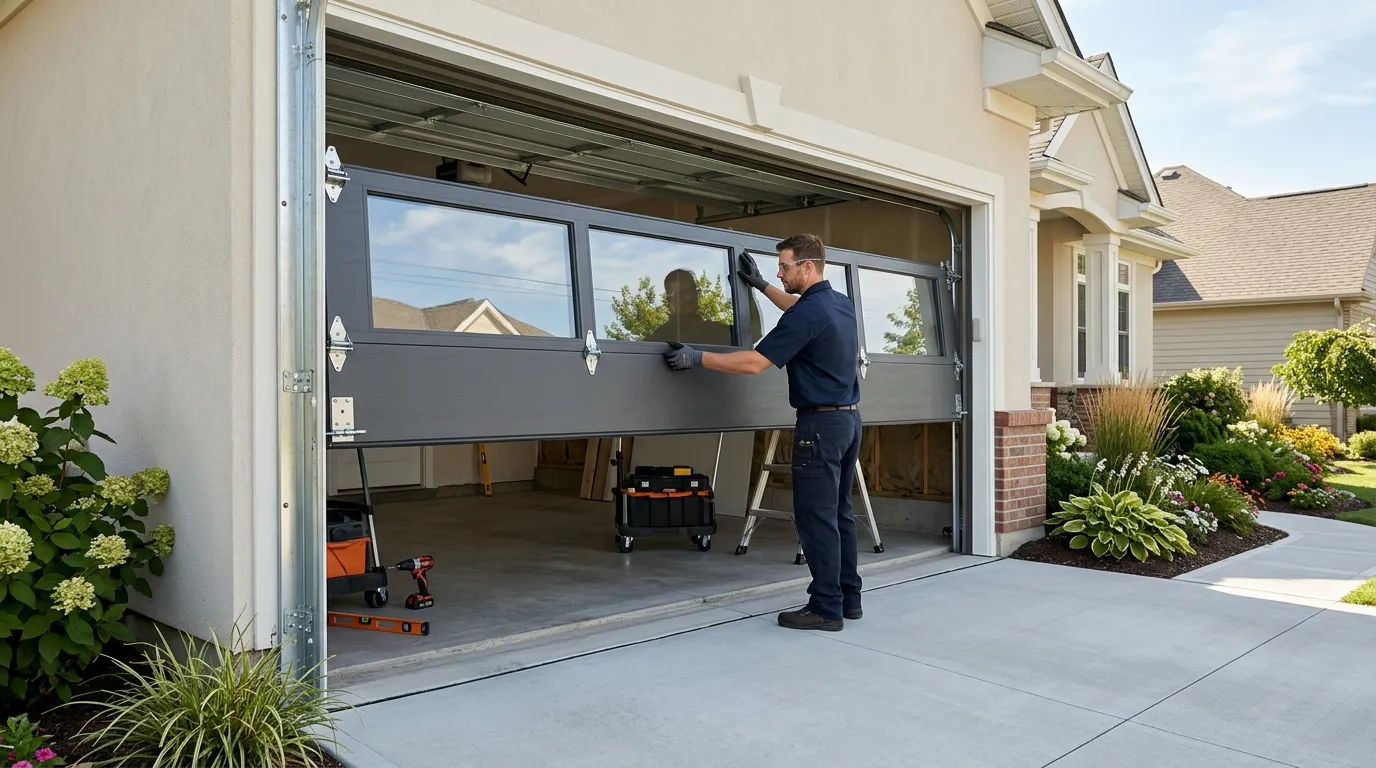
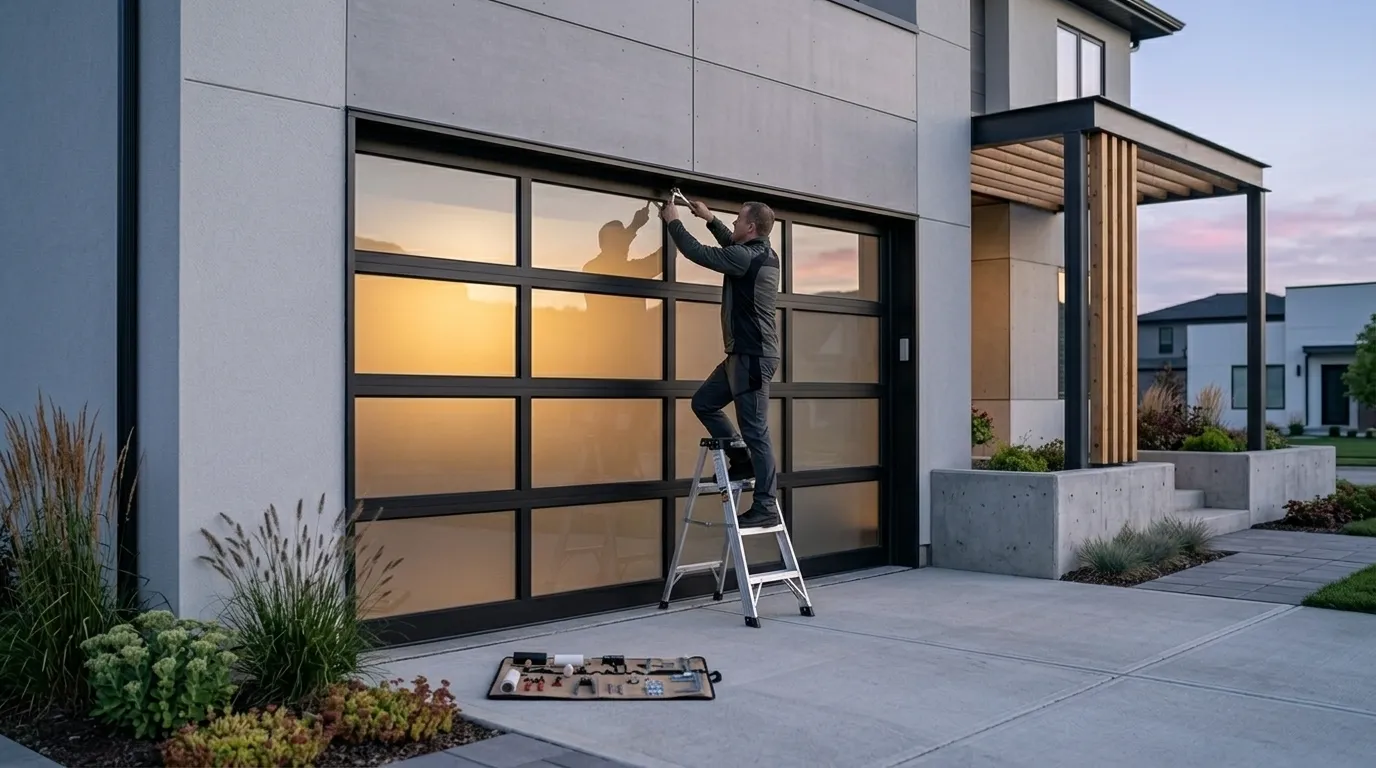
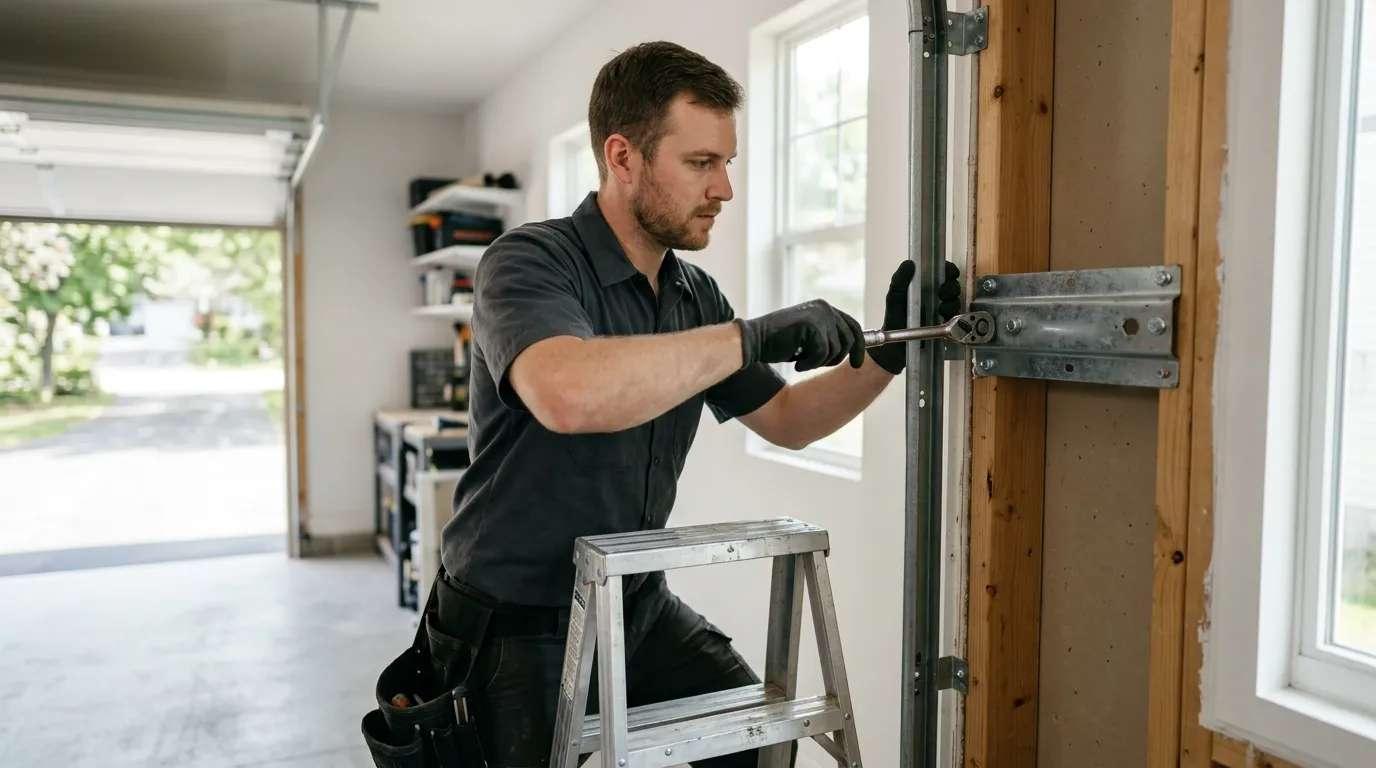
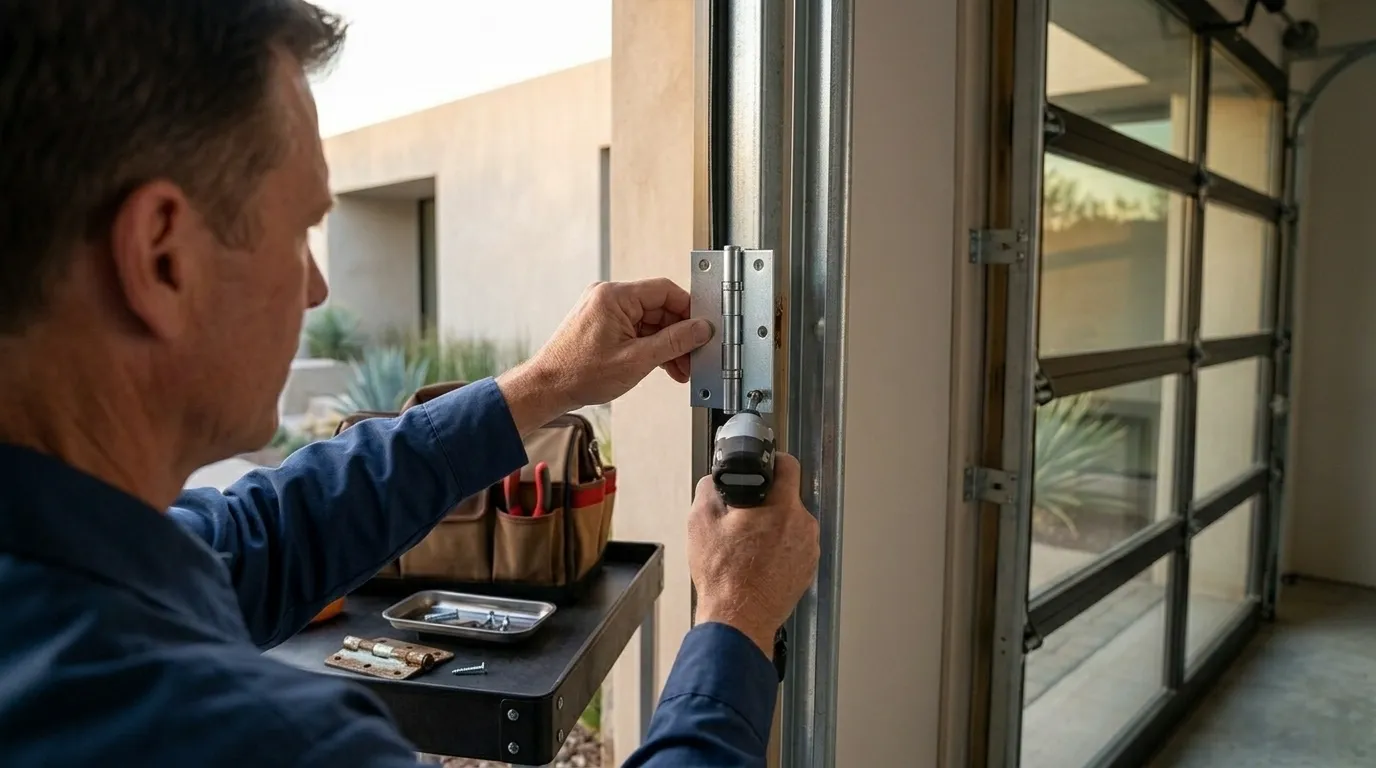
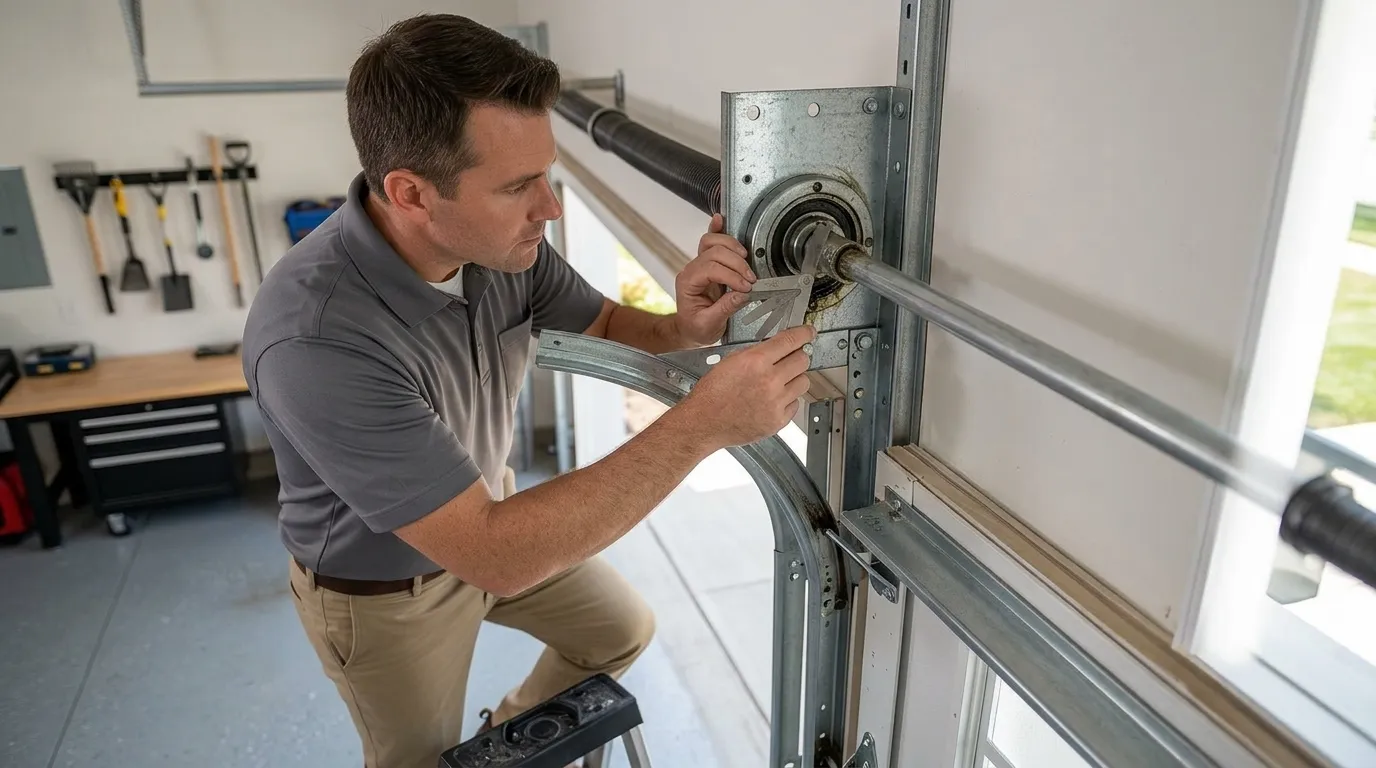
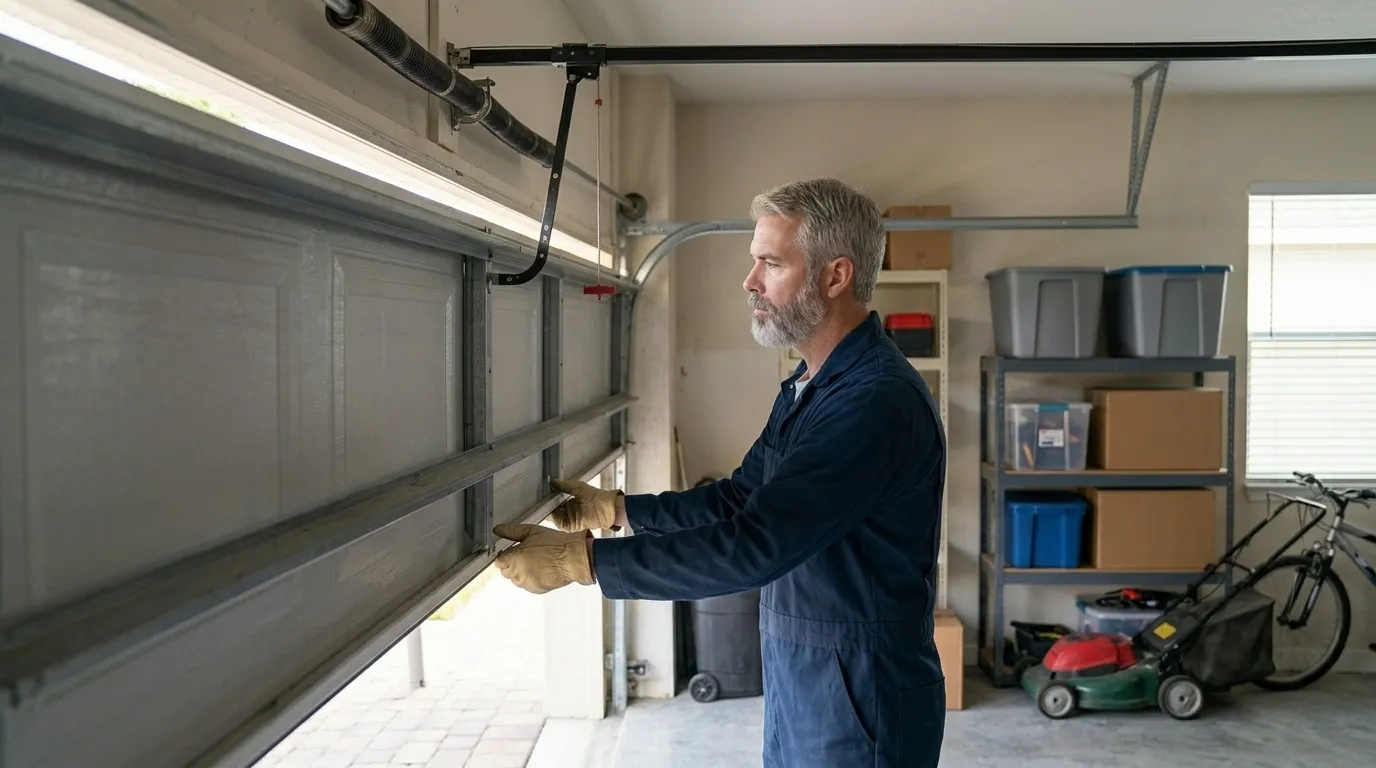
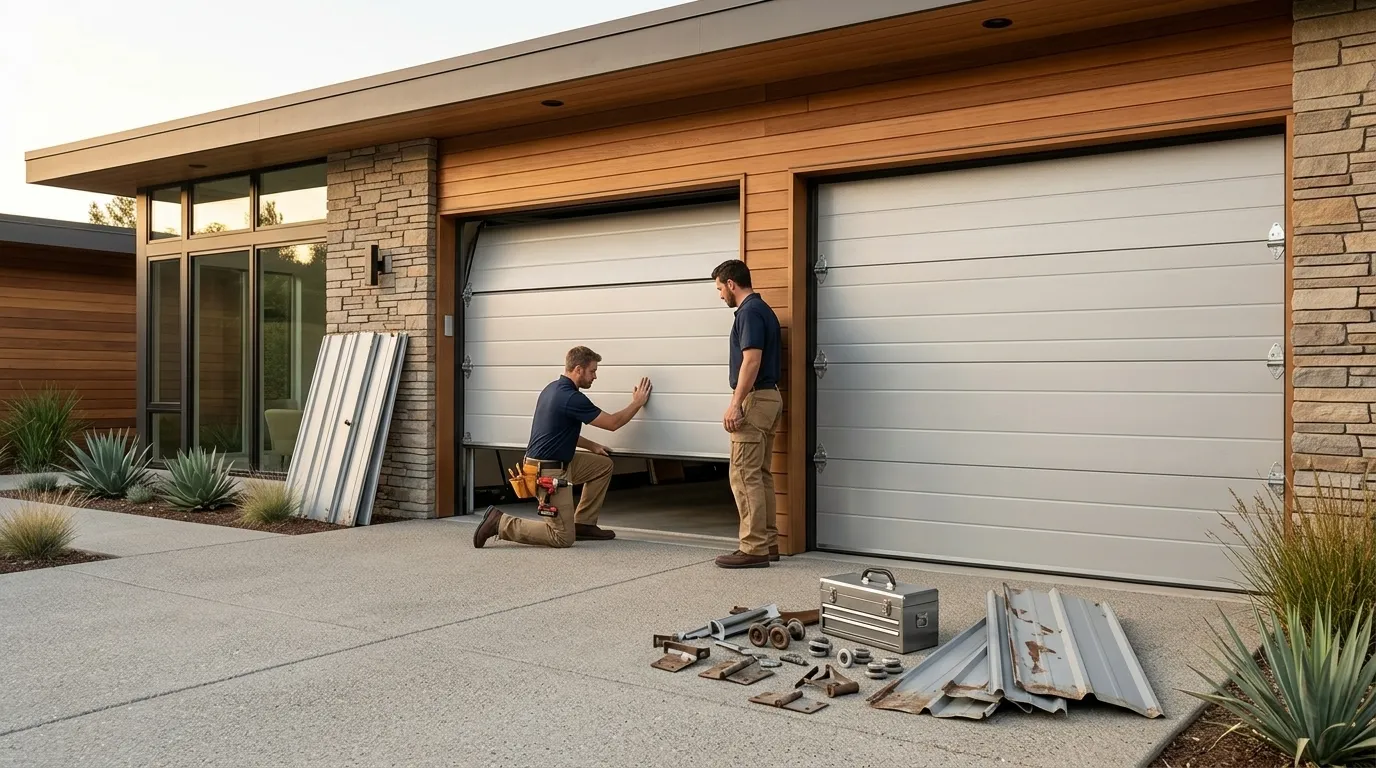
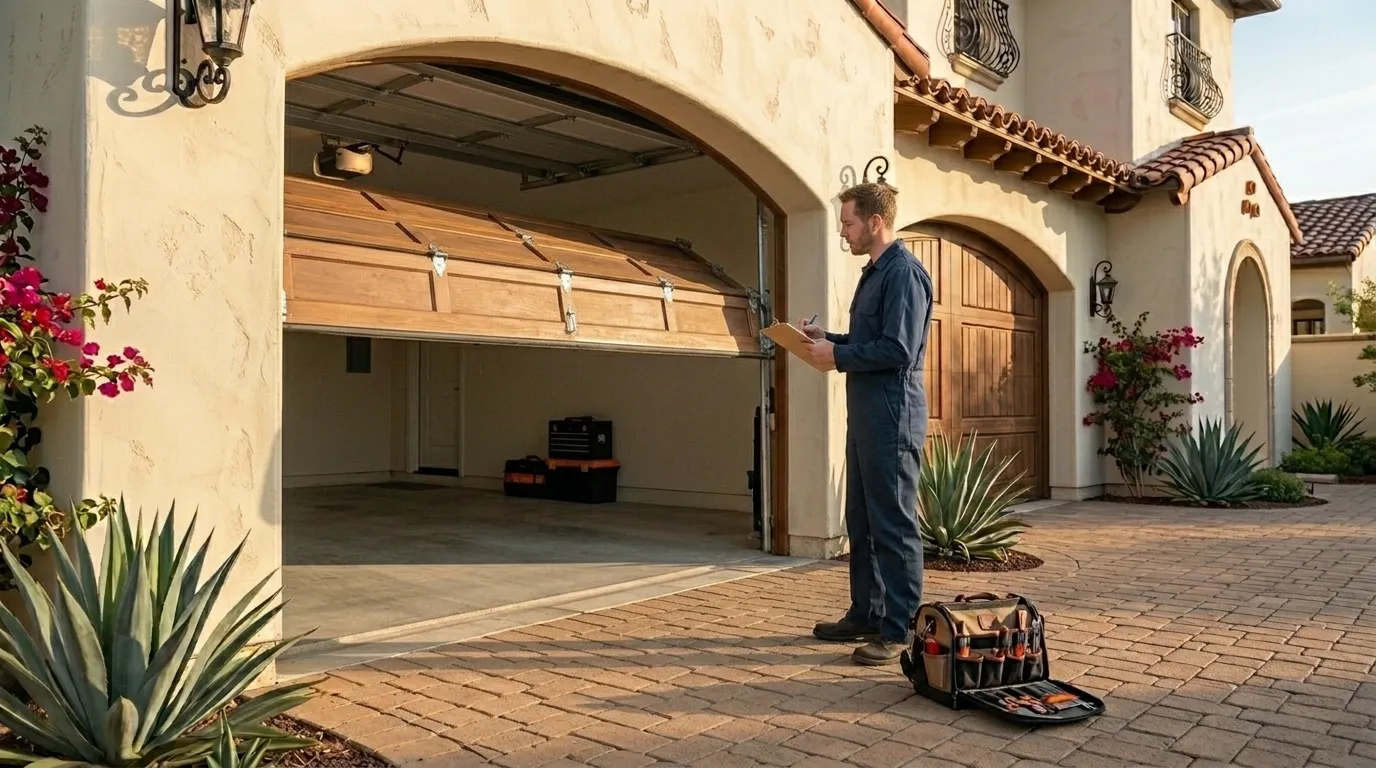
A full installation isn't a swap-and-go job. We pull the old door and track off the opening, check the header and jambs for square, and confirm the opening size before anything new goes up. In Spanish Fork, most homes went up between 1975 and 2015, with the median build year around 1998, so we're usually working with an opening framed to a builder spec from that era - steel jambs, a standard 7-foot header height, and hardware that hasn't been touched since the house was new.
We set new track, spring the door to the correct cycle count for its weight, and balance it so it holds at any point without a hand on it. If the door is insulated, we seal the perimeter tight - that matters more here than in a mild climate, because a gap that's a nuisance somewhere warm is a heat leak here. Depending on the door, the job runs a few hours to most of a day. We test the opener limits and force settings before we leave, and walk the owner through manual release in case the power goes out.
What You Are Seeing
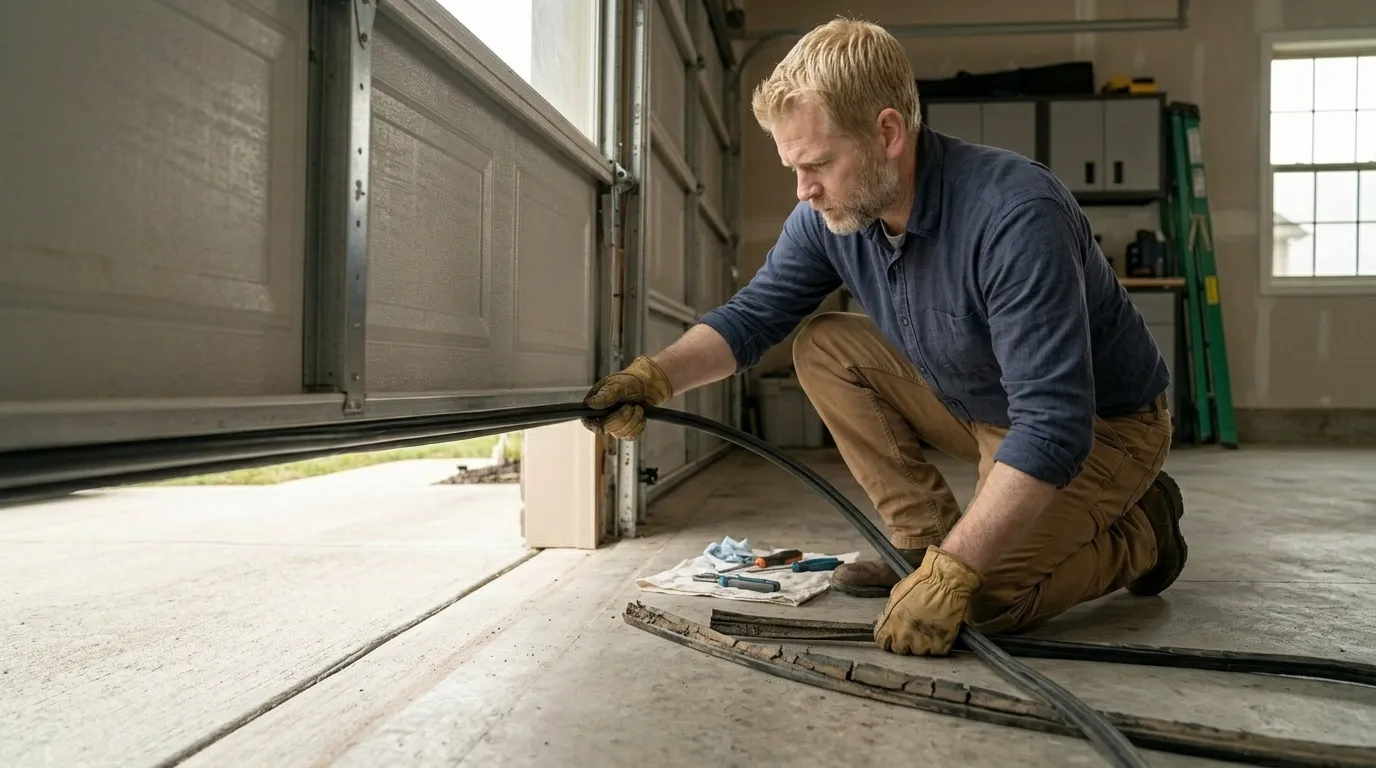
The doors calling us for replacement instead of repair tend to share a look: panels that have gone slightly wavy from decades of thermal cycling, weatherstrip at the bottom that's cracked and lets daylight through, and a door that groans or drags on the track even after a fresh coat of lubricant. Cold, severe winters here are hard on steel and foam alike - the panel skin contracts and expands with every freeze-thaw, and eventually the seams telegraph through the paint.
A lot of what we see is original to the house. Given that most homes in this area were built between 1975 and 2015, a door that was installed with the house is now anywhere from ten to nearly fifty years old, and the ones from the 1980s and 90s stock are the ones showing it hardest right now. Springs sized for the original door weight also start failing around this age, which is often the trigger that gets someone calling instead of just living with the drafts.
What It Costs
We don't quote a number without seeing the opening, because the range is wide and driven by real factors, not upsell. Door width and height matter - a single door costs less than a double. Insulation level matters more here than most places, since a cold, severe climate band means the difference between an R-value door and a bare steel panel shows up on the heating bill every winter, not just on install day.
Material and window options move the price too, along with whether the opener and track need replacing along with the door itself. We'll tell you plainly if a repair makes more sense than a full replacement - sometimes a spring and a set of rollers gets another decade out of a door that's otherwise sound, and there's no reason to spend more than that. We give a firm number after we've looked at the opening in person, not a range pulled from a phone call.
Why It Happens Here
Two things drive most of the installation calls we get in Spanish Fork: the age of the housing stock and the climate. Homes here were mostly built between 1975 and 2015, with a median build year of 1998, and across the fifteen named areas we cover the pattern is the same - heavy 1980s and 90s construction. That means a large share of the doors in this valley are original equipment, built to the insulation and hardware standards of that decade, not today's.
The cold, severe climate band does the rest of the damage. Repeated freeze-thaw cycles work on steel seams, foam backing, and weatherstrip in a way that milder climates don't. Across the wider service area - 49,905 households, 27,557 of them owner-occupied houses - we see the same failure timeline house after house: original door, original spring, original weatherstrip, all giving out around the same age because they were all installed under the same conditions. That's not a coincidence, it's the climate doing what it does every winter.
How it works
From “it’s stuck” to “it’s fixed”
01
Tell us what’s wrong
Describe the symptom - won’t open, loud bang, opener runs but the door won’t move.
02
On-site diagnosis
A technician tests the door under power and by hand and finds what actually failed.
03
Clear, up-front plan
You get the fix that’s needed and what drives the cost - before any work starts.
04
Repaired & tested
The repair is done, the door is set true and tested, and the work area left clean.
Serving Spanish Fork, UT - tell us what your door’s doing and we’ll take it from there.
01How do I know if I need a new door instead of a repair?
If the panels are visibly wavy, the door drags even after lubrication and adjustment, or the spring has failed on a door already showing wear at the seams, replacement usually makes more sense than another repair. We'll always tell you honestly if a repair will hold for a few more years - we don't push a new door when a spring and rollers will do the job.
02Does an insulated door actually matter in a garage that isn't heated?
Yes, more than people expect. Spanish Fork sits in a cold, severe climate band, and an insulated door slows how much cold transfers into the garage and through the wall shared with the house. It also keeps a parked car and anything stored in there from swinging as hard with the outside temperature.
03How long does a full installation take?
Most single-door jobs run a few hours; a double door with new track and opener setup can take most of a day. We test the balance, limits, and safety reverse before we leave, so the door is ready to use the same day it goes in.
04Can you match the door to the age of my house?
We can match style and proportions reasonably well, but we don't guarantee an exact match to a door that hasn't been made in decades. For a house built in the 1980s or 90s, we'll show you options that fit the garage opening and the house's look without pretending to replicate the original spec panel for panel.
Ready to get your garage door sorted?
Tell us what it’s doing and where you are in Spanish Fork - we’ll take it from there.