How That Shows Up in the Door
Salem's housing stock centers on 2004, noticeably newer than the 1998 median across the broader service area. That gap changes the calls we get. A 2004-era door is almost always a factory-insulated steel panel on a torsion spring system set up to code at the time, not the older extension-spring, single-layer door you'll still find in the oldest pockets of the valley. The failures skew toward opener electronics and worn rollers rather than the brittle, decades-old panel seams we see on 1970s stock elsewhere.
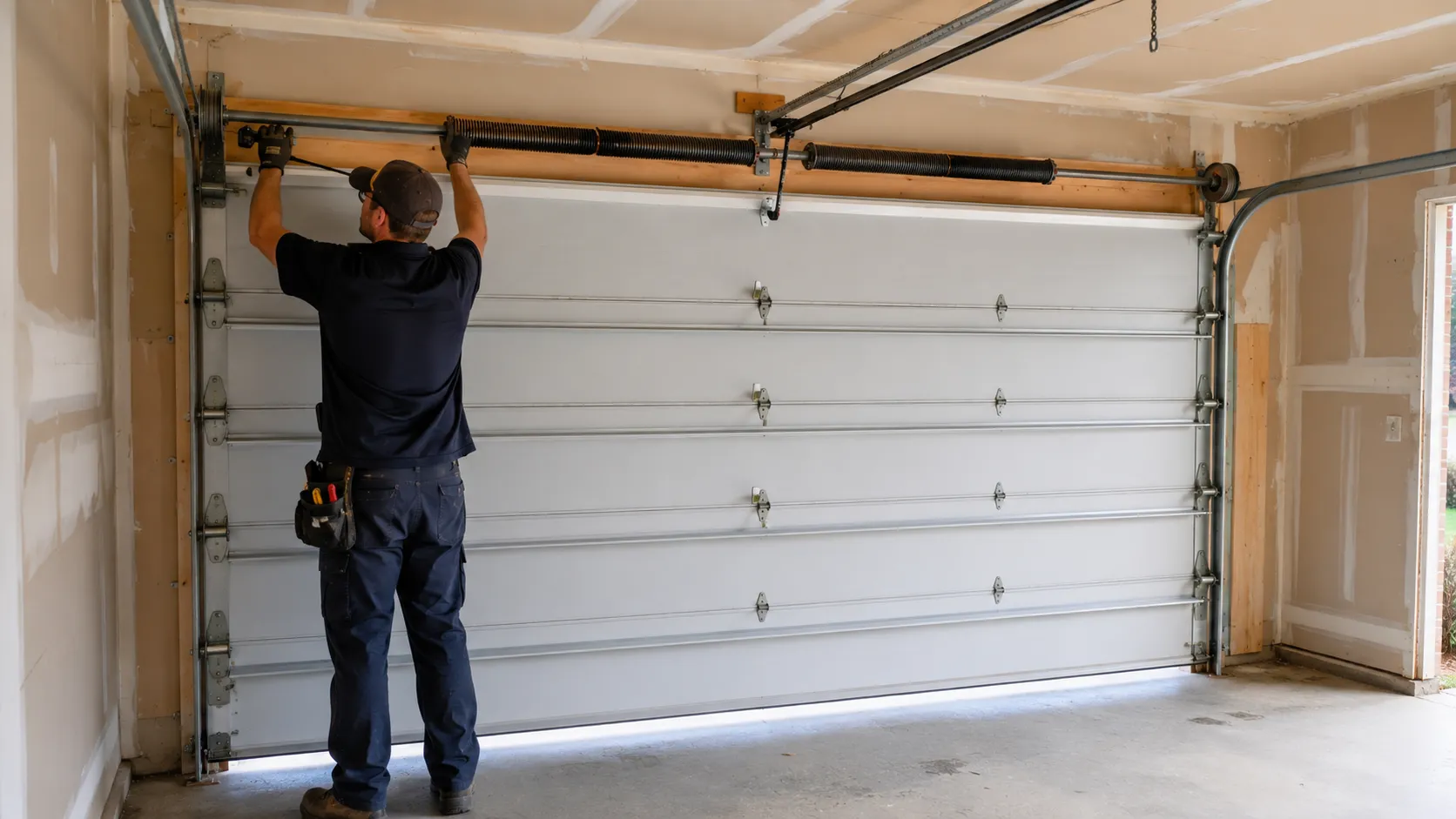
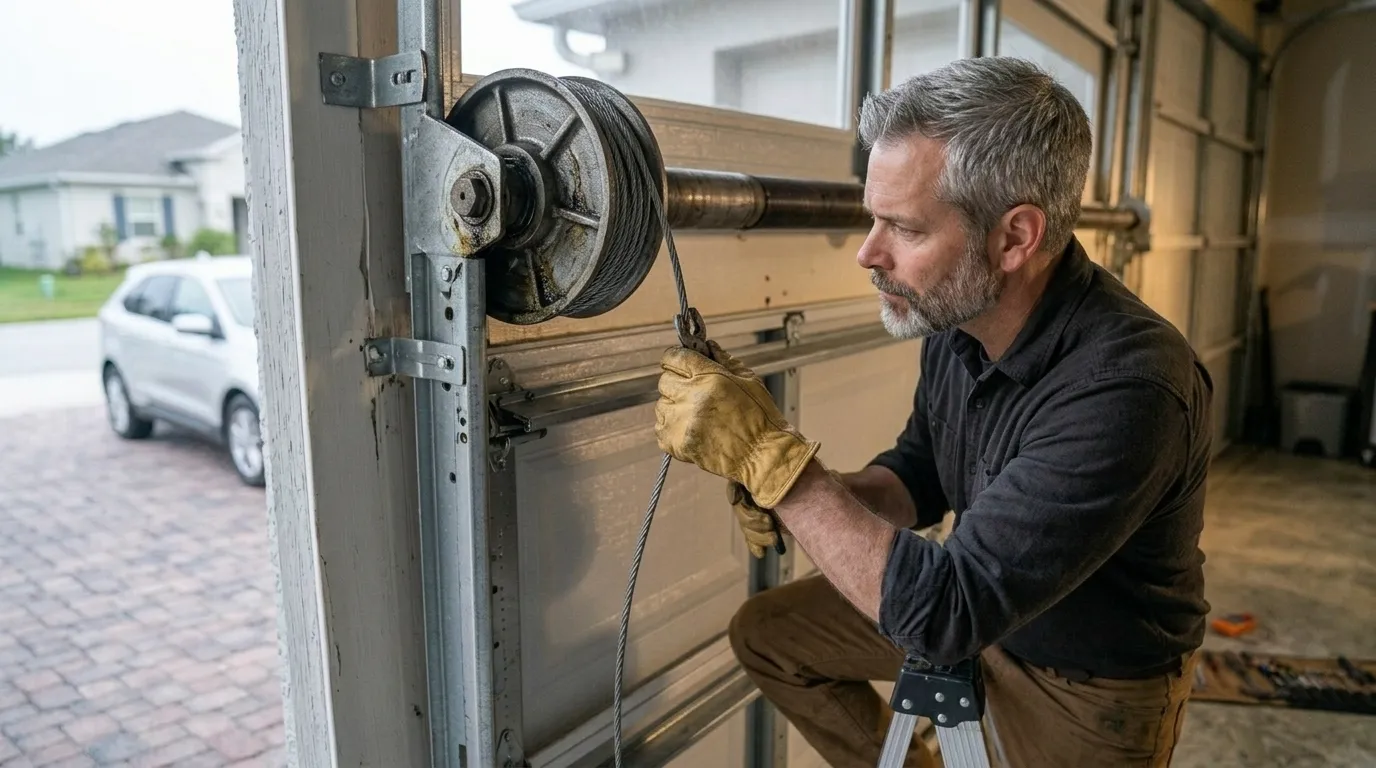
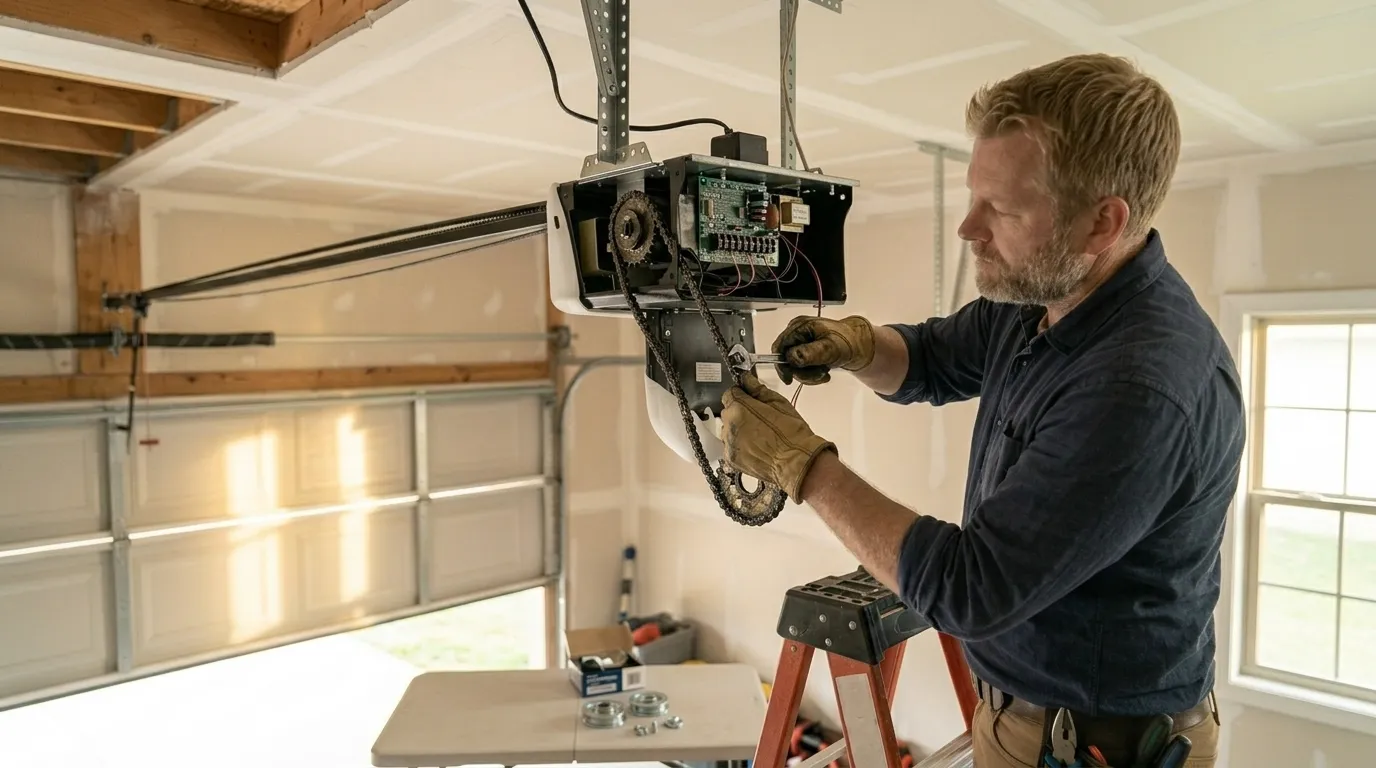
What that means for a Salem call: we're more often replacing a logic board, a broken torsion spring on hardware that's still a standard size, or a bent track from a car that clipped it, than we are wrestling with an obsolete one-piece door nobody makes parts for anymore. It's a different job with a different parts list, and it's part of why we ask where you live before we say what we think is wrong.
Timing on This Area
This region sits in a cold, severe winter climate, and Salem's newer builds generally mean better-sealed doors than older stock - but cold is still cold. Steel contracts in low temperatures, and a torsion spring that's been fine all summer can bind or snap on the first hard freeze. On a newer door the springs are usually still original, which means they're old enough now to be near the end of a normal service life even though the house itself isn't old.
We don't pretend every call is an emergency. If your door is slow to close on a cold morning but still closes, that's worth a scheduled visit, not a rush trip from Spanish Fork. Save the urgent call for a spring that's actually let go or a door stuck open - those are the ones where the metal or your car is at risk.