Garage Door Repair Built Around Spanish Fork Houses
Garage door repair for Spanish Fork homes built mostly 1980s-2015, matched to severe cold winters and the torsion hardware common in this housing stock.
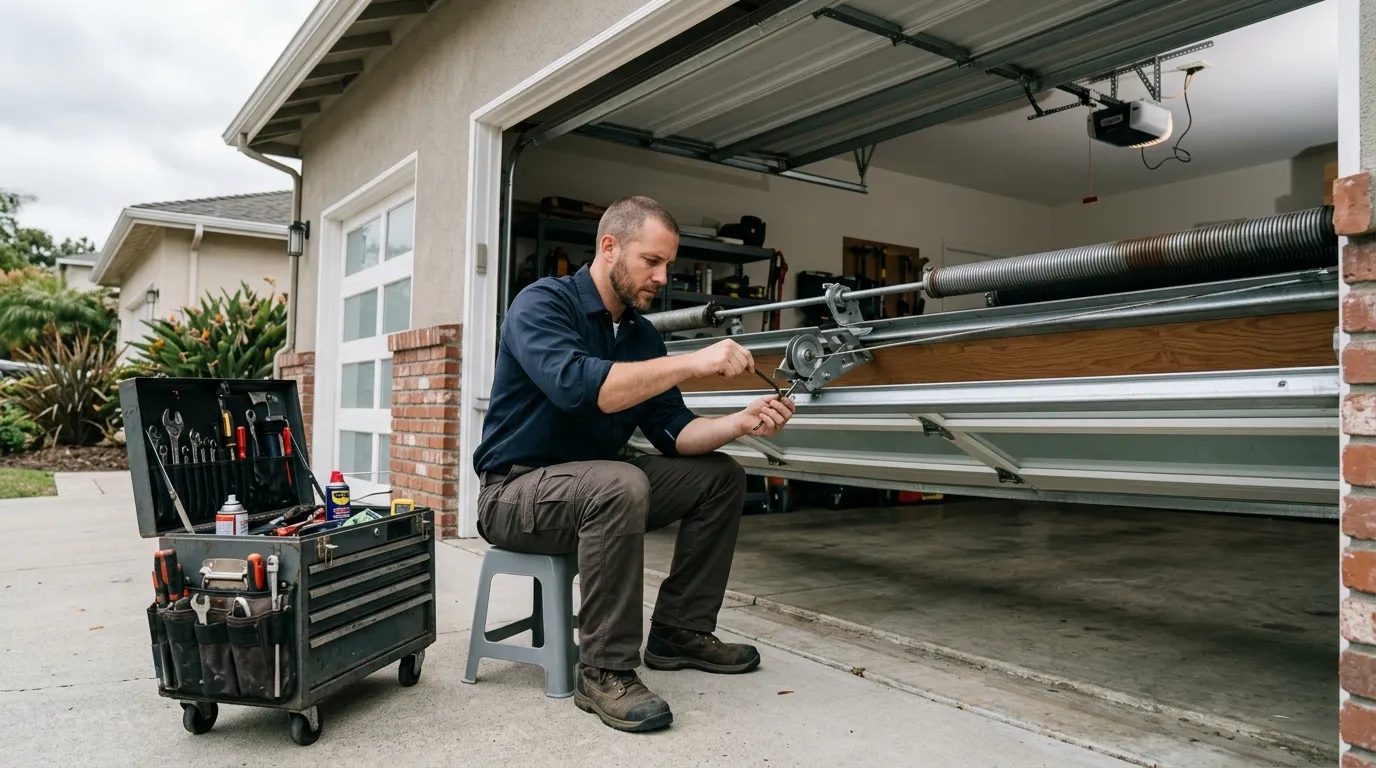
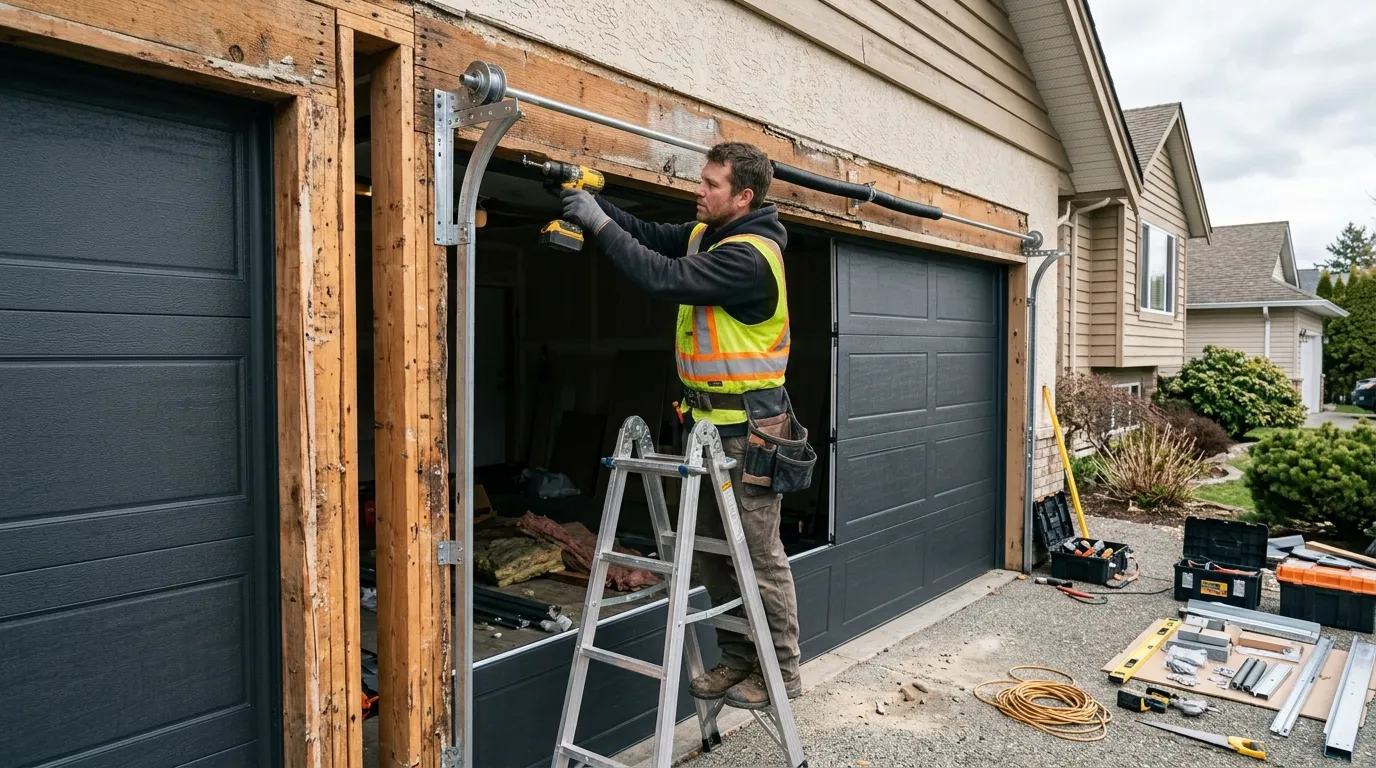
Most garage door repairs here start with a look at the spring system before anything else, because that's what's usually stopped the door cold. Homes in this area were mostly built between 1975 and 2015, with a lot of that stock going up in the 1980s and 90s across the fifteen or so named neighborhoods that make up the wider service area. That era of construction means torsion springs sized for standard steel doors, extension springs on some of the older builds, and openers that have usually been replaced at least once by the time we get the call.
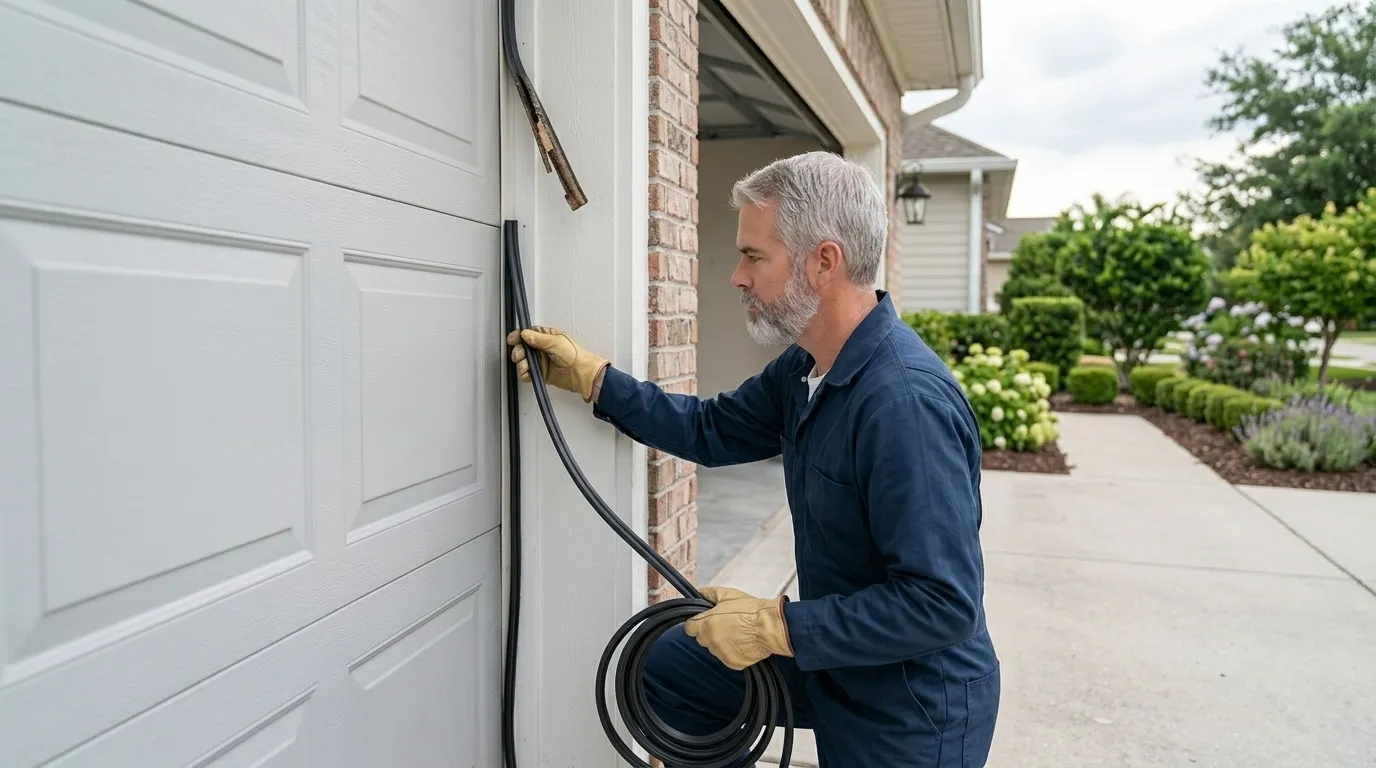
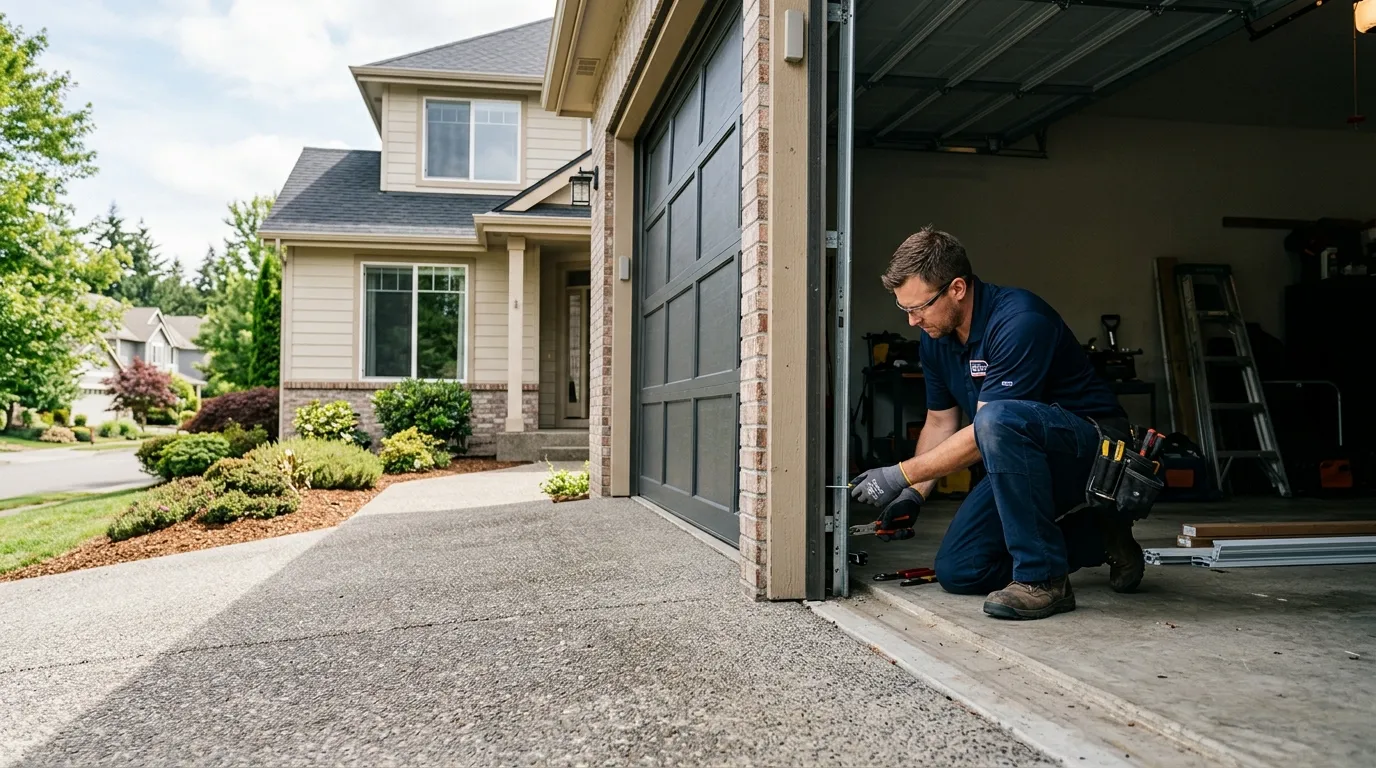
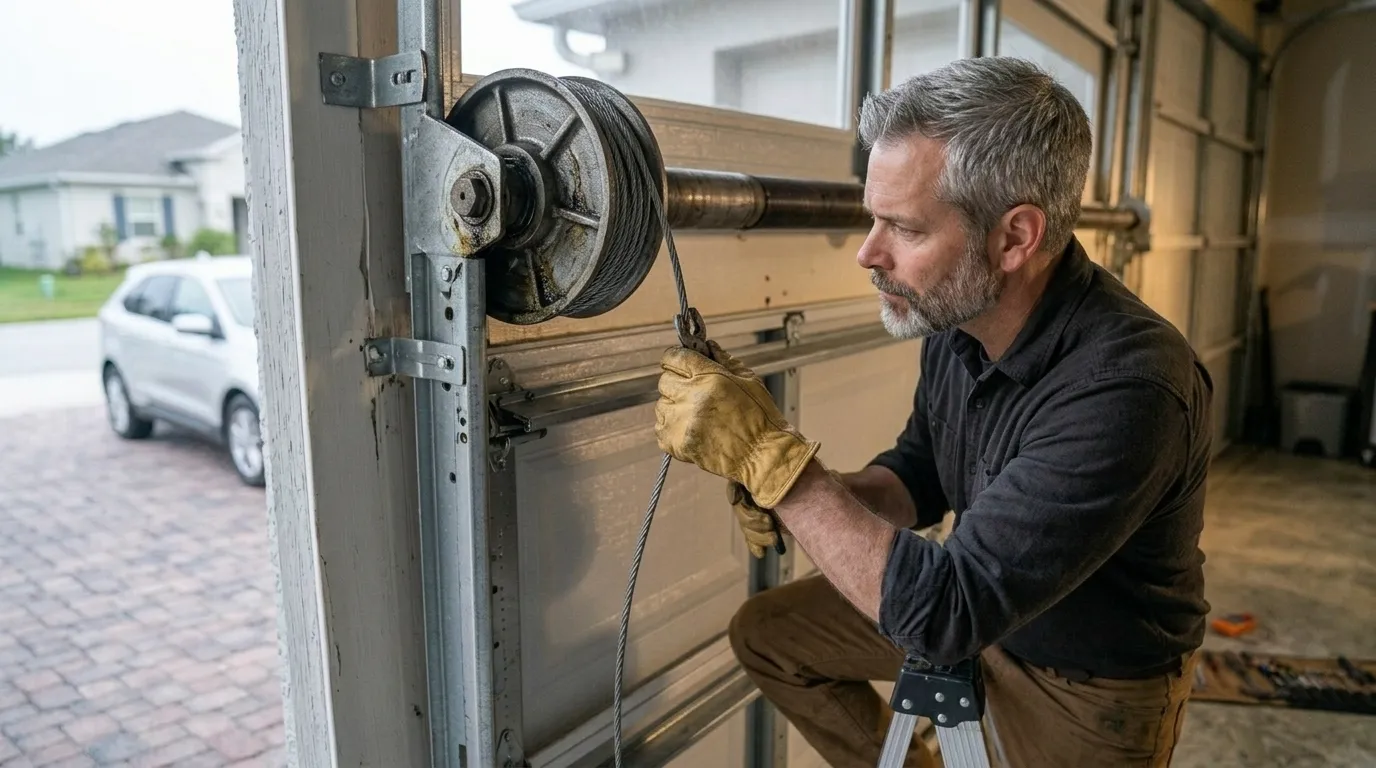
We pull the door by hand first to check balance, then inspect cables, rollers, and the track alignment before touching the opener. A door that won't open isn't always a spring - sometimes it's a broken cable that let the door drop crooked in the track, or a roller that finally gave out after years of cold-weather contraction and expansion. We tell you what's actually wrong before we quote anything, and if the fix is a fifteen-minute job, that's what you pay for. We don't sell a full torsion system replacement when a cable and a service call will do it.
What You Are Seeing
A door that's heavy to lift by hand, or won't stay up on its own, almost always means a spring has lost tension or broken outright. If you hear a bang from the garage and then the opener won't lift the door at all, that's a torsion spring failure - common, and not something to force with the opener motor, which will burn out trying.
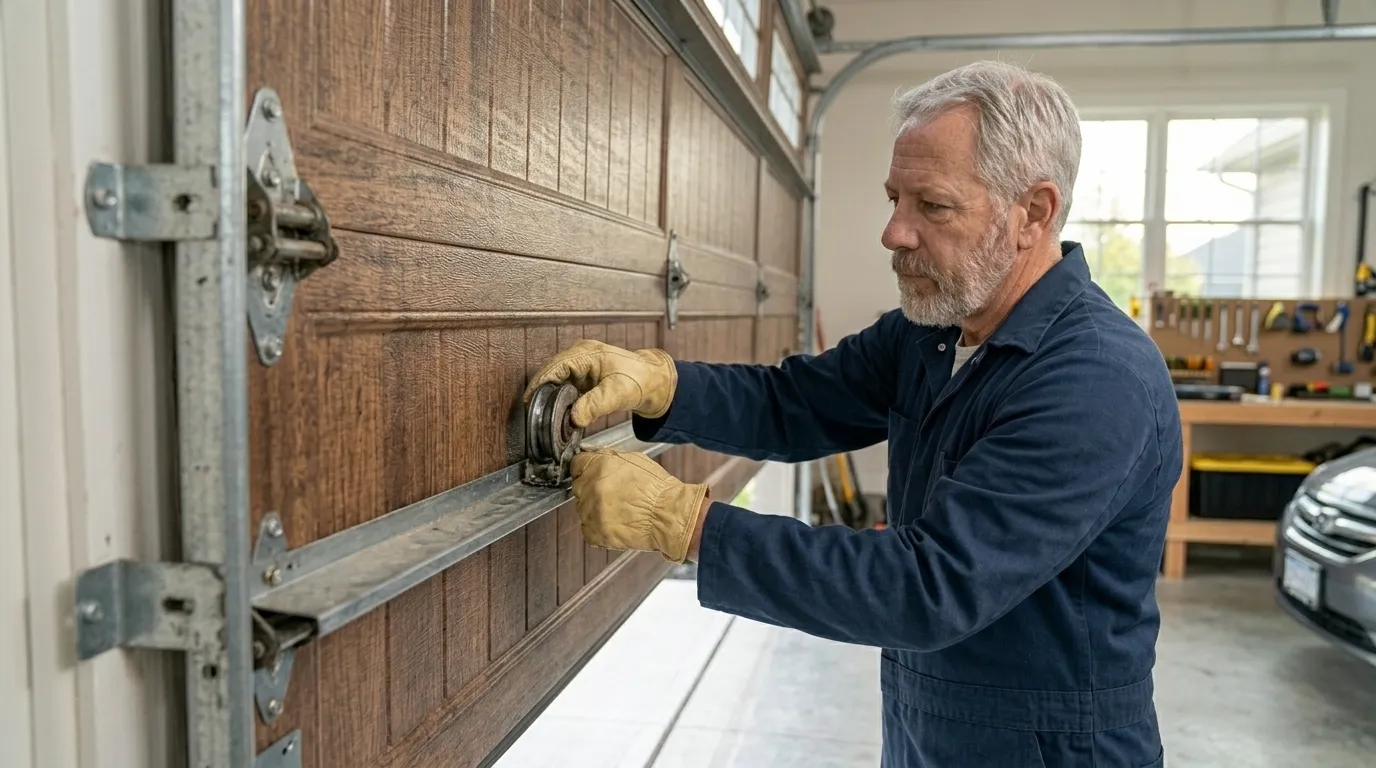
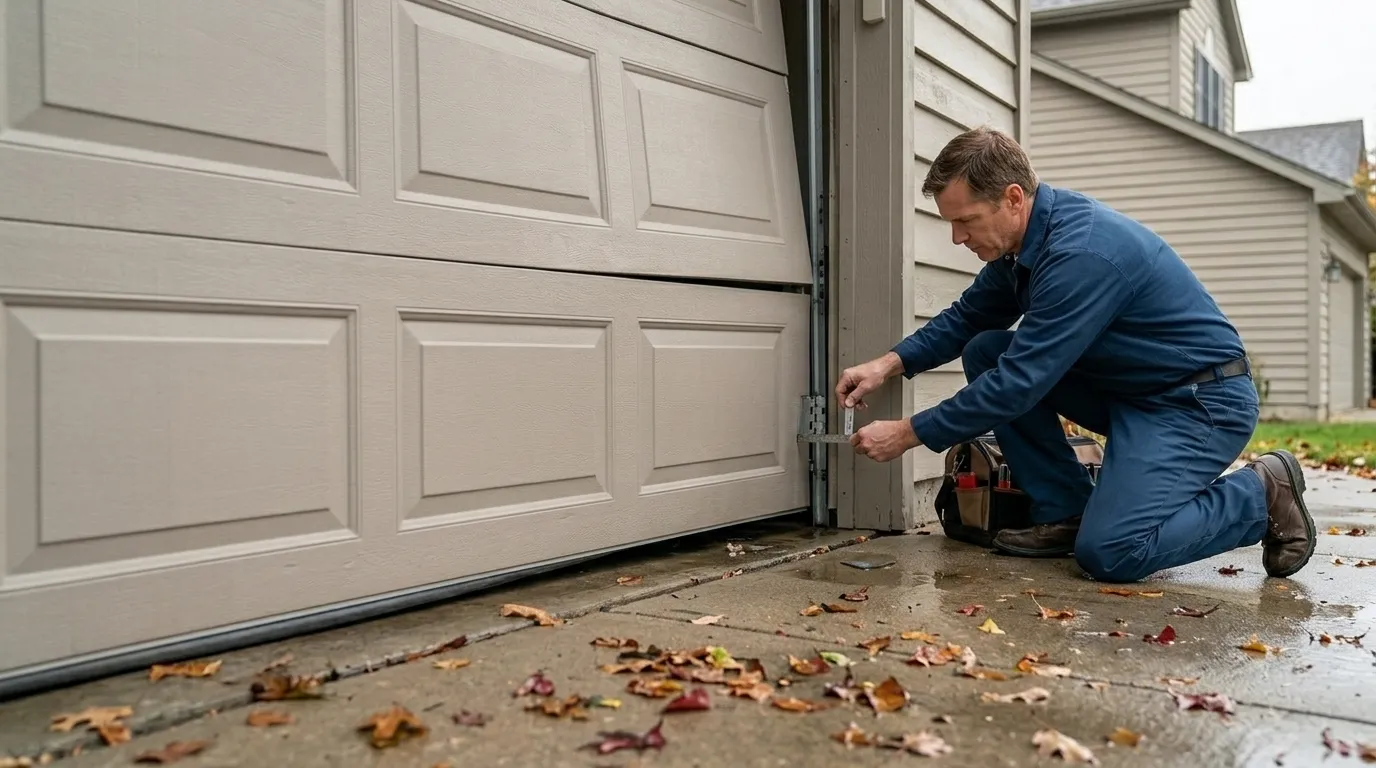
A door that shudders, jerks, or comes off track partway up usually points to a roller or a bent track, which shows up more in winter here given the cold band this area sits in - metal contracts, alignment tightens up, and a roller that was marginal in July quits in January. If the opener runs but the door doesn't move, check the drive gear or the trolley connection before assuming the motor is dead; that part fails a lot more often than the motor itself.
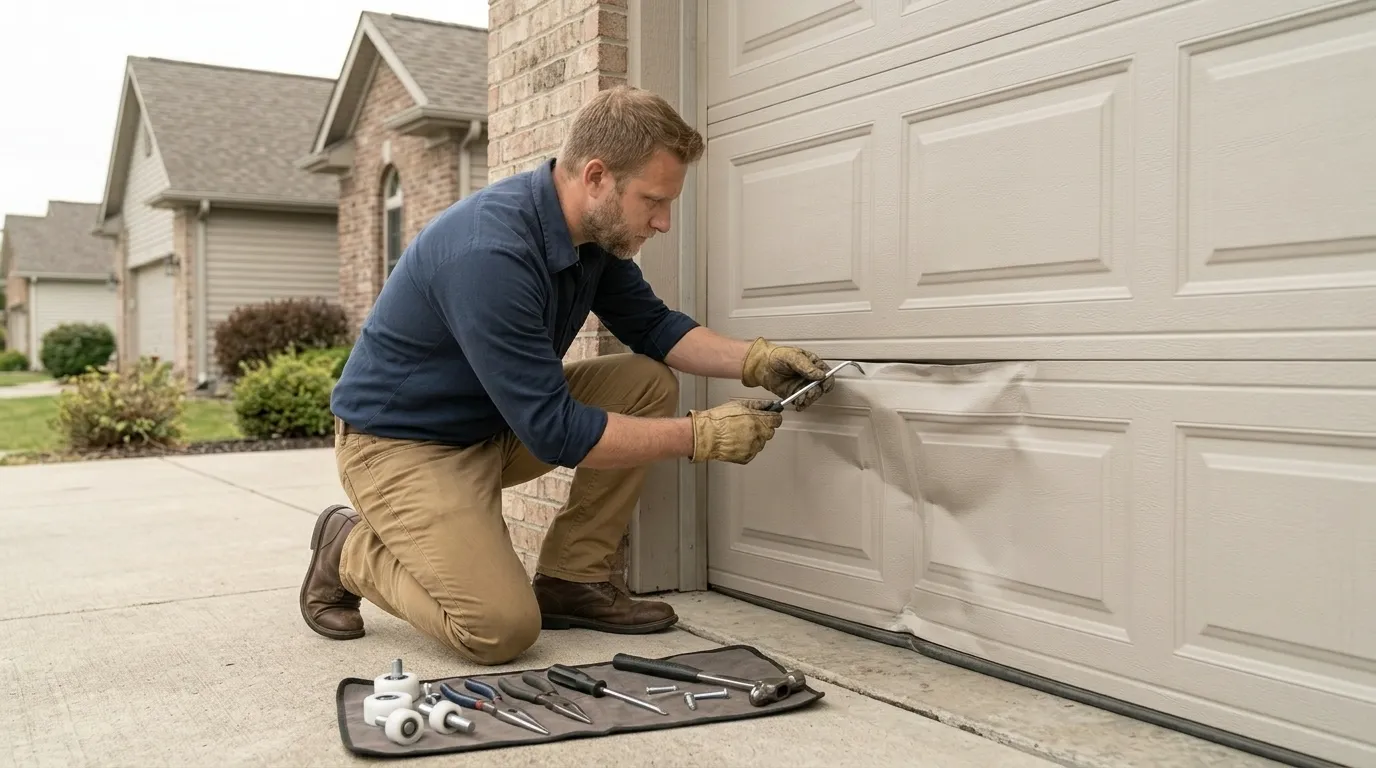
One thing we won't do is tell you a door needs full replacement over the phone. We've seen enough of these systems in this area's housing stock that a five-minute look tells us whether it's a repair or a replace conversation, and we'd rather say that in person.
What It Costs
We don't post a flat price list here because the range on a repair depends on what actually failed - a single cable is a different job than a full spring set on a heavier double door, and parts availability varies by what your opener and track hardware were built to. What we can tell you is that we diagnose before we quote, and the quote is for the actual failure, not a guess. If you want a number before we're on site, tell us the symptom - shudders on the track, dead opener, door won't budge - and we can narrow it down over the phone.
One honest limit: if your door and opener are old enough that parts aren't stocked anymore, repair can end up costing close to what a new door would run. We'll say so rather than patch something that's going to fail again in six months.
Why It Happens Here
This service area sits in a cold climate band with severe winter conditions, and that matters more for garage doors than most people expect. Steel contracts in the cold, torsion springs lose a little tension every cycle, and rollers that were fine in warm weather bind up once temperatures drop hard. Combine that with housing built mostly between the 1980s and 2015 - a lot of it now twenty-five to forty-five years old - and you've got original hardware reaching the end of its rated cycle count right around the time winter starts stressing it hardest.
We see the same pattern across the wider area, from homes near Palmyra and Mapleton three to four miles out to houses further toward Springville and Salem: doors installed with the house, springs never replaced, and the first real failure showing up on the coldest week of the year. It's not bad luck - it's a spring built for average use meeting a winter it wasn't quite rated for, on hardware old enough that the manufacturer doesn't always still stock the exact torsion size.
How it works
From “it’s stuck” to “it’s fixed”
01
Tell us what’s wrong
Describe the symptom - won’t open, loud bang, opener runs but the door won’t move.
02
On-site diagnosis
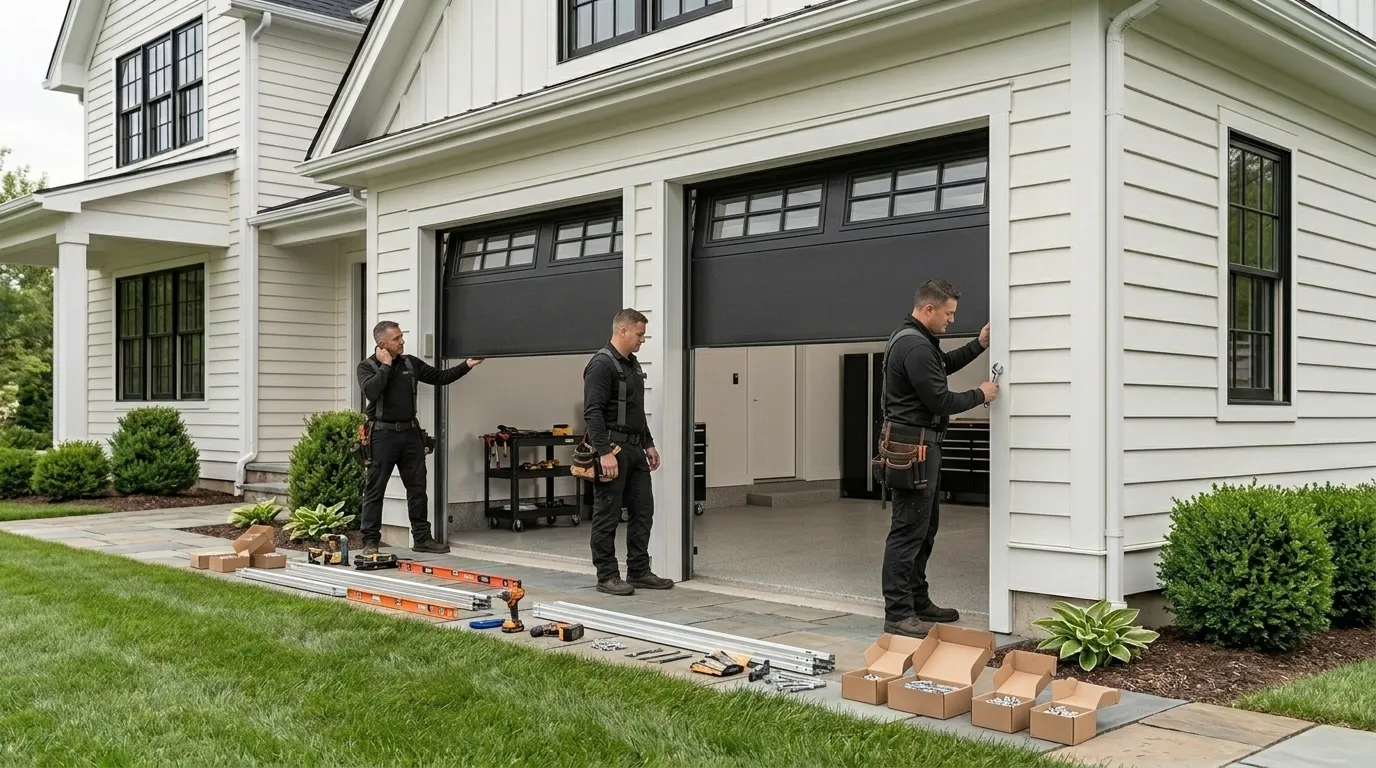
A technician tests the door under power and by hand and finds what actually failed.
03
Clear, up-front plan
You get the fix that’s needed and what drives the cost - before any work starts.
04
Repaired & tested
The repair is done, the door is set true and tested, and the work area left clean.
Serving Spanish Fork, UT - tell us what your door’s doing and we’ll take it from there.
01Why did my garage door spring break in winter and not summer?
Cold makes steel contract slightly, which adds stress to a spring that's already near the end of its cycle life. In this climate band, that extra tension is often what pushes a marginal spring - one that's been fine for years - into actually snapping. It's timing, not a separate problem.
02Is my opener or my spring the reason the door won't lift?
If the opener motor runs but the door doesn't move, or moves very slowly and struggles, suspect the spring first - the opener isn't built to lift a door's full weight without spring assist. If the motor doesn't run at all, that's more likely electrical or the opener itself.
03How old does a garage door have to be before repair stops making sense?
There's no fixed age, but once parts for your specific opener or track hardware are no longer stocked, repair costs start closing in on replacement cost. We'll tell you straight if that's where your door is instead of patching it repeatedly.
Ready to get your garage door sorted?
Tell us what it’s doing and where you are in Spanish Fork - we’ll take it from there.