Spanish Fork homes mostly date from the 1980s and 90s, with hardware built for a different era. Here's how to tell a noise that waits from one that doesn't.
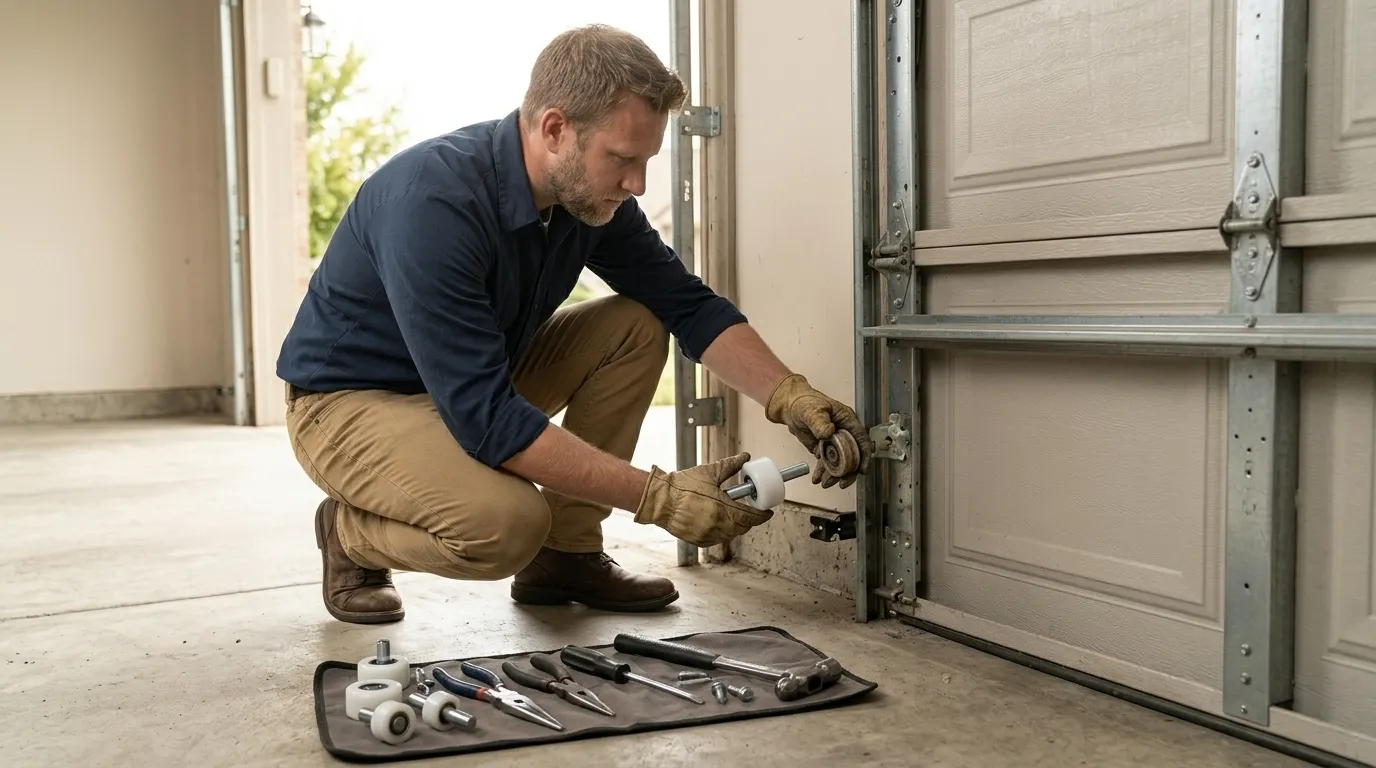
Most homeowners here assume a noisy door means the opener is dying. It's usually not the opener. Spanish Fork's housing stock runs 1975 to 2015, with the median build year around 1998, which means a lot of doors are still running original rollers and hinges from a builder-grade install that was never meant to last three decades. A grinding sound is almost always metal-on-metal at the roller stem or a hinge pin that's worn oval instead of round. People replace the opener, the noise comes back in six months, and now they've spent money on the wrong part.
The other mistake is assuming a rattle is normal because "it's always done that." A rattle that's always been there and a rattle that just started are different problems. If it just started, something has changed, usually a bracket working loose or a cable strand fraying. Neither of those gets better with time.
We don't diagnose over the phone based on a description of the sound alone, because the same word - "squeak," "clunk," "bang" - covers three or four different failures. What we can tell you without seeing the door is which failures are common on hardware from this era, and that's worth knowing before you decide whether to call.
When Waiting Is Fine
A dry squeak on a door that still opens smooth and closes flush is usually just a roller or hinge that wants lubrication. That's not an emergency, and if the door is otherwise moving the way it should, it can wait a couple of weeks without getting worse. Same goes for a light rattle in the track on a door that's not binding - annoying, not urgent.
What can wait, specifically: noise without a change in how the door moves, noise that's been stable for months, noise only on the coldest mornings that goes away by afternoon.
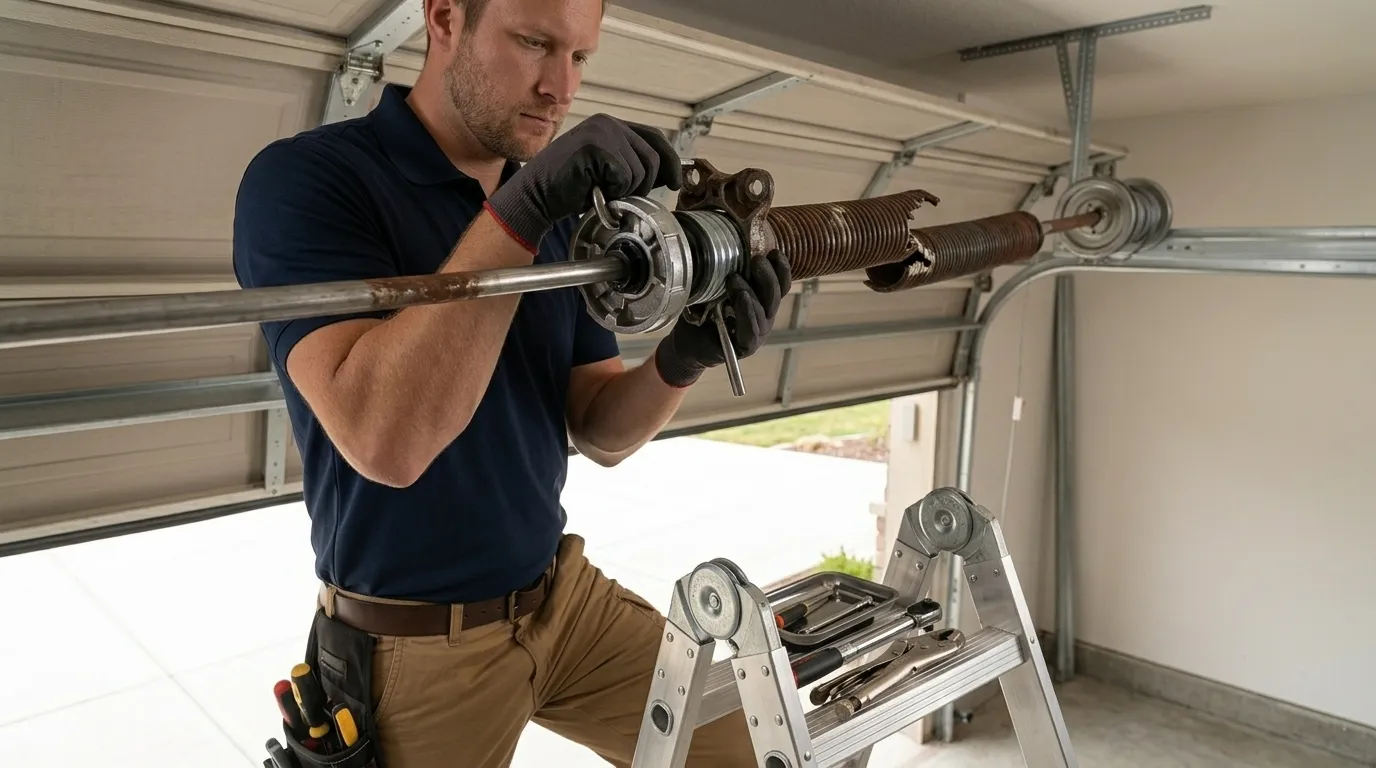
What can't wait: a bang or pop followed by the door refusing to move, a noise that's gotten louder over a week or two, or a cable that looks frayed or has visible strands sticking out. Those are progressing failures, not steady-state annoyances, and on a torsion spring system a cable failure under load is the kind of thing that can hurt someone standing under the door.
We'd rather tell you to wait and save the trip than run a service call for a squeak that WD-40 and a rag will fix. That's an honest limitation of what we do: not every noise is billable work, and we won't pretend otherwise to fill a slot on the truck.
What Local Conditions Do
Spanish Fork sits in a cold, severe climate band, and that matters more for garage doors than most people think. Steel contracts in the cold, and hardware installed a little loose in warm weather - which is common on 1980s and 90s tract-built doors - tightens up and starts grinding once temperatures drop. That's why a lot of the noise calls we'd expect to see cluster in the coldest stretch of the year: the same worn roller that was quiet in August starts complaining in January because the clearance it had is gone.
Cold also stiffens the lubricant on hinges and rollers, so a door that was fine last winter can start groaning this winter even with no new damage - the old grease has just gotten too thick to do its job. And torsion springs lose a little tension in sustained cold, which can make a door that used to lift smooth start to feel heavy right before it starts making noise at the bearing plate.
None of this means the door is failing. It means cold exposes wear that was already there but hadn't announced itself yet. A door with worn hardware in a mild climate might stay quiet for years longer than the same door here.
What Is Going On
Put those two things together - hardware that's mostly 1980s and 90s vintage, and a climate that stresses that hardware every winter - and you get a predictable pattern: noise complaints that spike seasonally, on doors that are old enough to have worn parts but not so old that anyone's replaced them yet. Spanya Fork's building stock, spanning roughly 1975 to 2015 across the area, means most doors are past the point where original hardware is still tight, and the cold makes that wear audible before it becomes visible.
The fix depends entirely on what's actually making the noise. A worn roller is a cheap part. A weak torsion spring is a bigger job and one we don't recommend doing yourself - spring tension on these systems can cause real injury if you don't know what you're doing. A bent track from years of a door running slightly off-square is sometimes a track replacement, sometimes a full door replacement if the panels have taken damage too.
If you're not sure which one you've got, describe what changed and when. A noise that started suddenly points to something breaking. A noise that's been building for months points to something wearing. Both are fixable. Neither gets better on its own.
How it works
From “it’s stuck” to “it’s fixed”
01
Tell us what’s wrong
Describe the symptom - won’t open, loud bang, opener runs but the door won’t move.
02
On-site diagnosis
A technician tests the door under power and by hand and finds what actually failed.
03
Clear, up-front plan
You get the fix that’s needed and what drives the cost - before any work starts.
04
Repaired & tested
The repair is done, the door is set true and tested, and the work area left clean.
Serving Spanish Fork, UT - tell us what your door’s doing and we’ll take it from there.
01My door started grinding only in the cold, is that serious?
Not necessarily. Cold tightens clearances on worn rollers and hinges, so a marginal part that was quiet in summer can start grinding in winter. It's worth having it looked at before it wears further, but it's not usually an emergency unless the door is also binding or moving unevenly.
02Is a popping sound followed by the door not moving an emergency?
Yes. That's often a broken spring or a cable failure, and on a torsion system that's under real tension. Don't try to force the door open or closed. Stop using it and get it looked at before anyone puts weight on it.
03Why does my door suddenly sound different this winter with no other changes?
Lubricant thickens in the cold and steel hardware contracts slightly, both of which can expose wear that was already there. It usually means a roller, hinge, or bearing is past its life, not that something new broke overnight.
04Should I lubricate the door myself before calling?
If the door still opens and closes smoothly and the noise is a dry squeak, lubricating the rollers and hinges is worth trying first. If the noise is a grind, bang, or the door binds at all, hold off and get it checked instead.
Ready to get your garage door sorted?
Tell us what it’s doing and where you are in Spanish Fork - we’ll take it from there.