Where This Job Goes Sideways
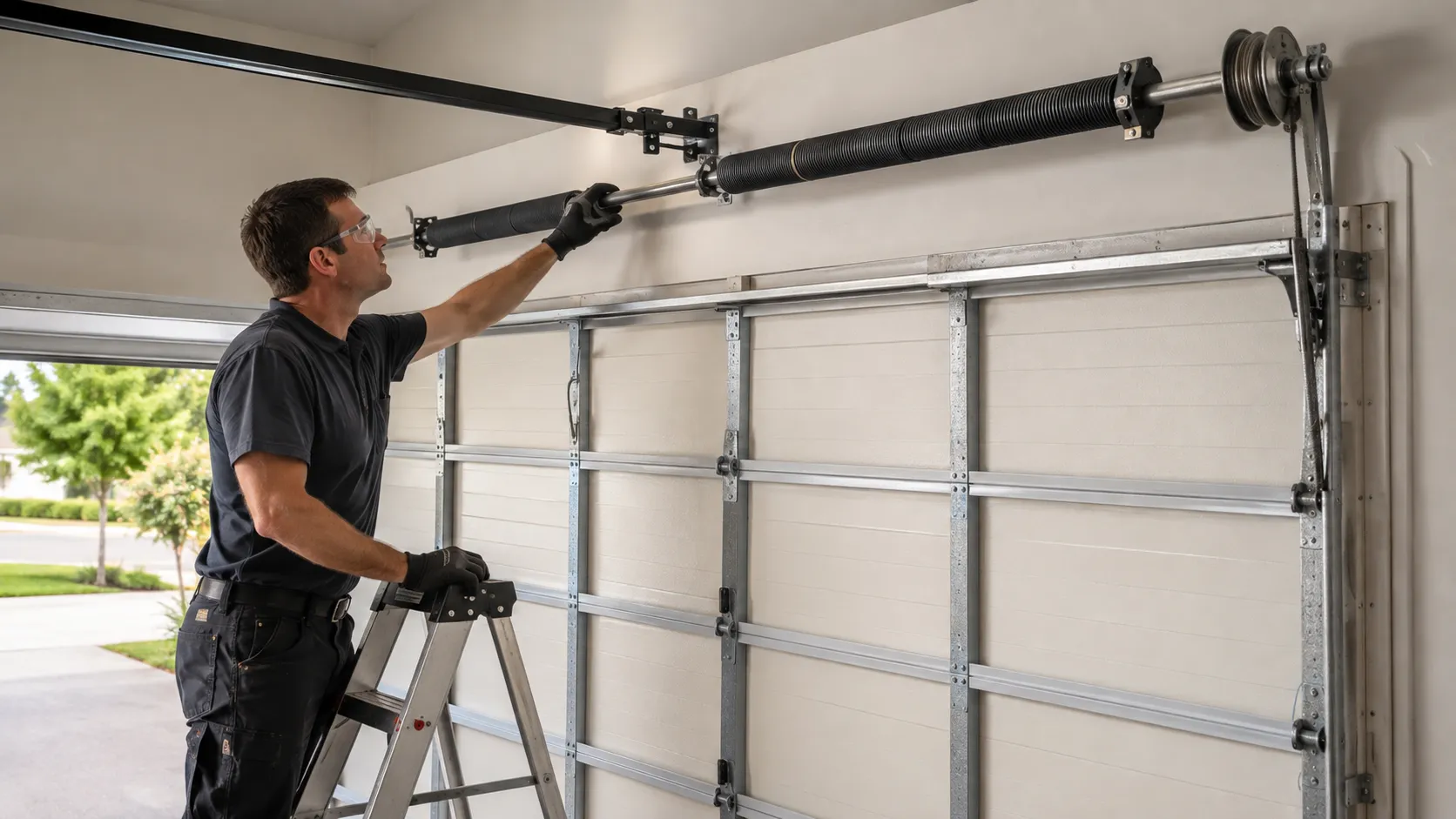
A 1995-built two-car door in Springville almost certainly runs standard torsion springs rather than the older extension-spring hardware you'd find on anything built before 1975. That's good news for repair - torsion setups are more predictable - but it means when one spring goes, the other is usually close behind, since they're wound to the same cycle count and age at the same rate.
Cold is the other factor. This area sits in a severe cold climate band, and steel contracts in winter mornings the same way it does anywhere else - but a spring already near the end of its rated cycles is far more likely to snap on a 10-degree morning than a mild one. We see doors that were fine in October seize or snap in January because the metal had already fatigued and cold was just the trigger.
The other place this goes sideways: panels. Non-insulated steel sections from the 90s rust from the inside out at the bottom corners, where snow melt sits against the door. By the time you see the rust on the outside, the steel underneath is usually already soft.
Stocked Parts
Because most doors on this side of Springville share a build era - mid-90s, standard steel sectional, torsion spring - the parts that fail most often are parts we can size and carry without guessing. Torsion springs wound for a standard 16-foot double or a single 8- or 9-foot door, the rollers and end bearings that go with that hardware, and standard-width tracks all fall into a narrow, predictable range for houses this age.
What we don't carry on the truck: matched replacement panels for a specific factory run from the 90s, or anything custom-width. If a single section is cracked or rusted through and the rest of the door is sound, matching that one panel can mean an order and a wait - sometimes it's simpler and about the same cost to replace the whole door instead of chasing one obsolete panel. That's the honest tradeoff on doors this age: repair works right up until the parts get hard to find, and then replacement stops being the expensive option and starts being the practical one.
What It Costs
We're not going to put a number here that isn't backed by anything - pricing on a spring job depends on how many springs, what size the door is, and whether the rollers and cables need to come off along with it. What we can tell you is how the local numbers shape the job: Springville's median household income runs $88,516, well under the wider service area's $104,583, and with 10,574 households in town, a lot of those are mid-90s steel sectional doors coming due for spring replacement around the same age at roughly the same time.
That's not a pricing promise, it's context - a common spring size on a common door age is the cheapest version of this repair to price and stock for, because we're not special-ordering anything. Custom sizes, mismatched panels, and openers bought separately from the door all push a job toward the more expensive end. Ask for the number on your specific door; we're not going to guess at it here.