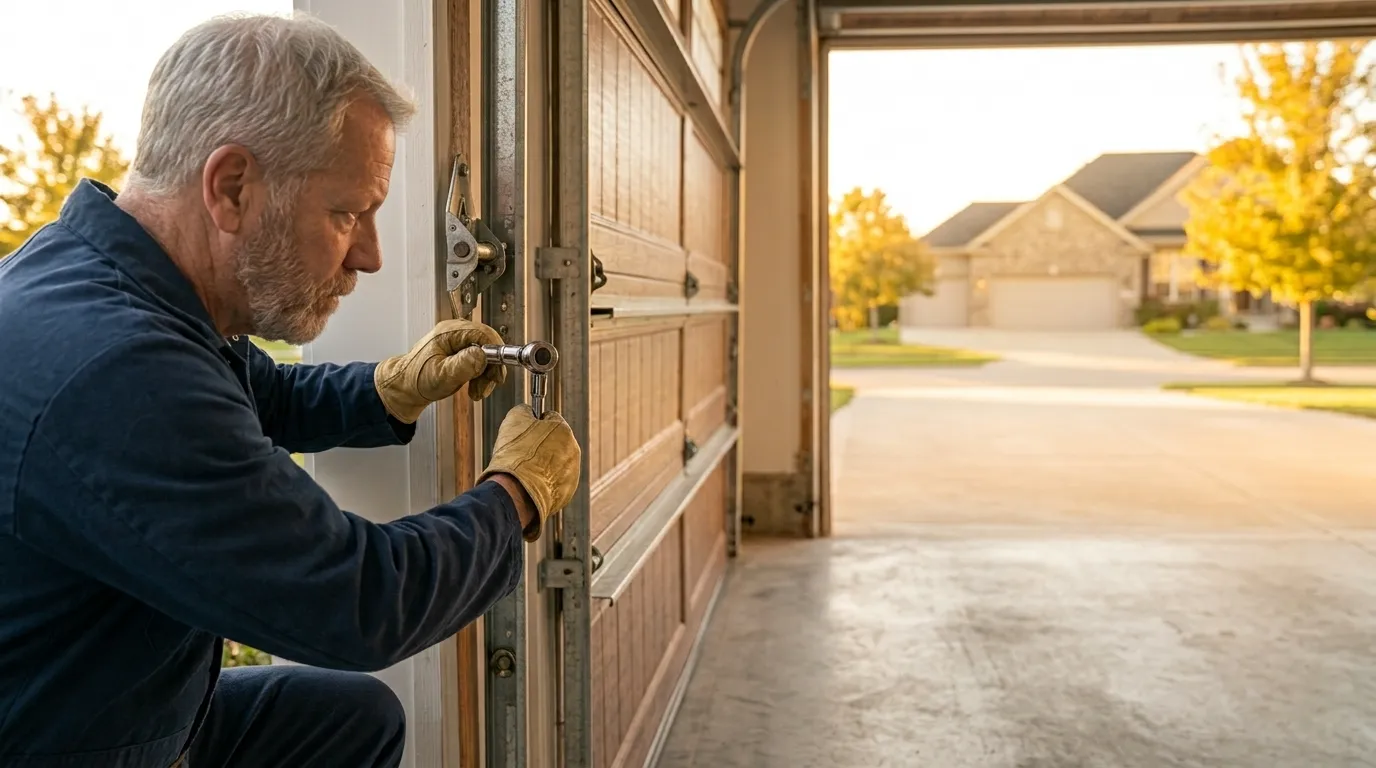
Broken or frayed garage door cable in Spanish Fork? We explain what a cable repair takes, what to look for, rough cost factors, and why this fails so often on local homes.
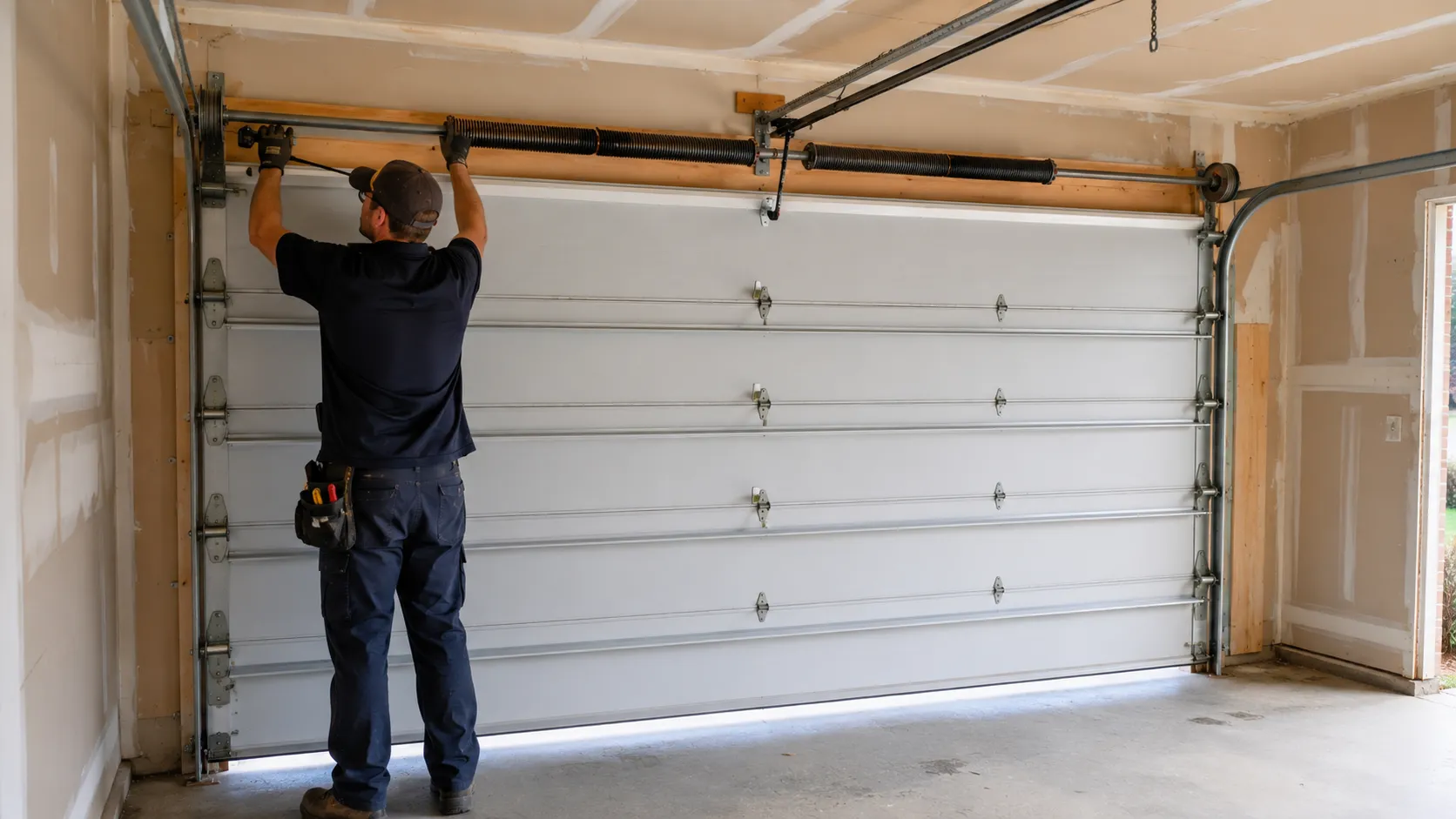
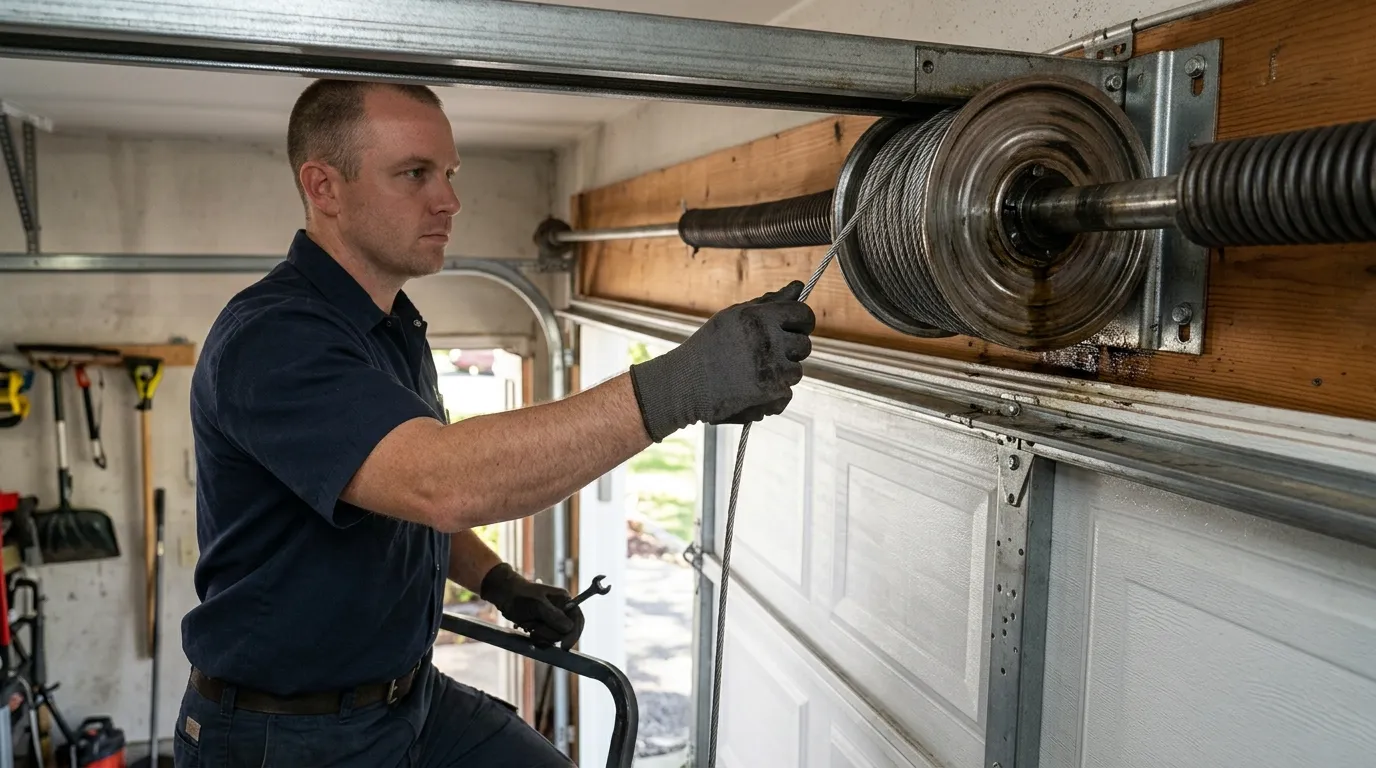
A cable job is not a five-minute fix, even though the part itself is cheap. Both lift cables run under heavy spring tension, so before anyone touches the cable the torsion or extension springs have to be locked off safely. On a double door that means two cables, two drums, and matching them so the door doesn't rack sideways when it goes back up.
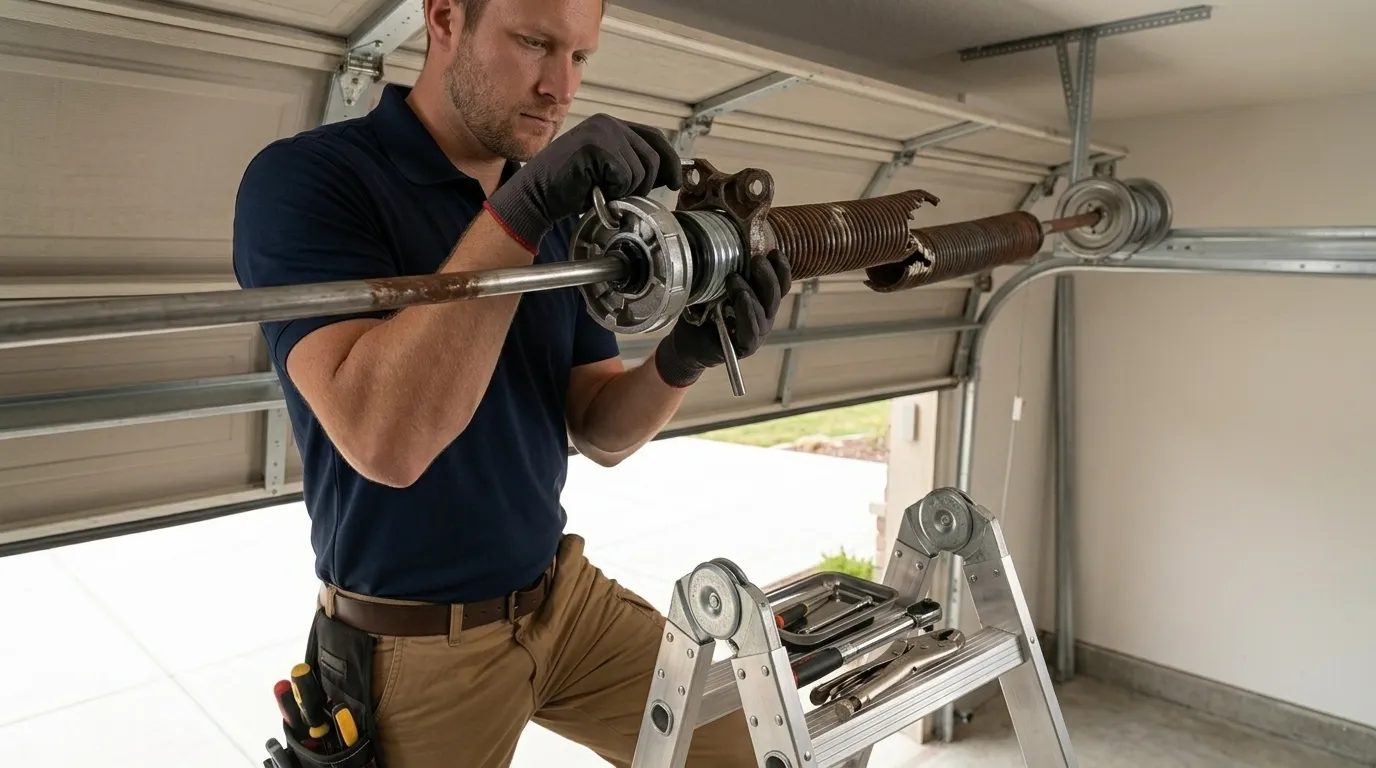
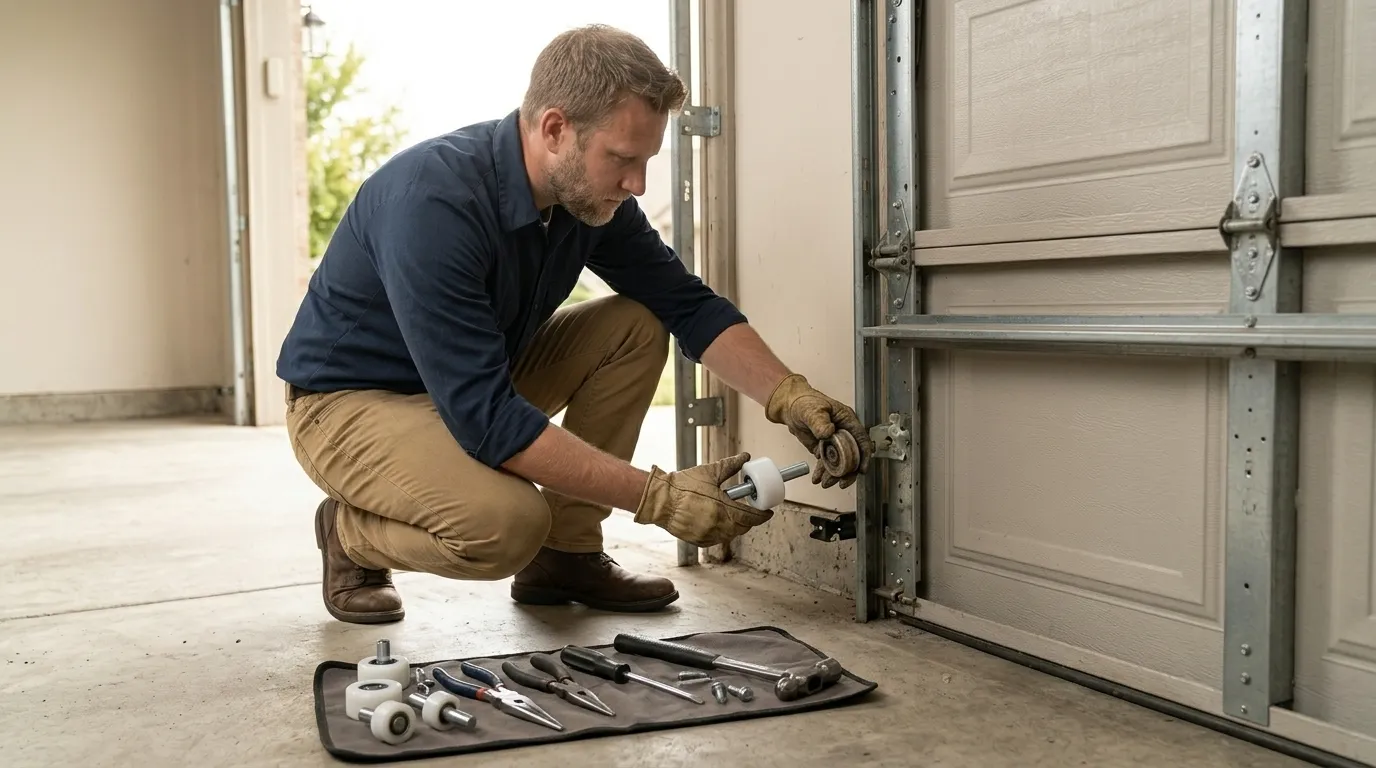
We pull the old cable off the drum, check the drum groove for wear, check the bottom bracket where the cable clips in, and check the track for the burrs that usually caused the fray in the first place. If the drum's worn a channel, we replace it - reusing a grooved drum just re-frays the new cable in a season or two.
Once the new cable's seated, we re-tension the spring, run the door through a full cycle by hand before the opener touches it, and check that both sides lift even. A door that closes crooked after a cable swap almost always means the tension wasn't matched side to side, so we test that before we call it done.
Most cable jobs are same-visit work. If a drum or a whole spring set needs ordering because of unusual wear, that adds a day or two - we tell you up front rather than guessing.
What You Are Seeing
The most common sign is a door that stops mid-travel, tilts to one side as it opens, or comes down fast and uneven on one corner. Sometimes you'll hear a loud bang first - that's usually the cable letting go under tension, not the spring.
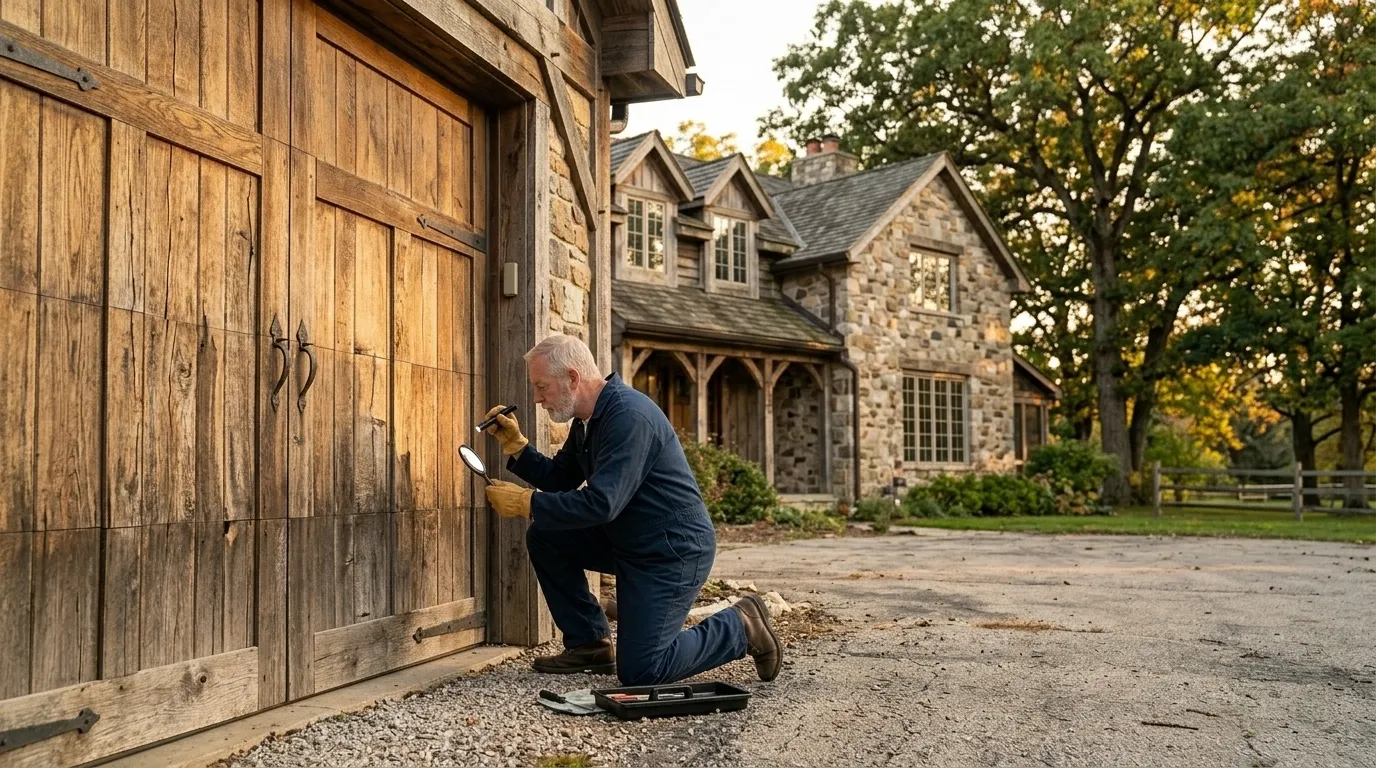
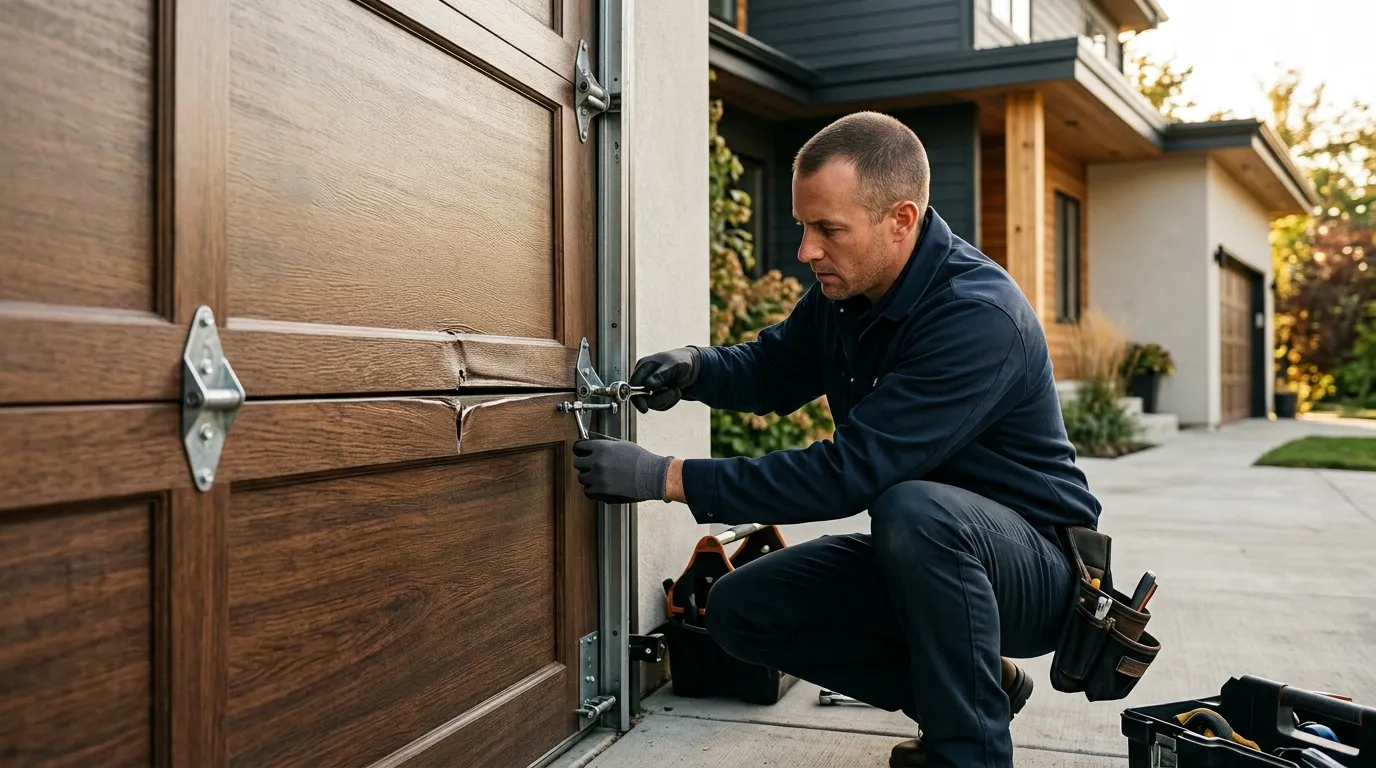
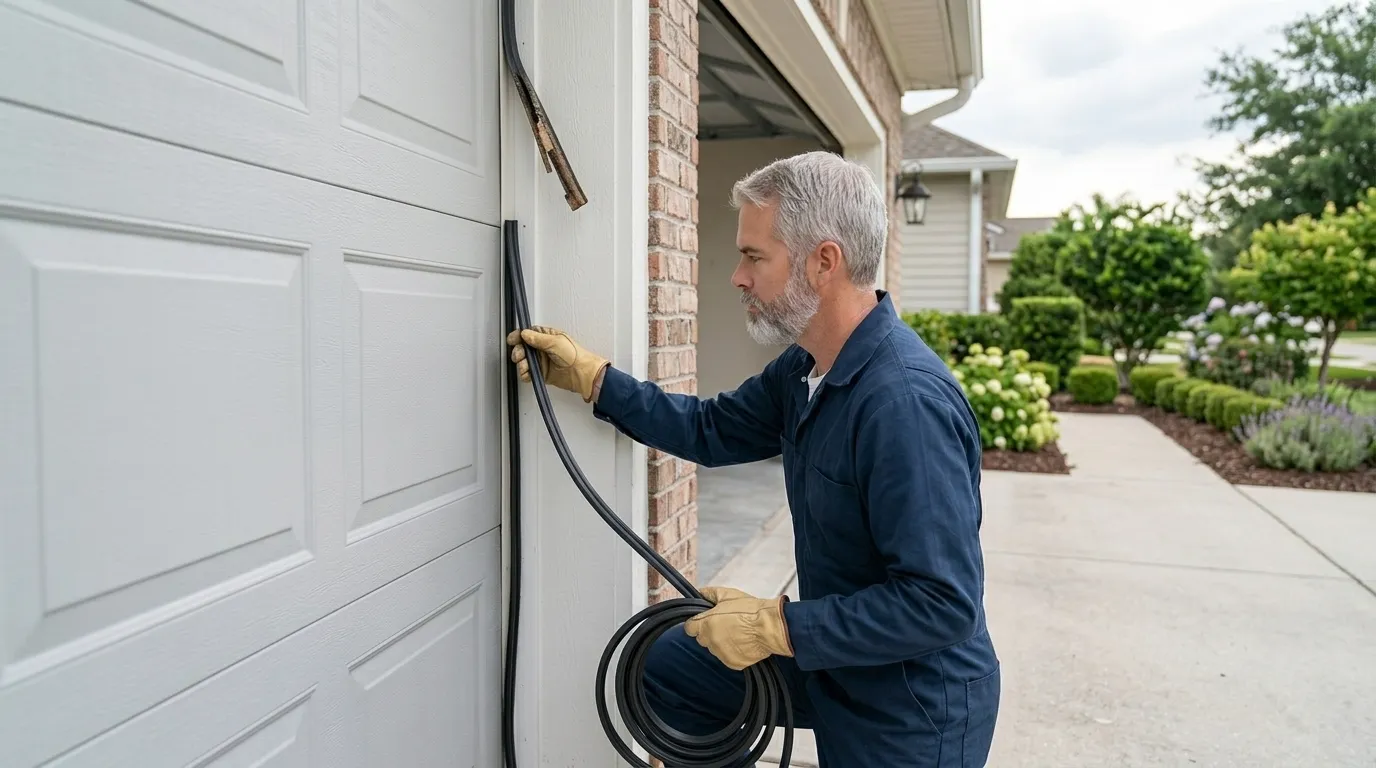
Look at the cable itself if the door is stuck open: frayed strands sticking out like a broom, a cable that's slipped off the drum and is bunched up, or a cable that's popped out of the bottom bracket entirely. A door that lifts unevenly, even if it still moves, means one cable has stretched or partly failed while the other is holding.
Don't run the opener again once you see any of this. A partially failed cable under load can snap the rest of the way and drop the door, and a door hanging on one cable can come off the track. Block the opener, don't force the door by hand, and call it in.
One thing we won't do is tell you a cable repair will hold when the drums or track are also worn out. If the cable failed because the drum's chewed through, patching just the cable is a callback waiting to happen, and we'll say so instead of billing you twice.
What It Costs
We don't post a flat number here because cable repairs vary with door size, whether one or both cables need replacing, and whether the drums or bottom brackets are also worn. A single-cable repair on a standard door is a different job from a double-cable, double-drum replacement on a two-car door, and pricing follows that.
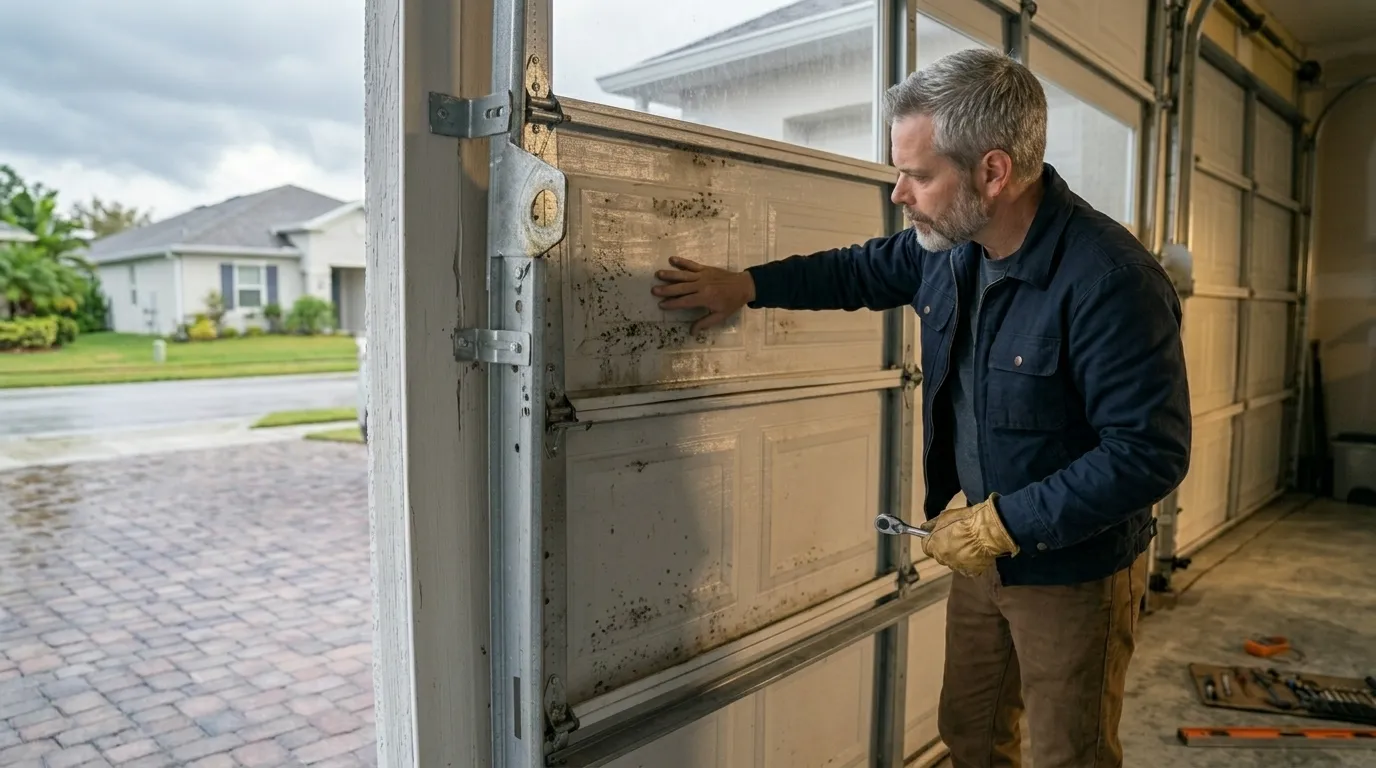
What we can tell you is what drives the cost: parts (cable, drum, bracket), labor to safely release and reset spring tension, and whether the job turns up a second problem once the door's opened up, like a cracked drum or a track that's bent from the door running unevenly before it stopped. We quote after we look at the door, not before, because guessing on a tension job is how you end up over- or under-charging someone.
If you want a number before we're on site, the honest answer is we can't give you one that means anything. What we can do is get someone out, look at both cables, both drums, and the track, and give you one price that covers everything the door actually needs - not just the part that snapped.
Why It Happens Here
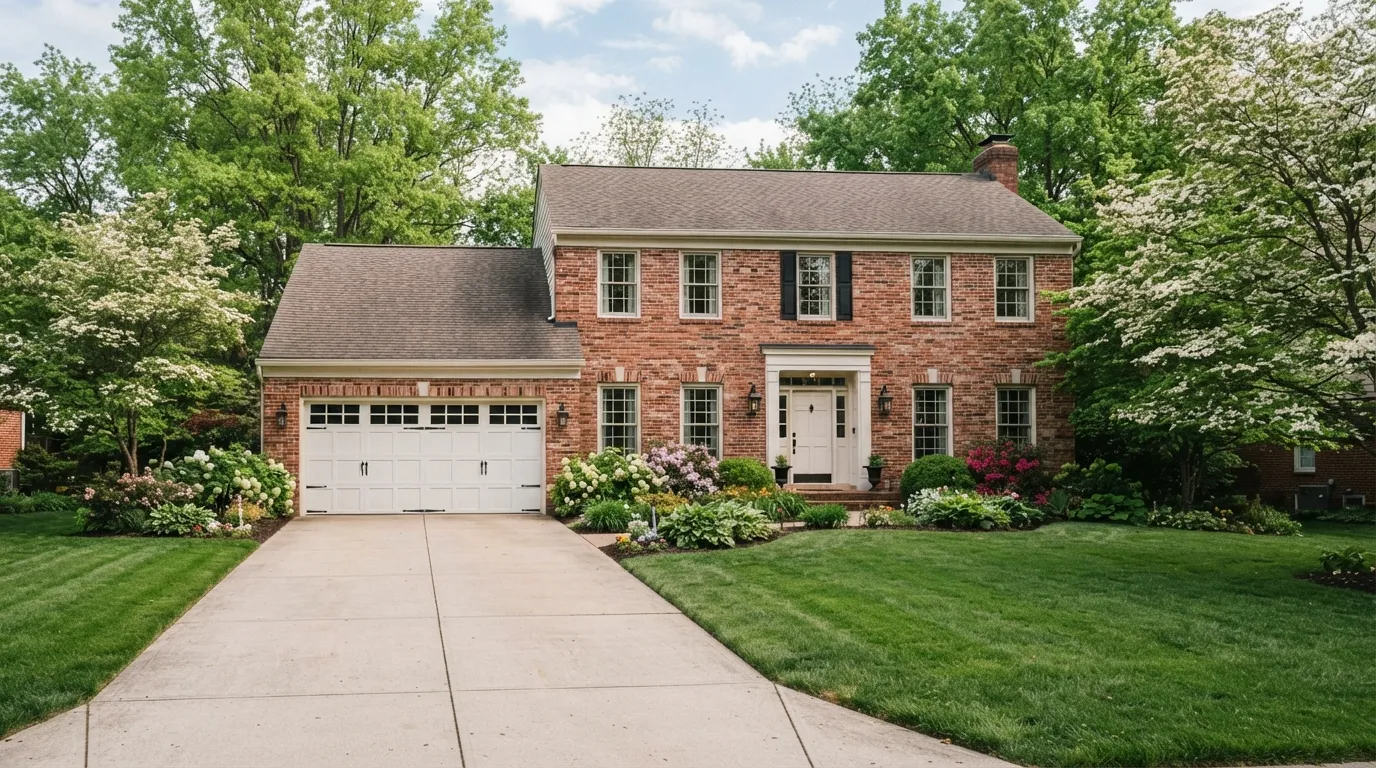
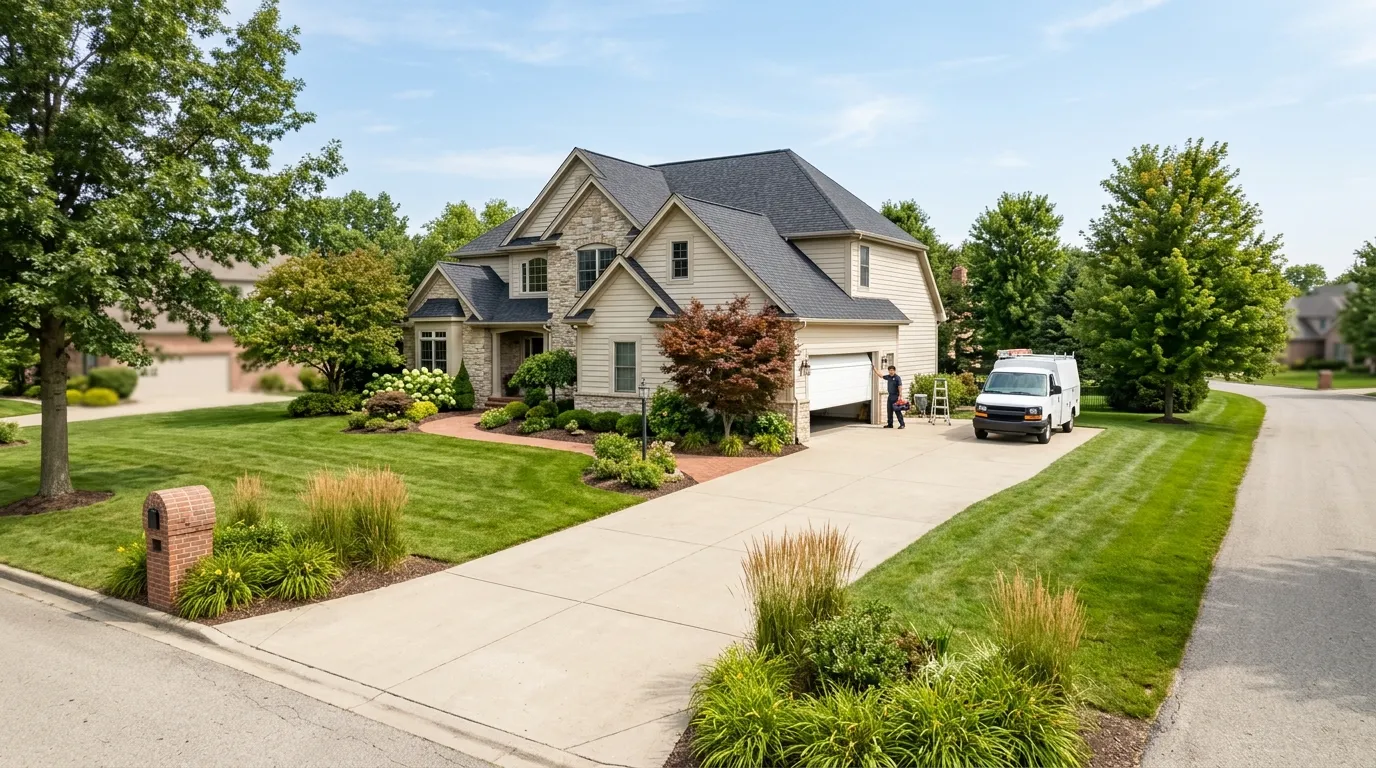
The service area we cover runs from three miles off, out to at nineteen miles, and across those fifteen communities most of the houses share a similar build era: the bulk of the stock went up in the 1980s and 90s, with the overall housing base spanning 1975 to 2015 and a median build year of 1998. That matters for cables specifically, because that era is when builders standardized on lighter-gauge 7x19 aircraft cable and steel drums instead of the older flat-wire setups. That cable is fine for decades, but it's not infinite - and a lot of doors in this area are now hitting the age where the original cable is due.
The other piece is climate. This area sits in a cold, severe climate band, and the freeze-thaw cycle does two things to a cable system: it stiffens the drum lubricant so the cable rides rough instead of winding smooth, and it makes the steel itself more brittle right at the point where it flexes over the drum and through the bottom bracket. A cable that's fraying slowly all year can let go all at once on the first hard cold snap, which is why we see a jump in cable calls right when temperatures drop.
Put those two together - original-era cable plus a climate that stresses it - and cable failure on 1980s-90s builds isn't random. It's the predictable end of a part doing exactly what it was built to do for exactly as long as it was built to last.
How it works
From “it’s stuck” to “it’s fixed”
01
Tell us what’s wrong
Describe the symptom - won’t open, loud bang, opener runs but the door won’t move.
02
On-site diagnosis
A technician tests the door under power and by hand and finds what actually failed.
03
Clear, up-front plan
You get the fix that’s needed and what drives the cost - before any work starts.
04
Repaired & tested
The repair is done, the door is set true and tested, and the work area left clean.
Serving Spanish Fork, UT - tell us what your door’s doing and we’ll take it from there.
01Can I drive on a garage door with a broken cable, or open it by hand?
No. If one cable has failed, the door is hanging unevenly on the other side and can drop or come off the track if you force it by hand or run the opener. Leave it where it stopped, don't disconnect the opener yourself, and call it in - a partially loaded door under spring tension is not safe to work on without releasing that tension first.
02Is it normal for both cables to fail around the same time?
On a lot of the 1980s-90s builds we work on here, yes - both cables were installed the same day, see the same tension cycles, and sit in the same cold climate, so they wear at close to the same rate. If one has visibly frayed, we check the other closely rather than assuming it's fine.
03Do you replace just the cable, or the drum too?
Depends on what we find. If the drum groove is still clean, the cable alone gets replaced. If the groove is worn or chewed - common once a cable's been slipping for a while - the drum has to go too, or the new cable frays again fast. We check both before quoting.
04Why did my cable snap in the cold instead of during summer?
Steel cable gets more brittle as temperatures drop, and drum lubricant thickens up in the cold, so the cable rides rougher through its last stretch of wear. A cable that's been slowly fraying all year often lets go on the first hard freeze rather than gradually.
Ready to get your garage door sorted?
Tell us what it’s doing and where you are in Spanish Fork - we’ll take it from there.