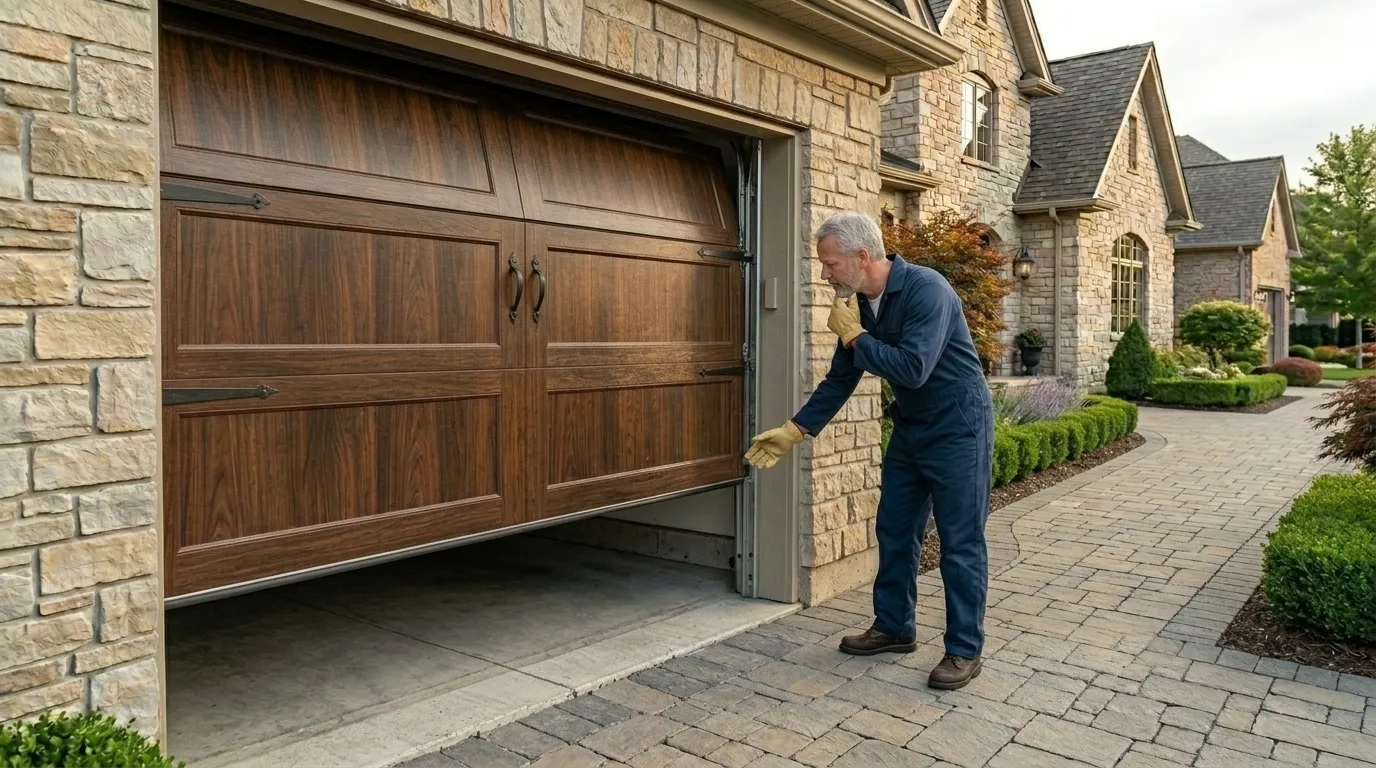
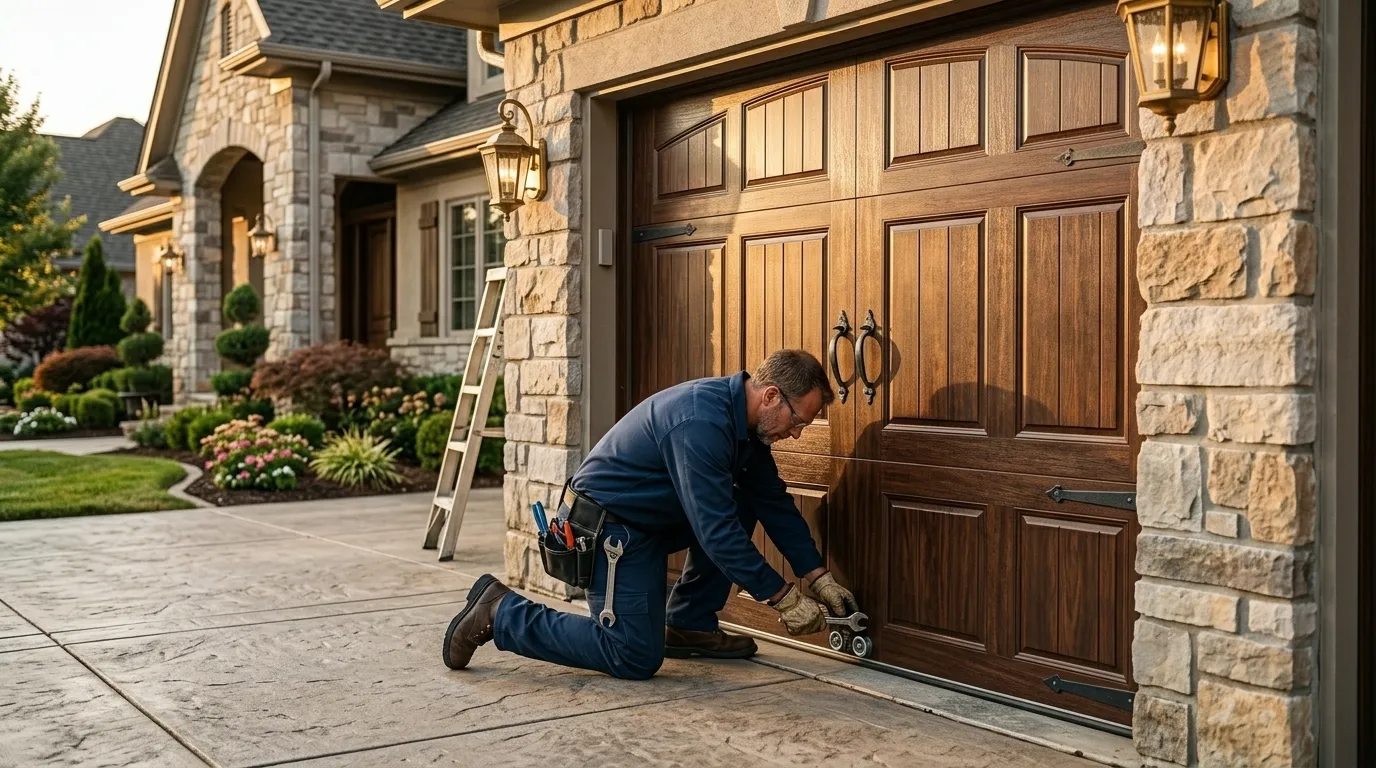
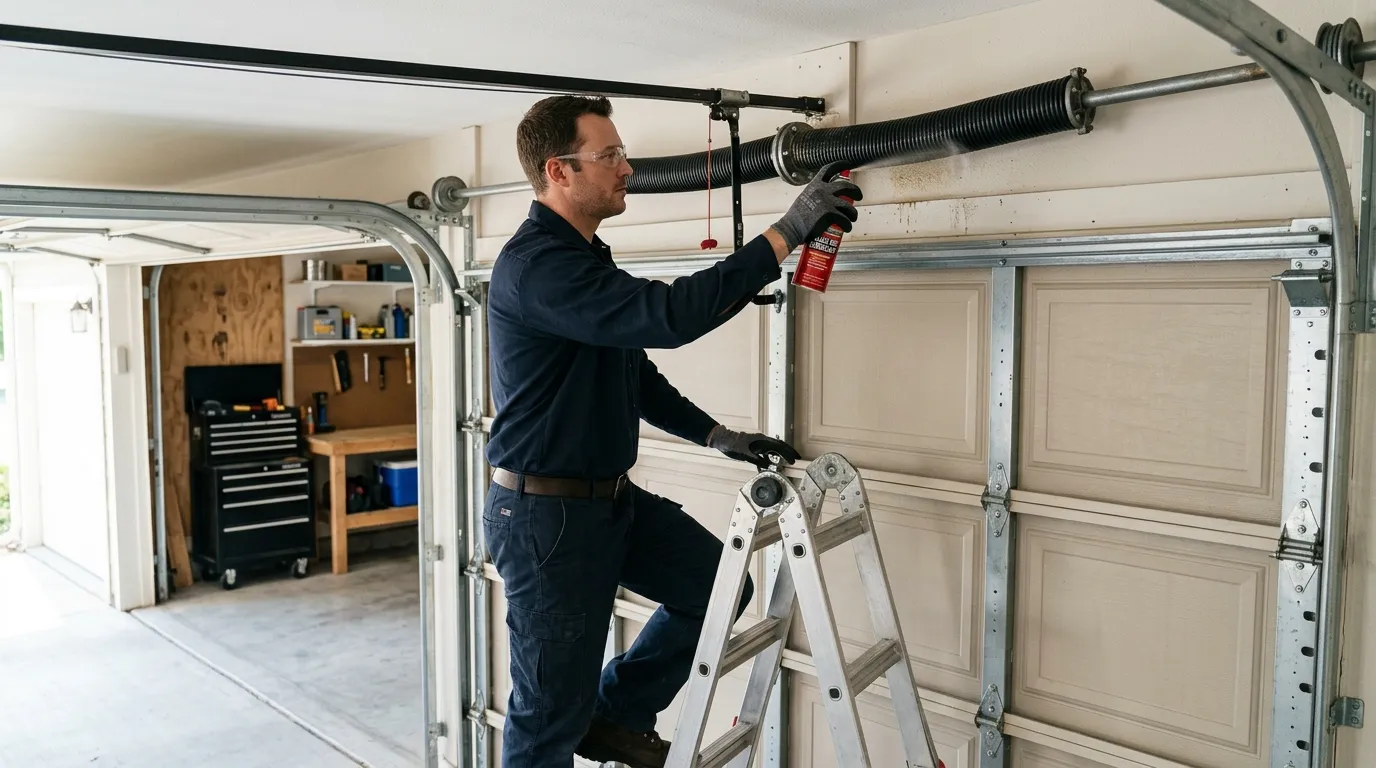
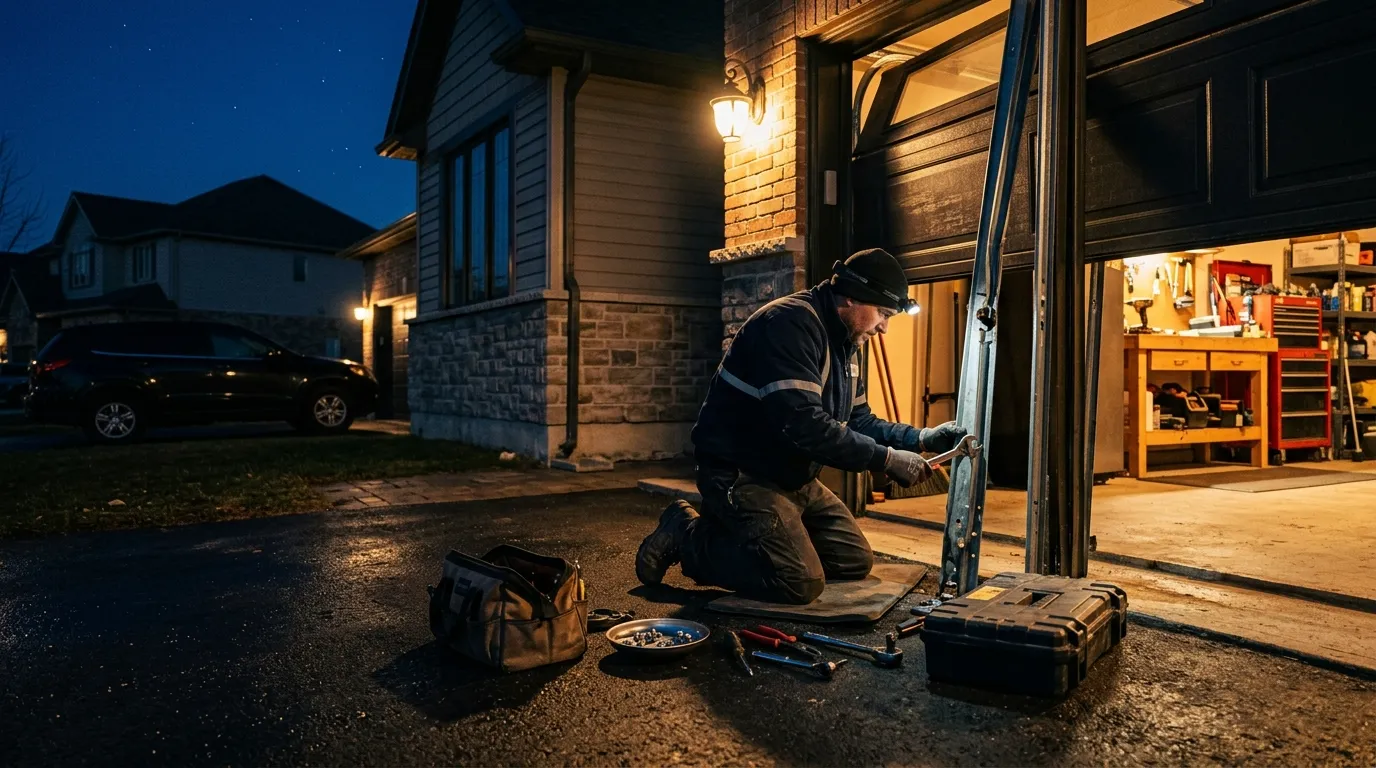
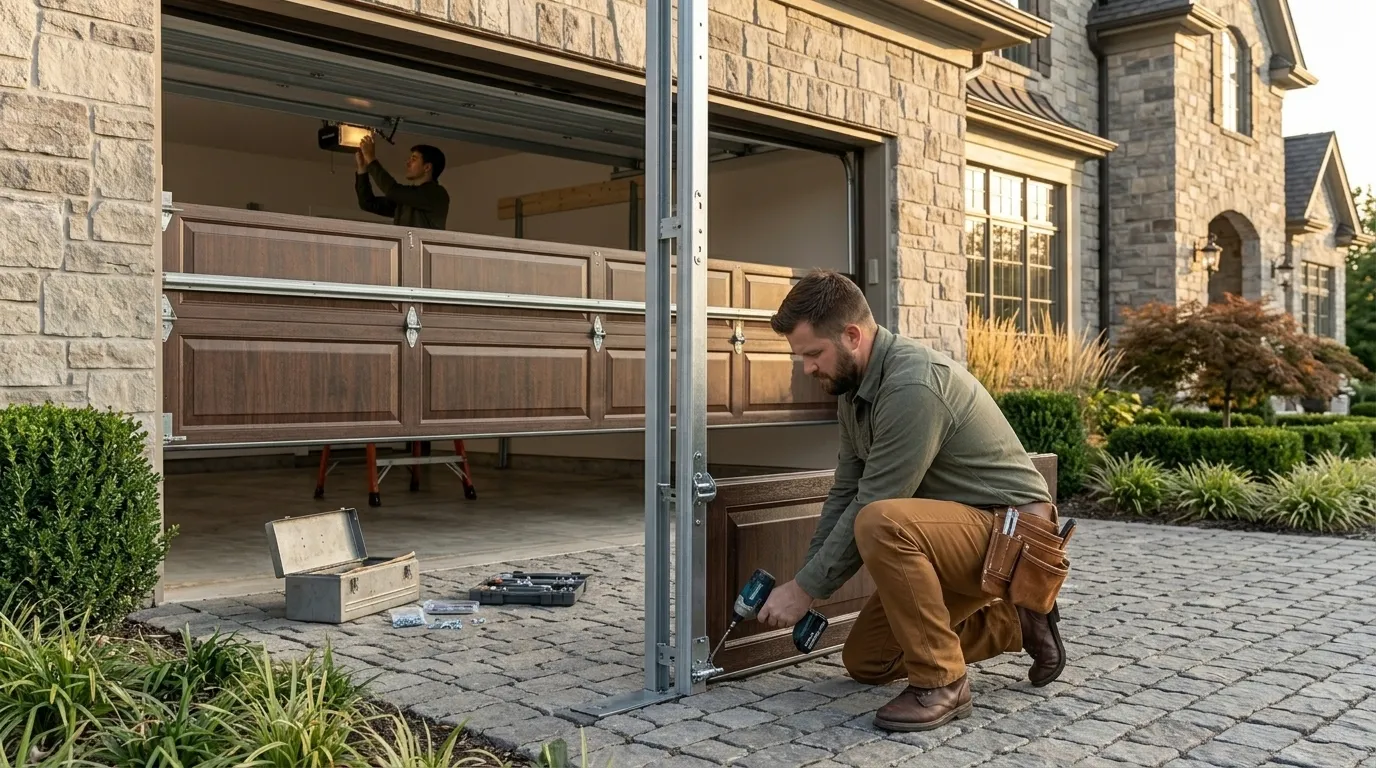
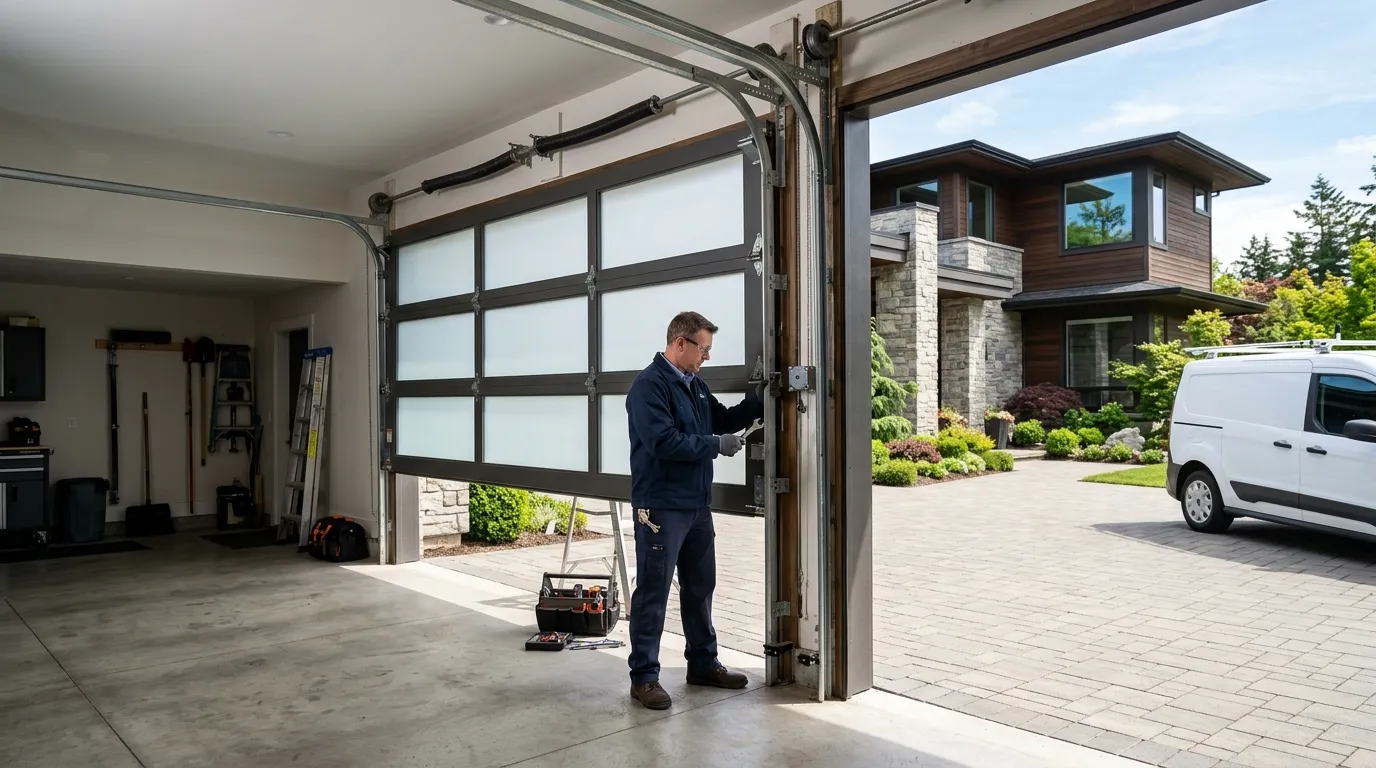
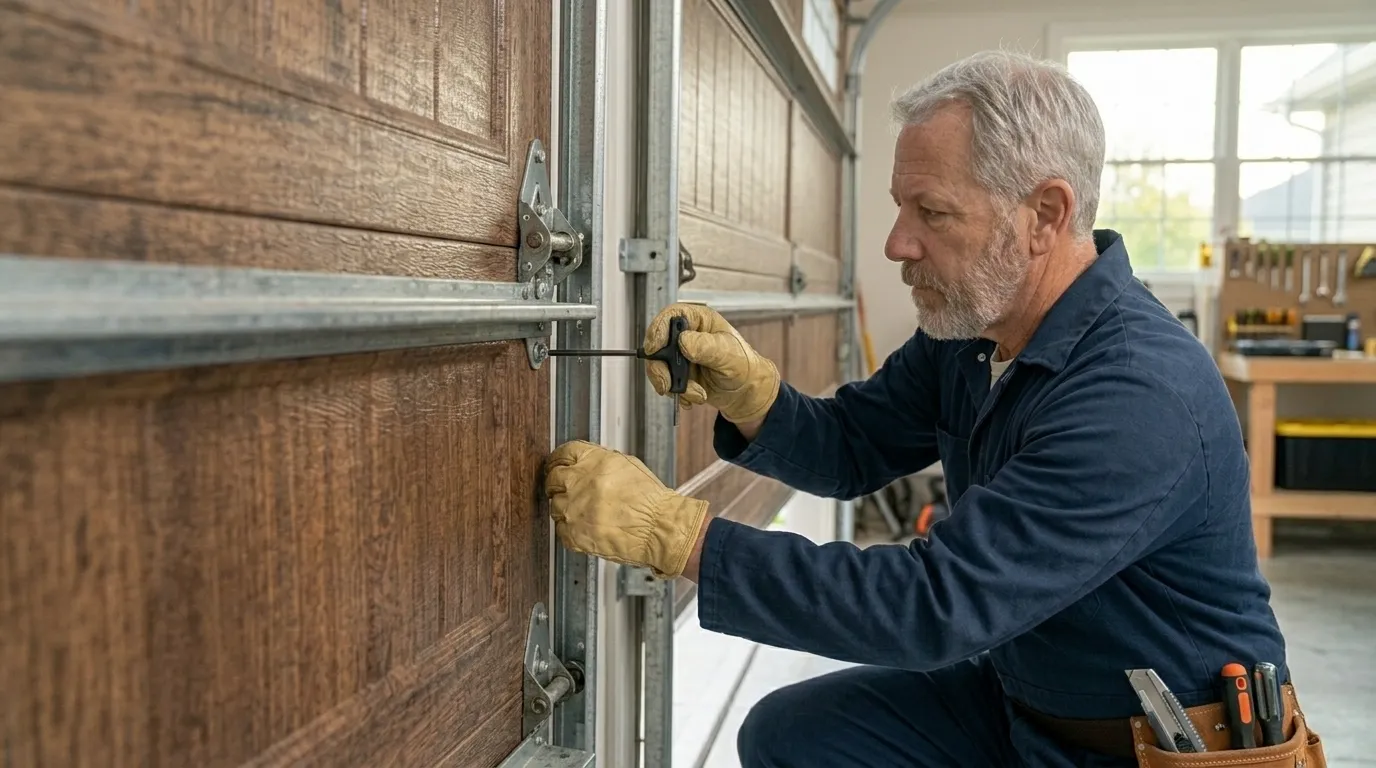
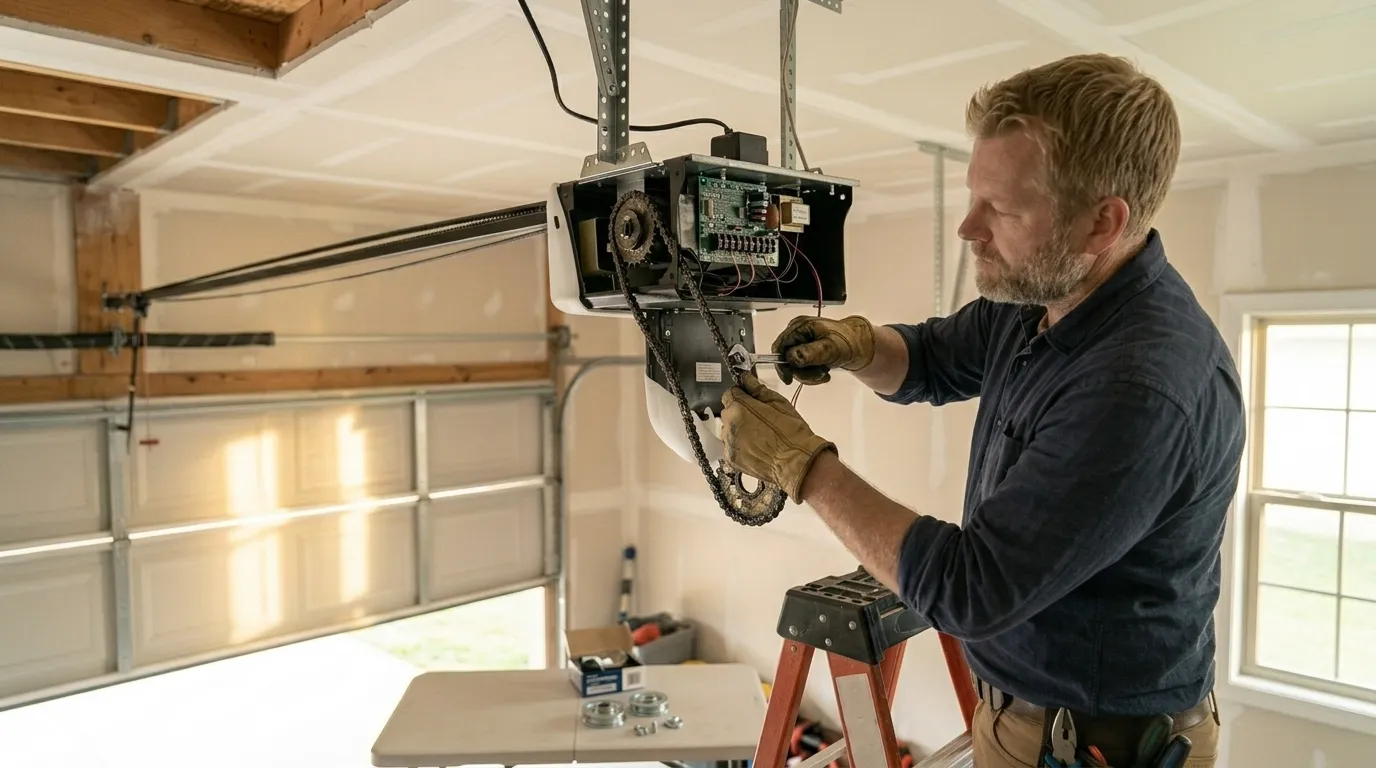
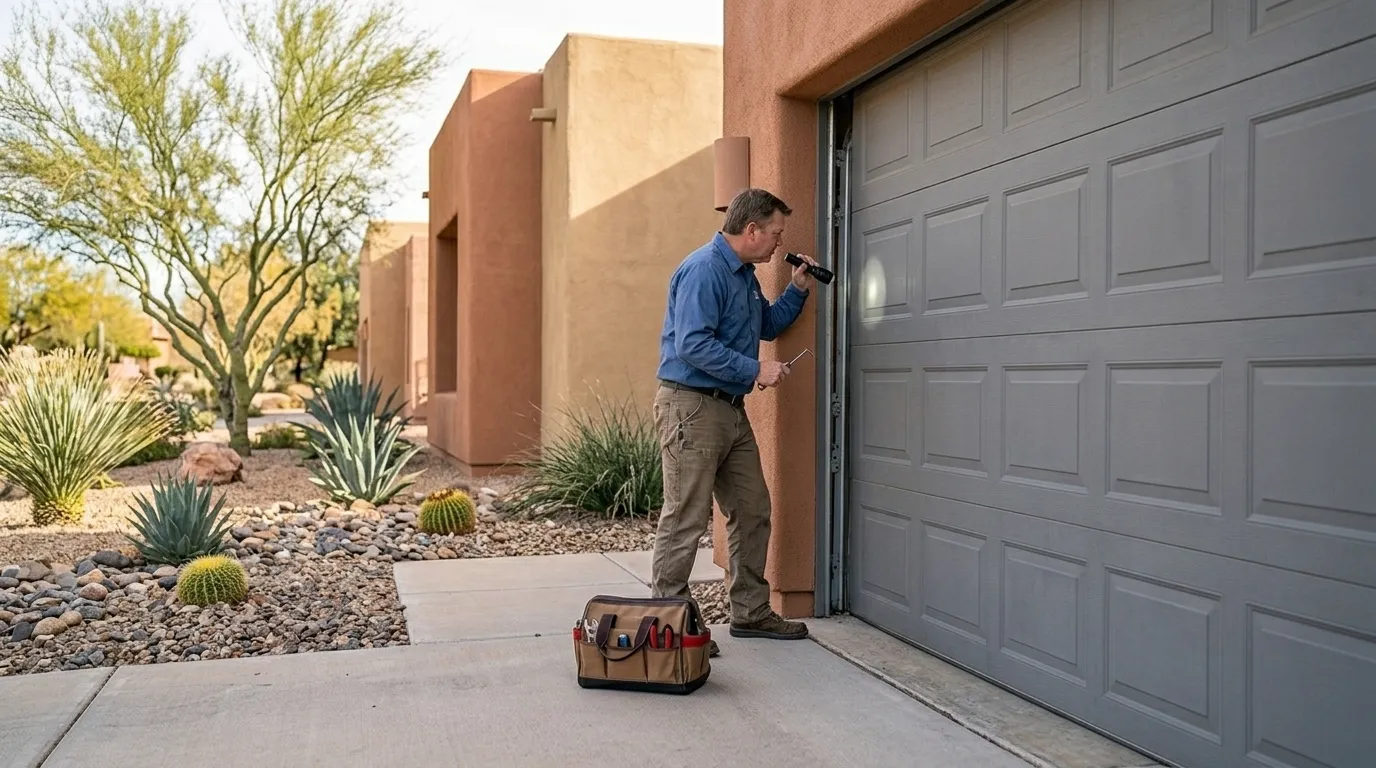
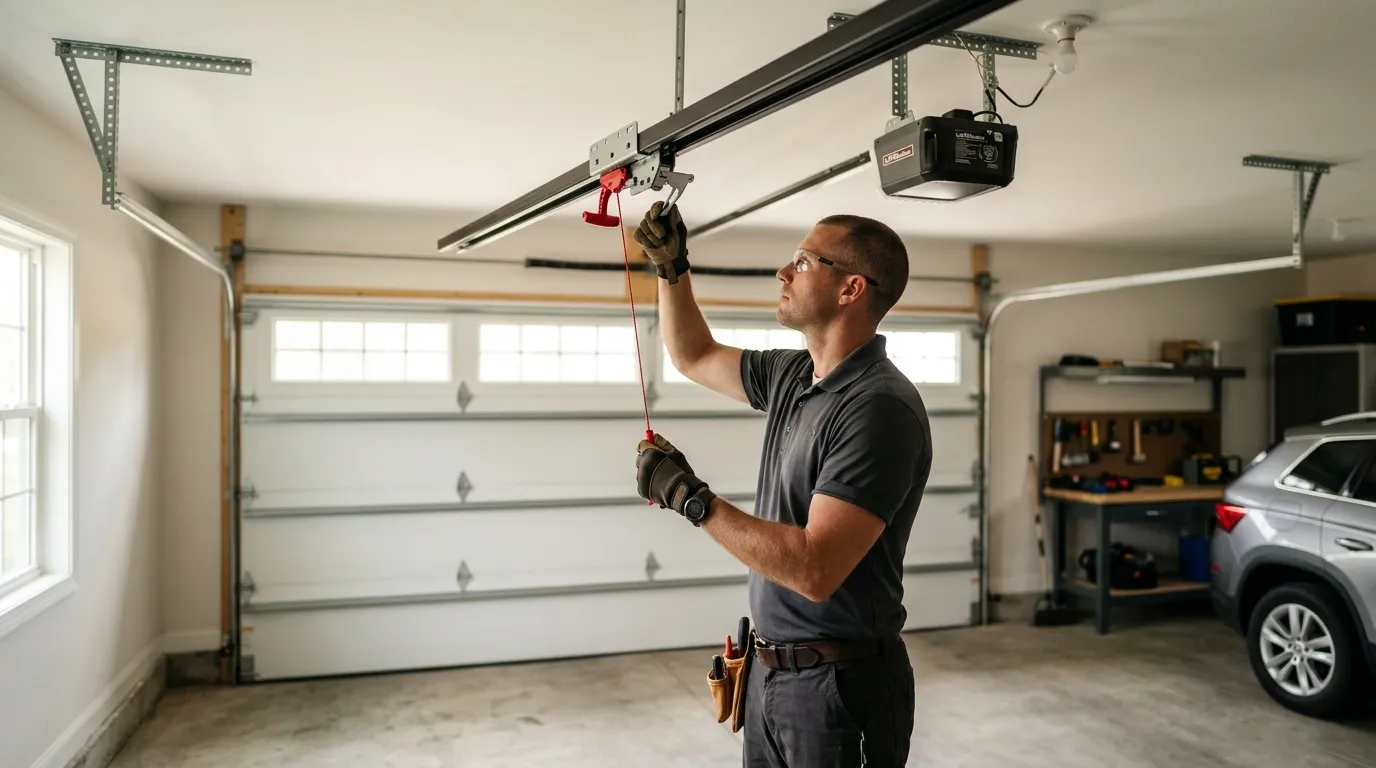
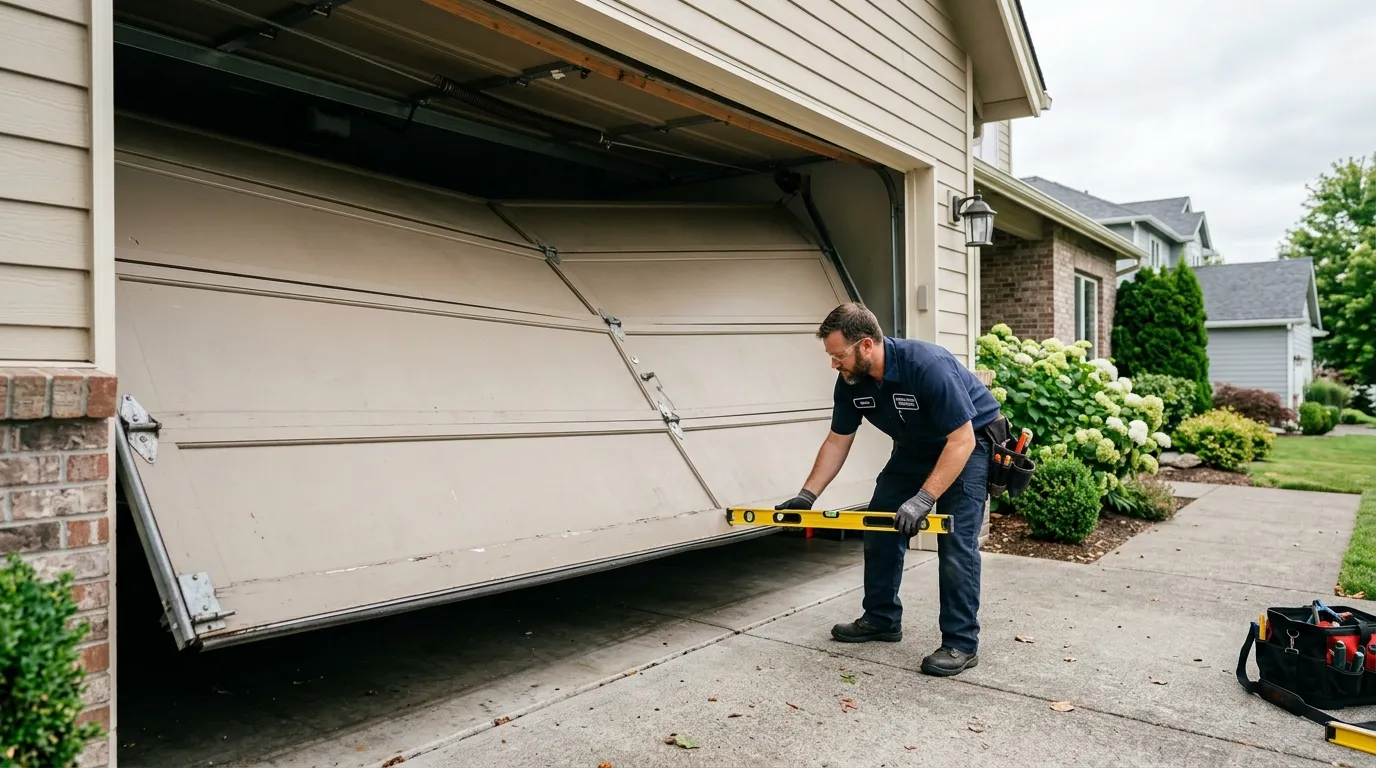
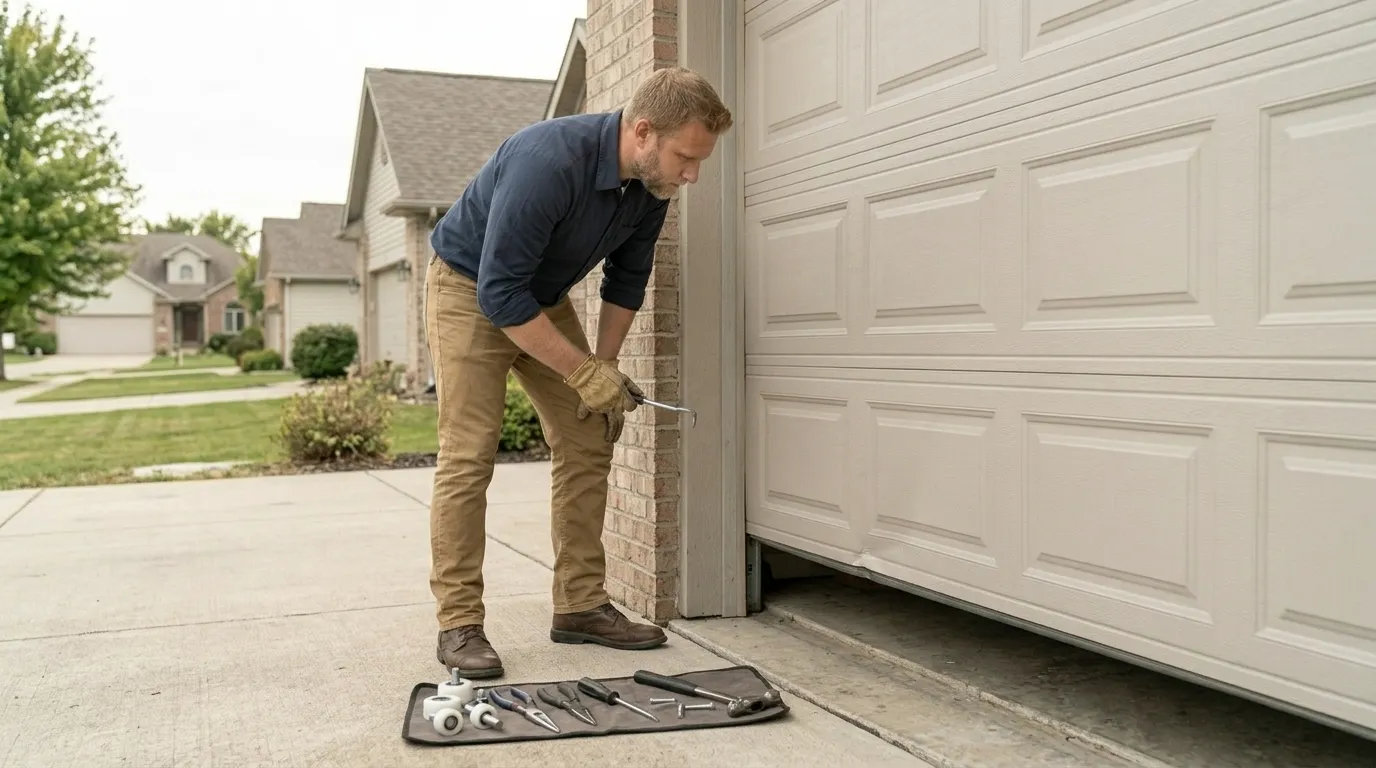
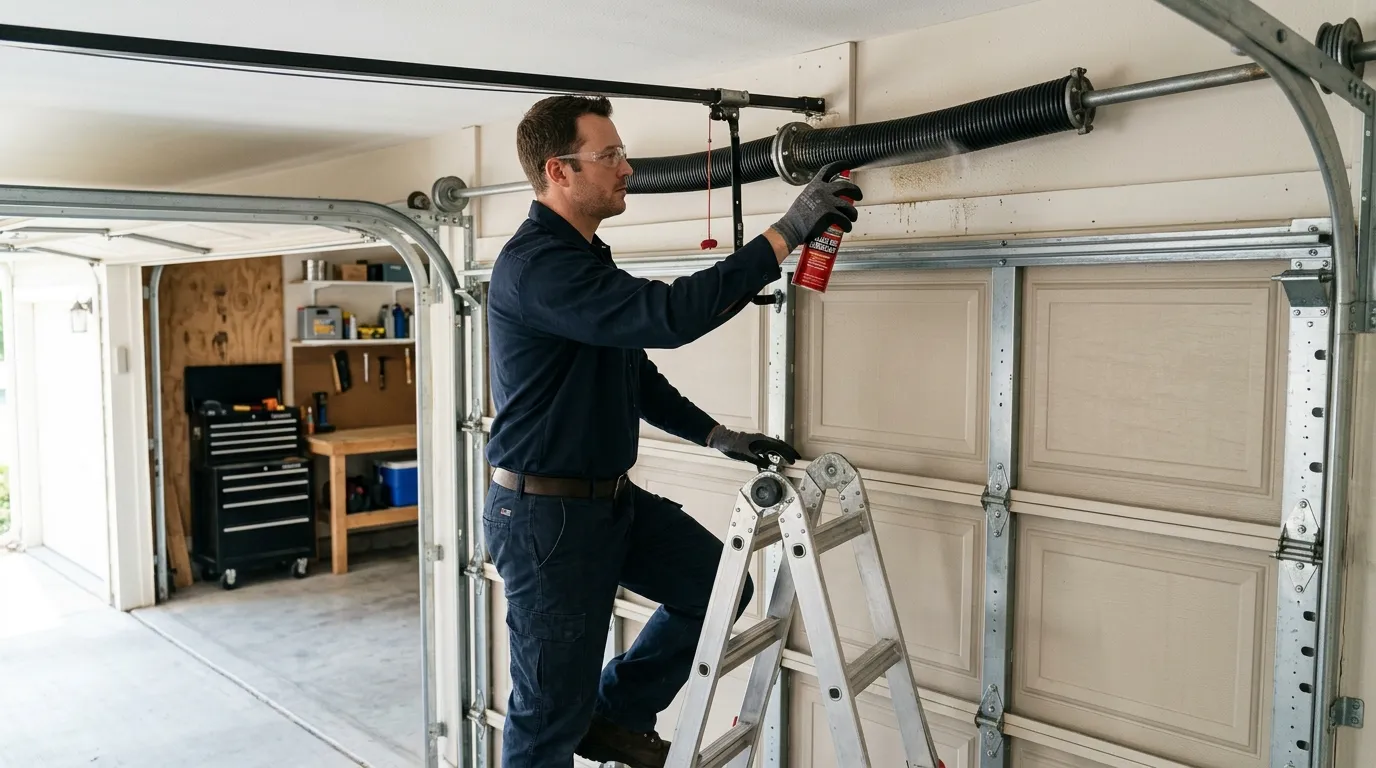
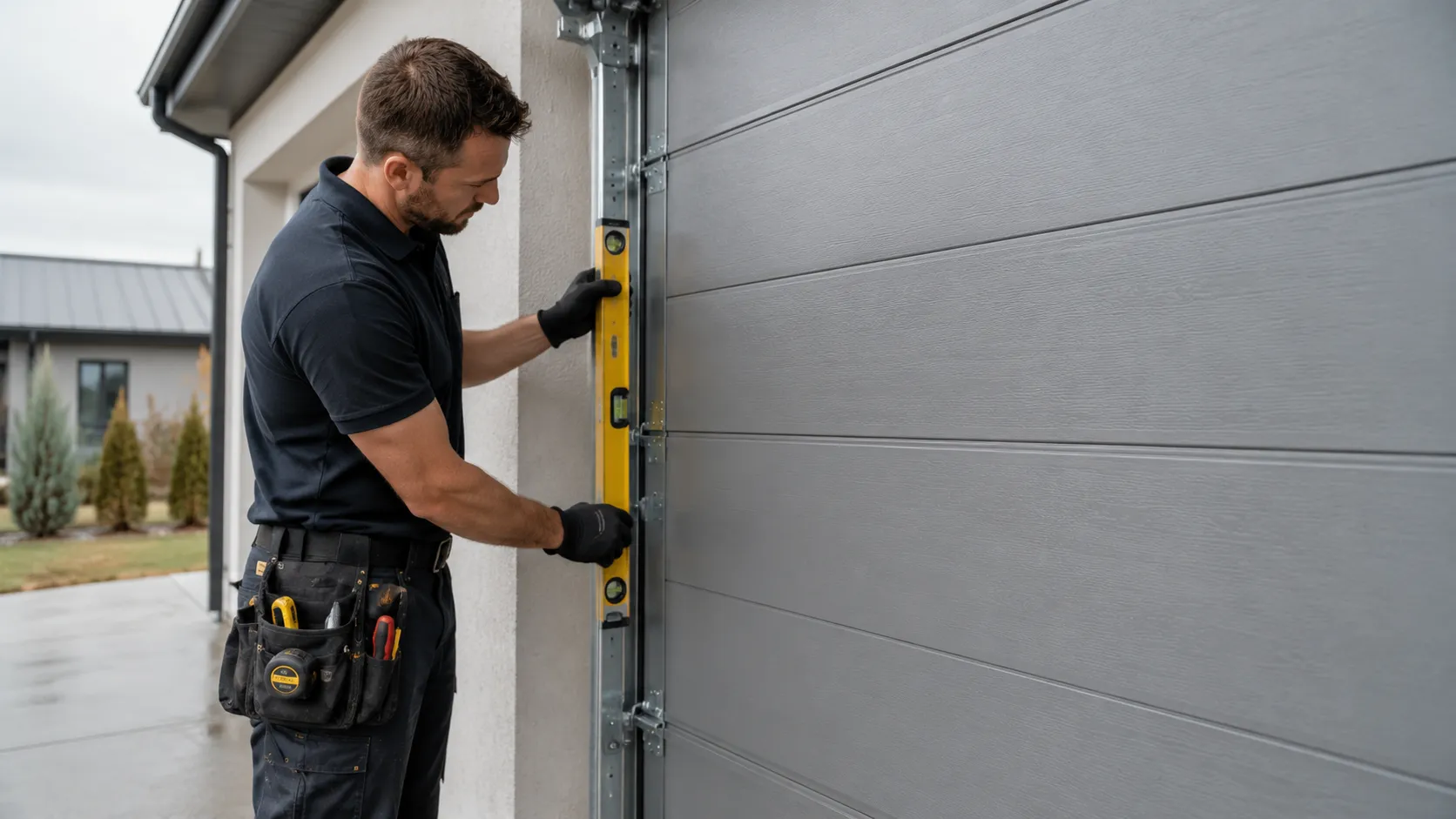
A maintenance visit isn't a repair, but it's built to catch the things that turn into one. We check spring tension, inspect cables and rollers for fraying and flat spots, lubricate the track and hinges, test balance, and torque down the hardware that vibration works loose over a few hundred cycles. On a door with an opener, we check travel limits, force settings, and the safety reversal.
Most of the houses we service across the 15 areas around Spanish Fork went up between 1975 and 2015, with the bulk clustered in the 1980s and 90s. That means a lot of doors are still on their original torsion springs and factory rollers, aging out right around the same window as their neighbors' doors did. A maintenance visit on a door that age usually runs 20 to 30 minutes if nothing's wrong, longer if a roller needs swapping or a cable is starting to fray.
We don't upsell a full spring replacement on a maintenance call unless the spring is actually showing wear - gaps in the coil, rust pitting, or a door that's noticeably heavier to lift by hand. If it's fine, we say so and move on.
What You Are Seeing
The usual signs we get called out for: a door that groans or bangs going up, one side that looks like it's dropping faster than the other, a remote that used to work first try and now takes three tries, or a door that reverses partway up for no clear reason. None of these mean the door is done - most of the time they mean a spring has lost tension, a roller has worn flat, or the track has drifted out of alignment.
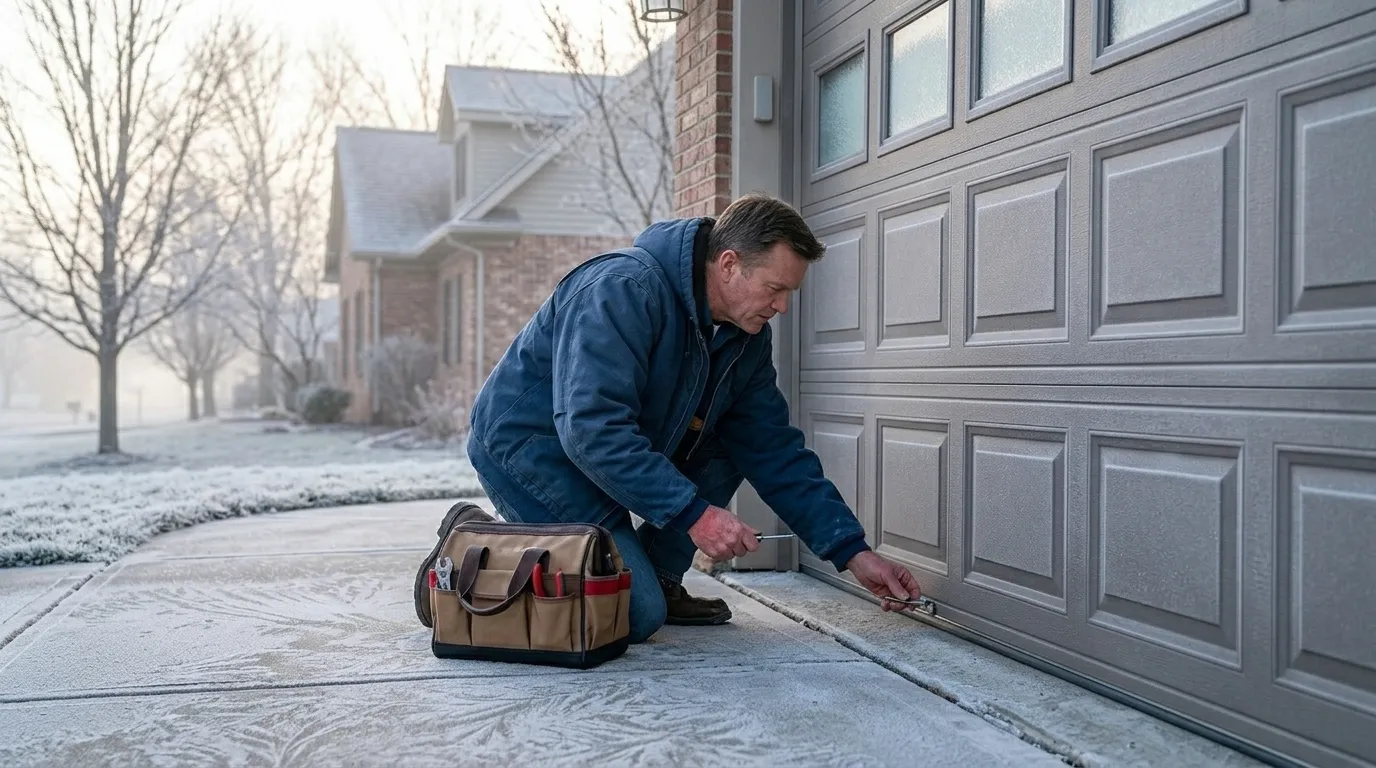
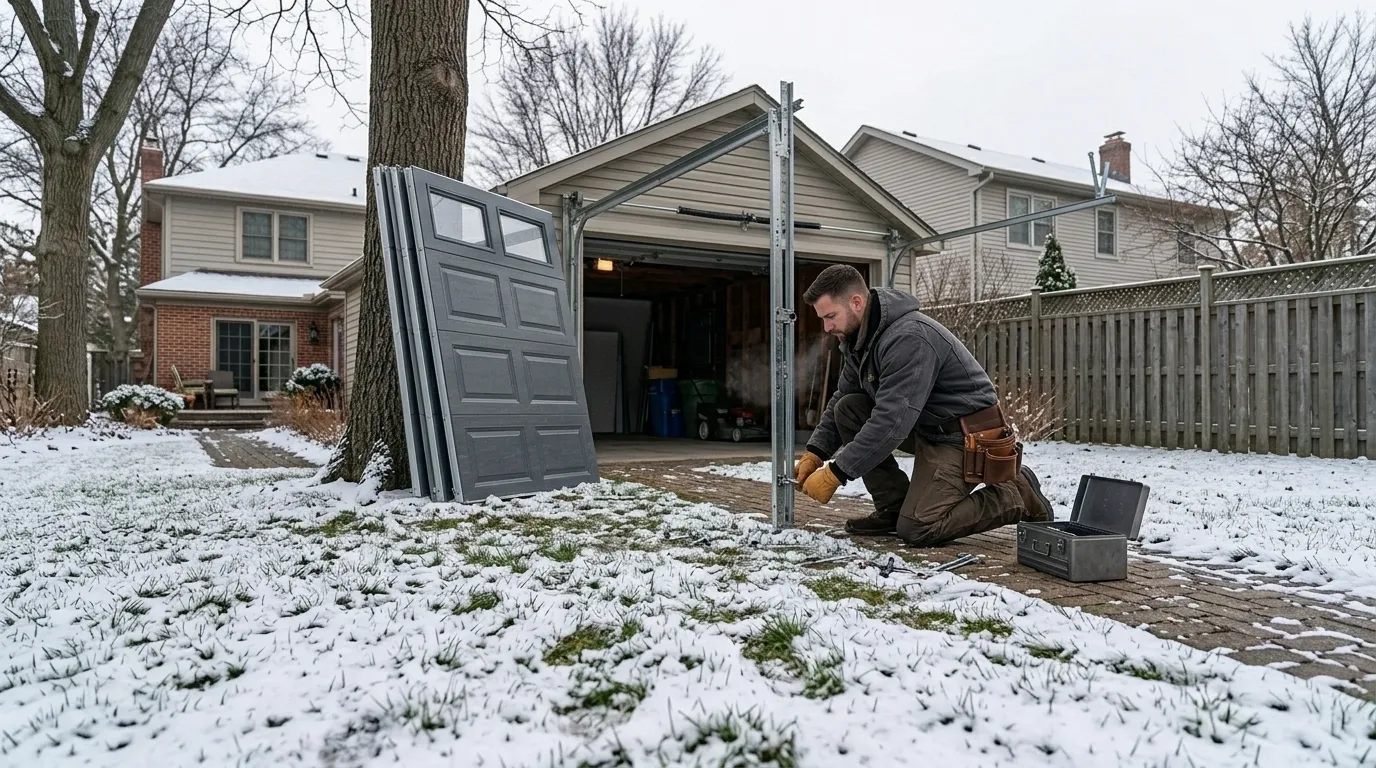
Cold-weather stiffness is its own category here. Spanish Fork sits in a cold, severe climate band, and lubricant that's fine in July gets thick and sluggish once temperatures drop, which makes springs work harder and openers strain more on every cycle through winter. A door that's been sitting unused and un-lubed through a cold stretch is exactly the kind of call we see spike this time of year.
If your door is making a new noise, that's worth a look before it becomes a stuck-door call. We'd rather catch a worn roller on a maintenance visit than get called out for a snapped cable at 6pm.
What It Costs
We don't have a published flat rate to quote here, and we'd rather tell you that than guess. What a visit costs depends on the door size, whether it's single or double, how many rollers or hinges need swapping versus just lubing, and whether the opener needs adjustment on top of the door hardware. A straightforward tune-up on a well-kept door costs less than one where we're replacing worn rollers or re-tensioning a spring that's drifted out of balance.
One honest note: if your door is original to a house built in the late 1970s or early 80s, the spring and hardware may be near the end of what maintenance can extend, and we'll tell you that instead of running a tune-up that just delays the real fix by a few months.
Across the service area, median household income runs around $104,583, and most of the homes we work on are owner-occupied rather than rentals - both of which shape how people plan maintenance here, usually as a once-a-year visit rather than a reactive call.
Why It Happens Here
Two things push maintenance needs in this area harder than in a milder climate. First, the housing stock: with most homes built between 1975 and 2015 and a heavy concentration in the 1980s and 90s, a lot of doors across the 15 communities we serve are hitting the 20-to-30-year mark on original hardware around the same time. Springs, rollers, and cables don't fail on a fixed schedule, but they do fail more predictably once a door crosses that age, and cold makes the failure arrive faster.
Second, the cold-severe climate band itself. Steel contracts in the cold, lubricant thickens, and openers pull harder against springs that are already working overtime to lift a heavier door. A door that's marginal in September can become a stuck door in January without ever changing physically - just because everything around it got stiffer.
With 27,557 owner-occupied houses across the roughly 49,905 households in this service area, we see the same handful of failure patterns repeat house after house. Maintenance doesn't stop a spring from eventually wearing out. It just means the wear shows up as a scheduled visit instead of a door stuck halfway up on a cold morning.
How it works
From “it’s stuck” to “it’s fixed”
01
Tell us what’s wrong
Describe the symptom - won’t open, loud bang, opener runs but the door won’t move.
02
On-site diagnosis
A technician tests the door under power and by hand and finds what actually failed.
03
Clear, up-front plan
You get the fix that’s needed and what drives the cost - before any work starts.
04
Repaired & tested
The repair is done, the door is set true and tested, and the work area left clean.
Serving Spanish Fork, UT - tell us what your door’s doing and we’ll take it from there.
01How often should I get my garage door maintained in Spanish Fork?
Once a year is the general rule, timed before the coldest stretch of winter if you can manage it. Cold thickens lubricant and stiffens hardware, so a door that's been serviced going into winter handles the season a lot better than one that hasn't been touched since spring.
02Will maintenance fix a door that's already making noise?
Sometimes. If the noise is a dry hinge or a roller that needs lubrication, yes, a tune-up clears it. If it's a spring losing tension or a cable fraying, maintenance catches it before it snaps, but the worn part still needs replacing, not just lubricating.
03Is my door too old for a maintenance visit to help?
Most doors from the 1980s and 90s still respond well to maintenance if the spring and cables haven't already failed. Once a spring shows rust pitting or the door feels noticeably heavier to lift, a tune-up is more of a stopgap than a fix, and we'll tell you that instead of charging for a visit that won't hold.
04Do you service areas outside Spanish Fork itself?
Yes, we run trucks through the surrounding communities regularly as part of the same service area, including towns a few miles out in every direction from Spanish Fork.
Ready to get your garage door sorted?
Tell us what it’s doing and where you are in Spanish Fork - we’ll take it from there.