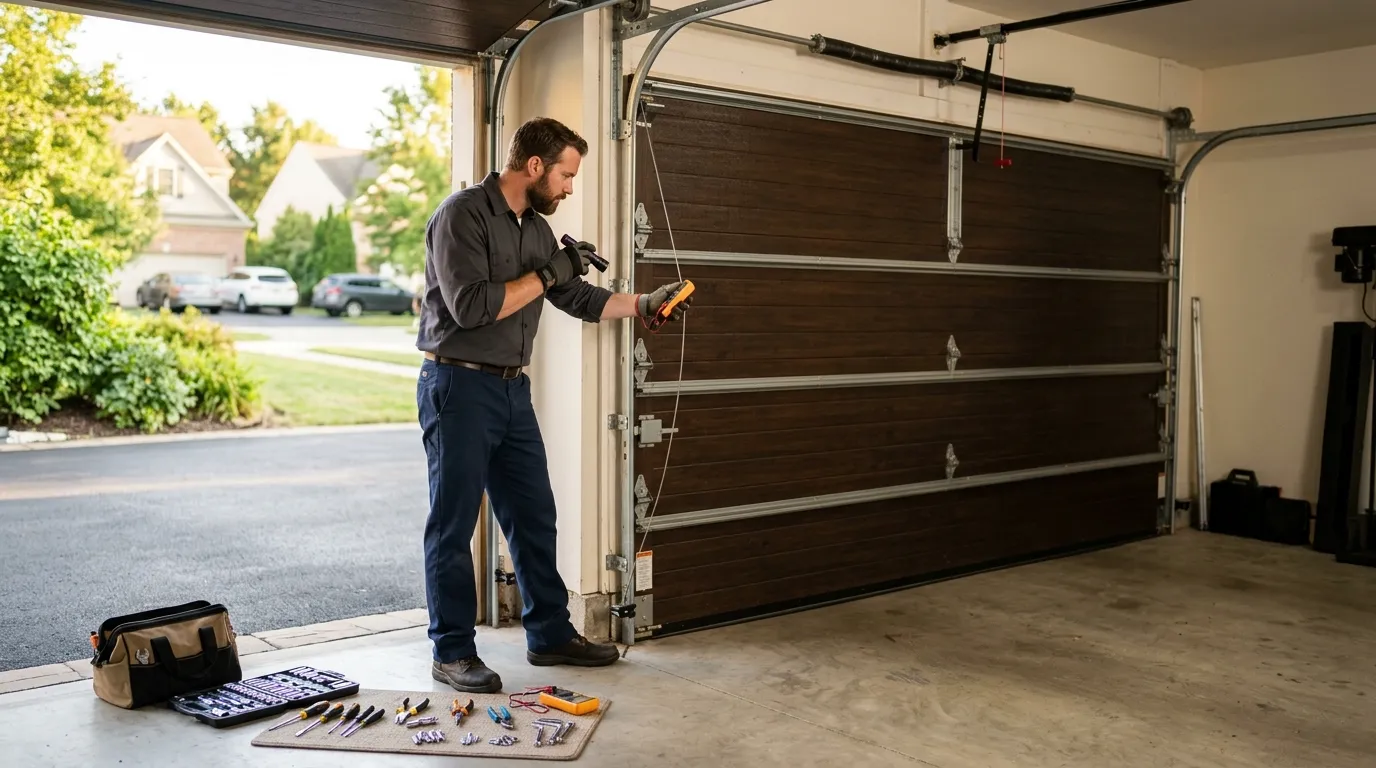
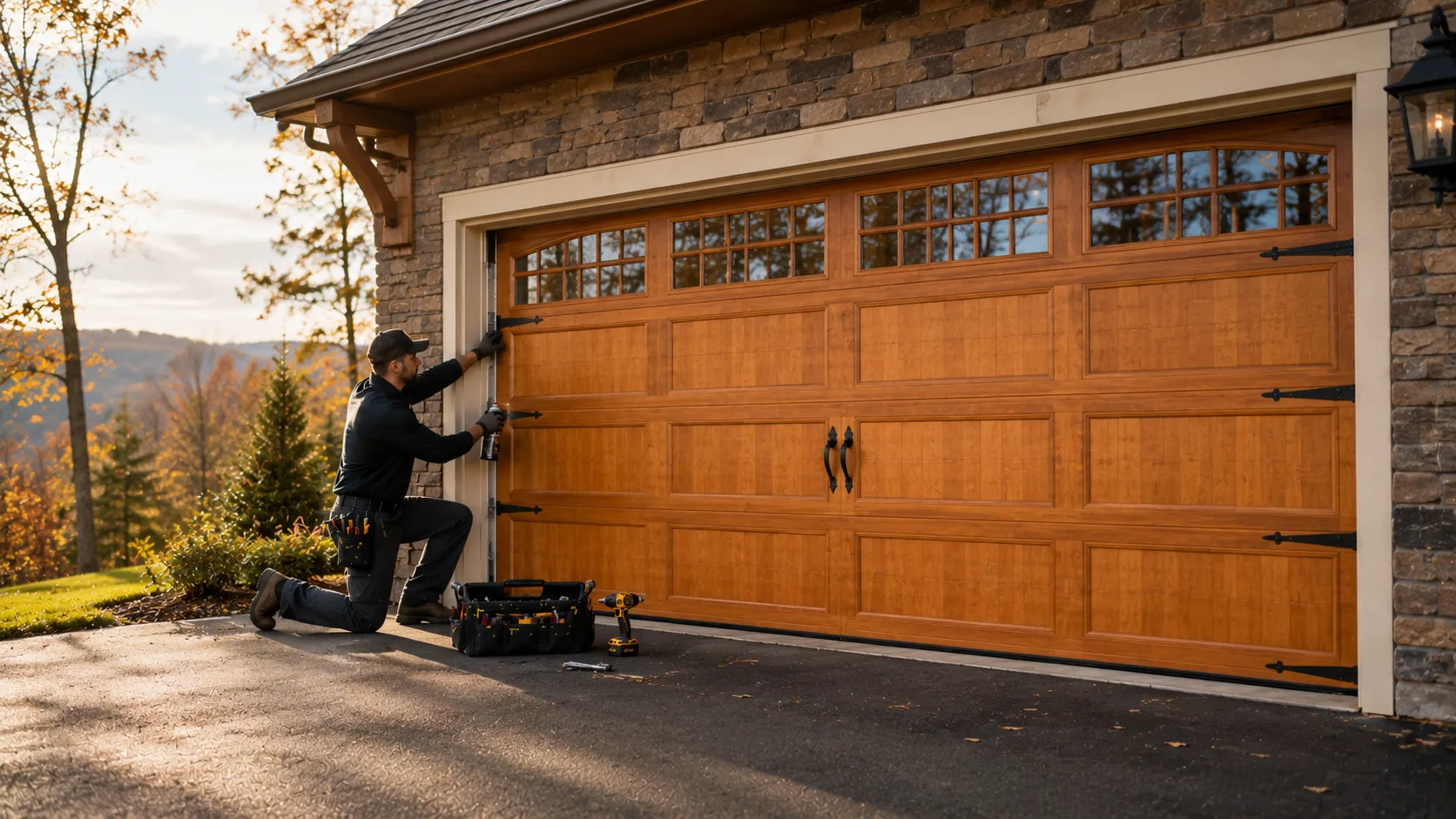
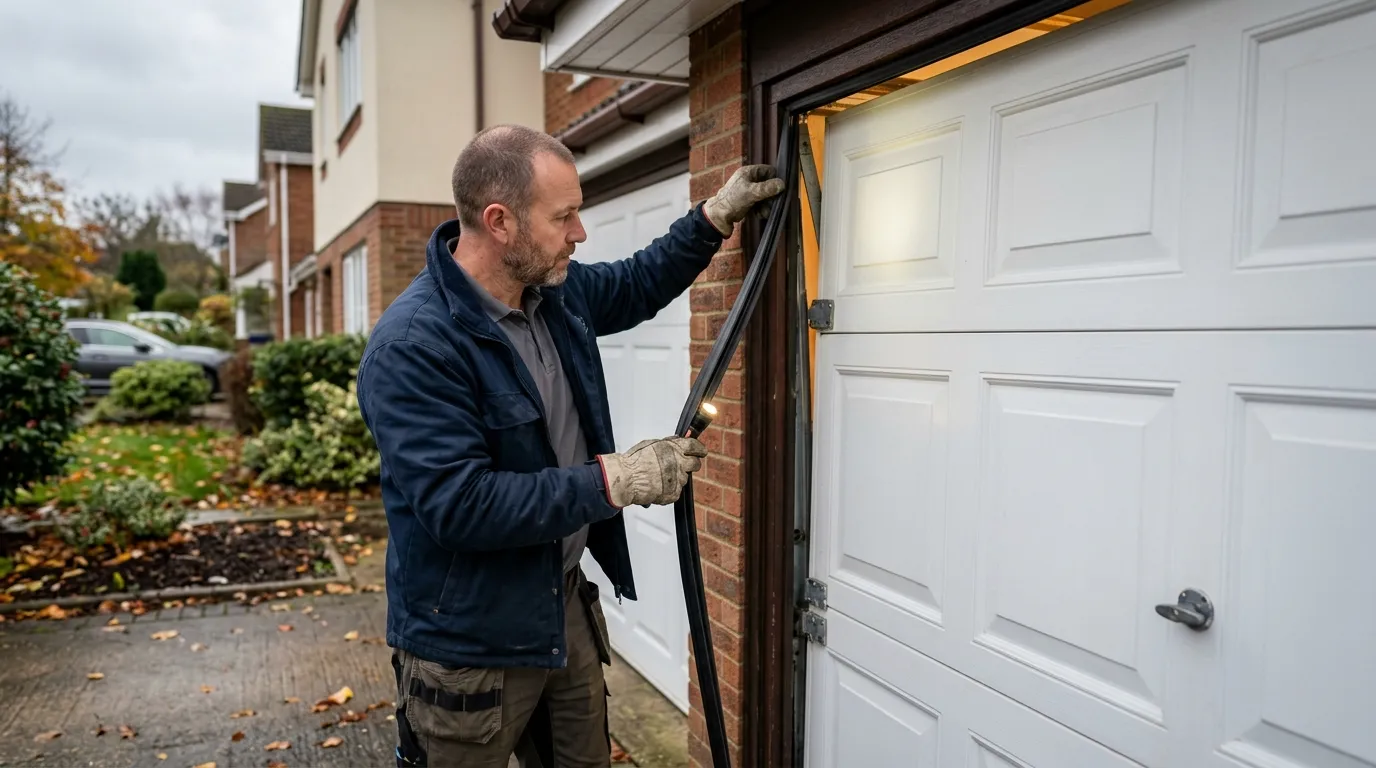
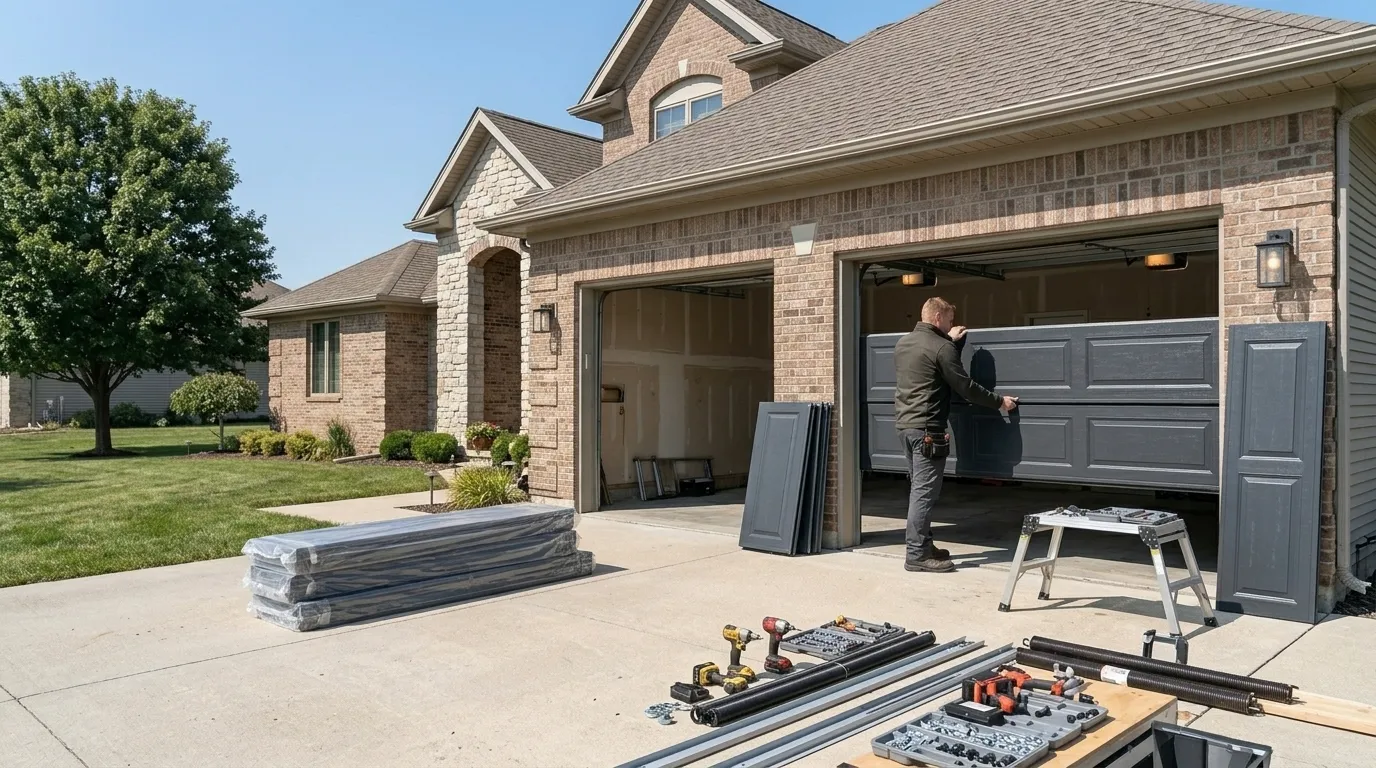
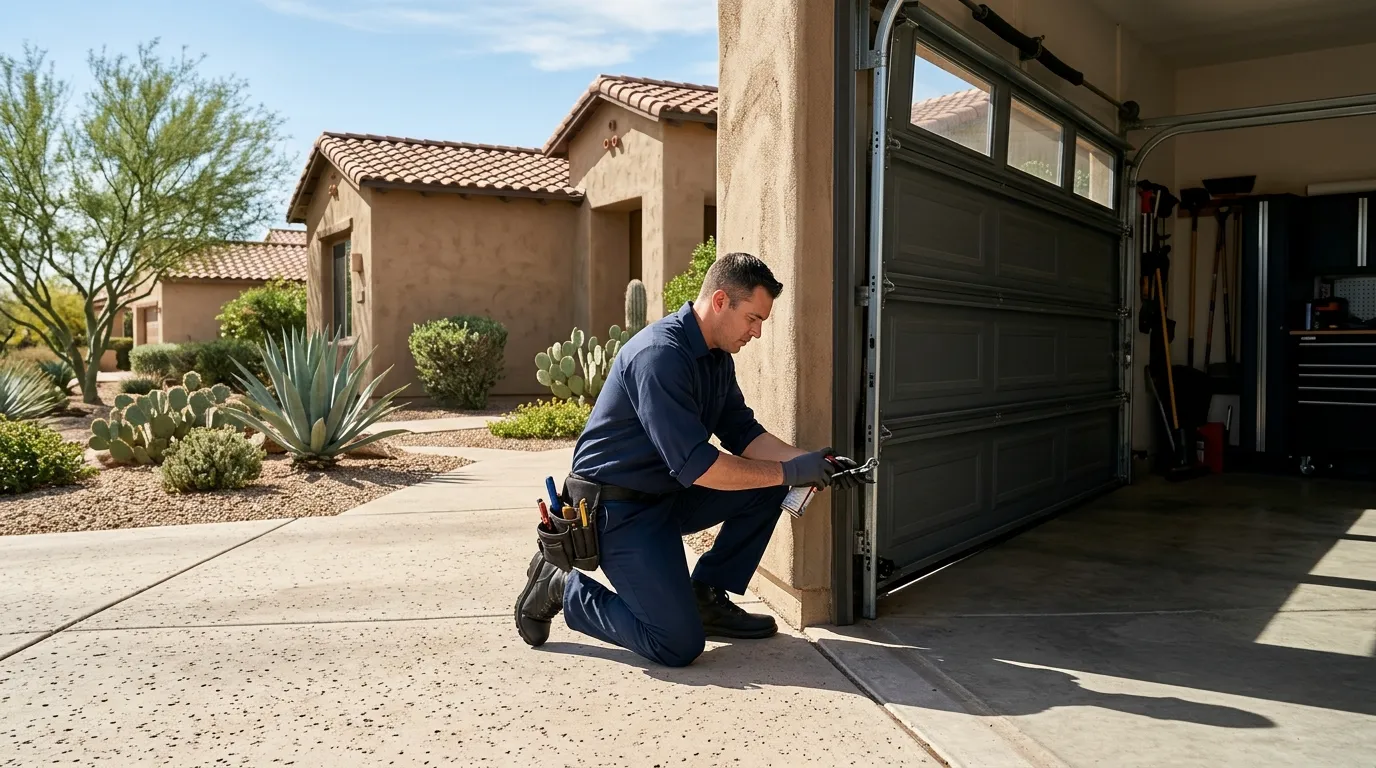
Panel replacement on a sectional garage door is a matching job before it's a repair job. Most houses in this part of the service area went up between 1975 and 2015, with the bulk of that stock dating to the 1980s and 90s across the fifteen named areas we work. That spread matters because door manufacturers change panel profiles, seam widths, and hinge spacing over the decades. A single damaged panel on a door from that era often can't be pulled off a generic shelf - we have to identify the door line first, then source a panel that actually fits the existing track and hinge pattern.
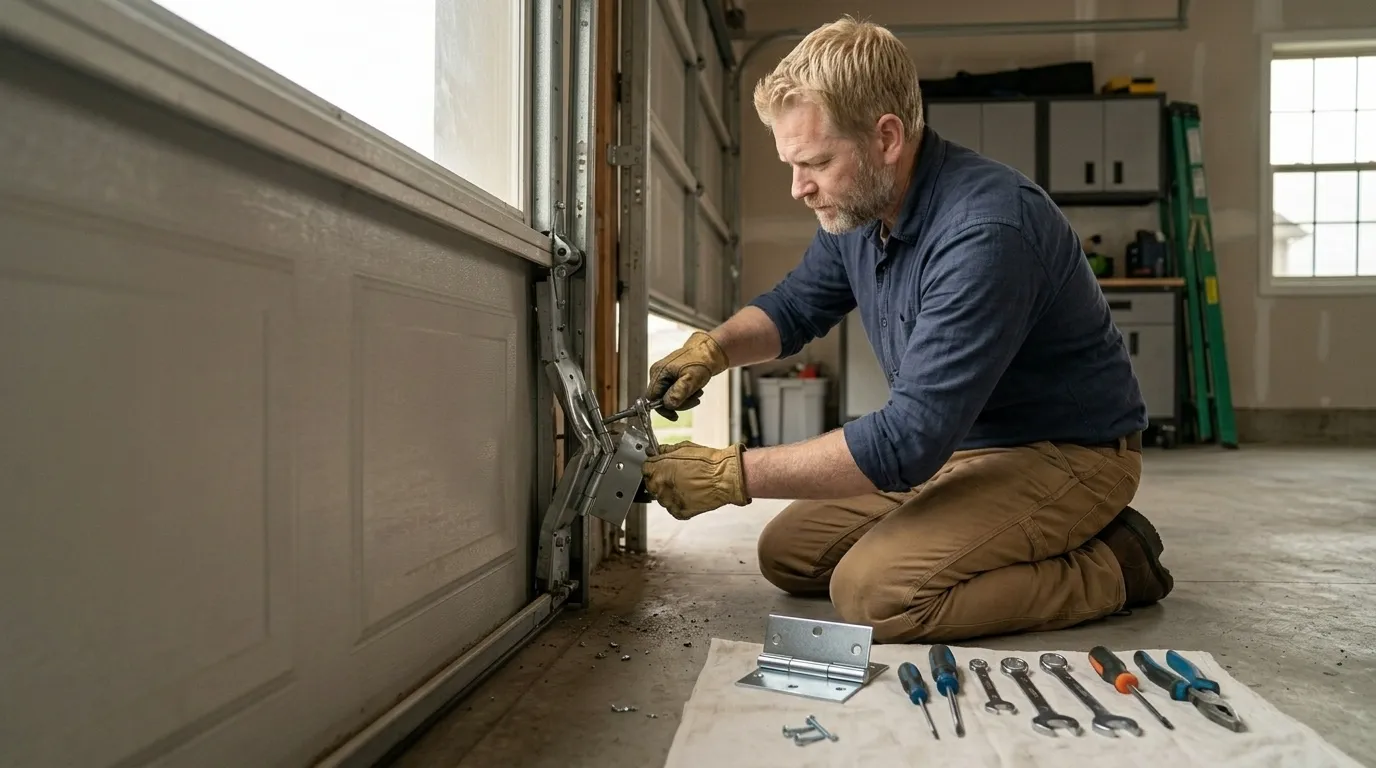
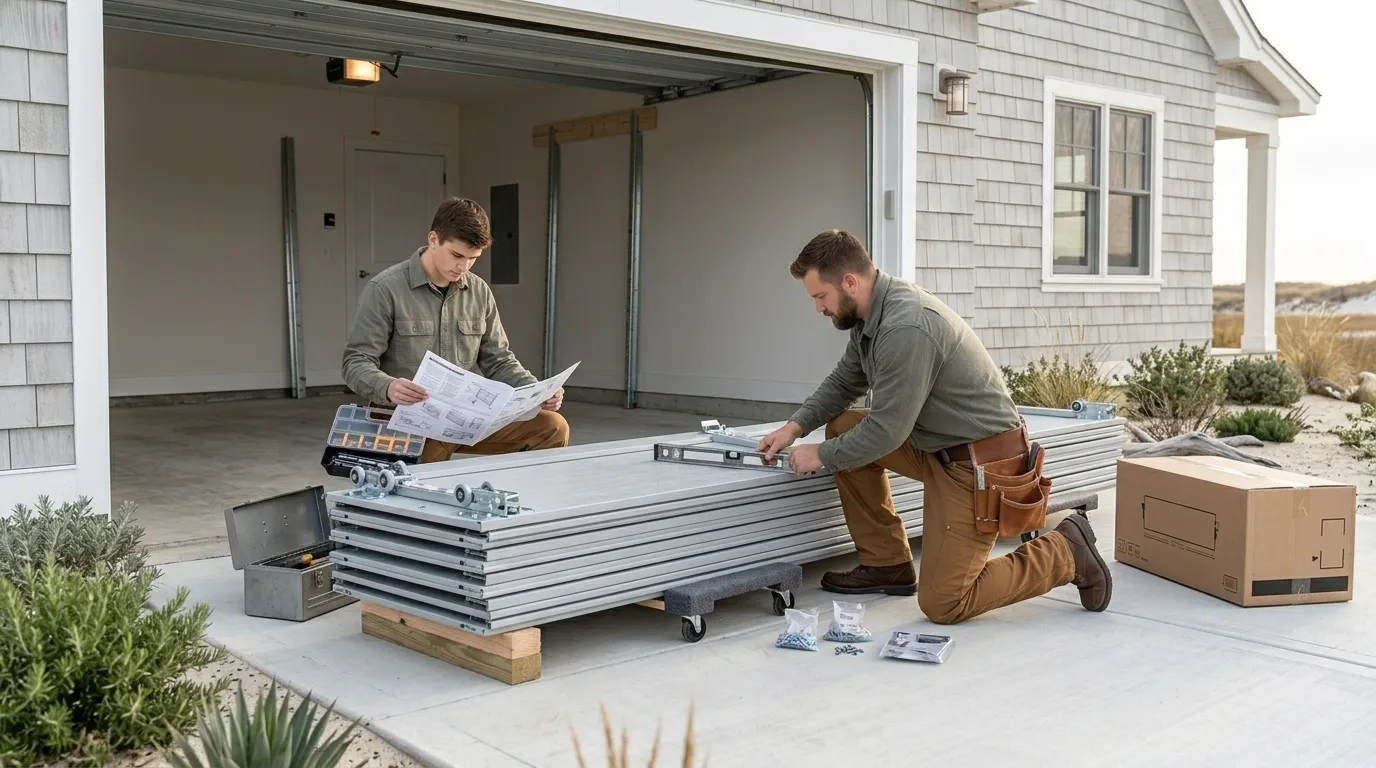
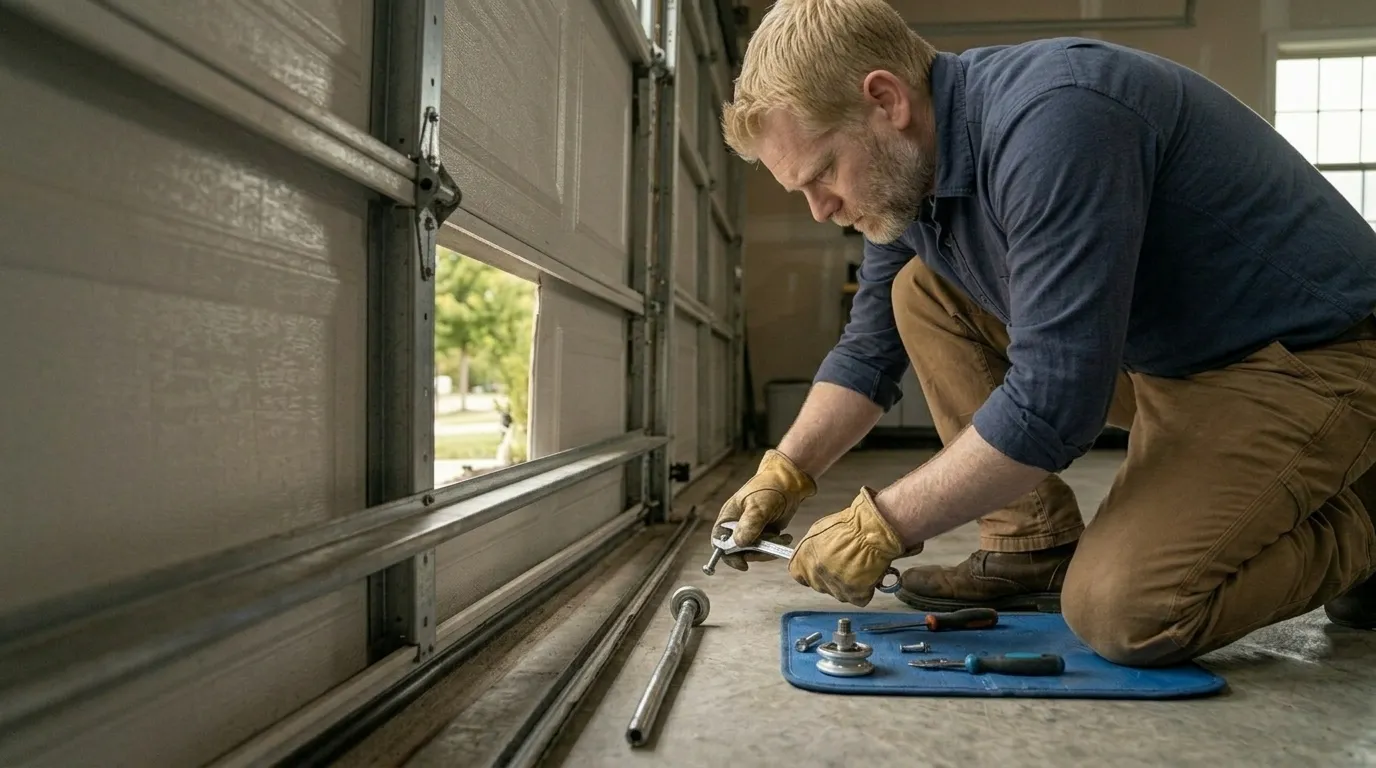
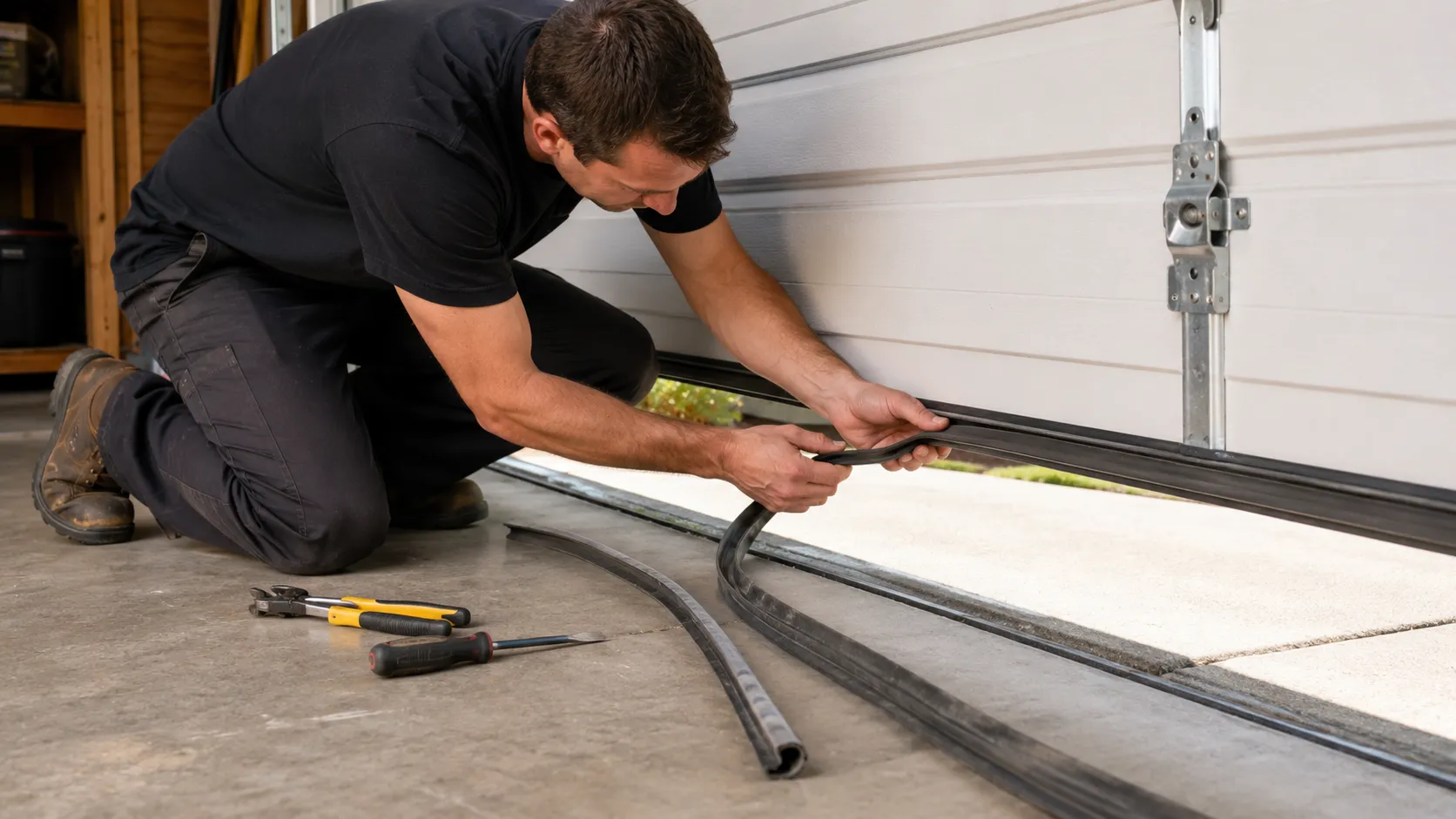
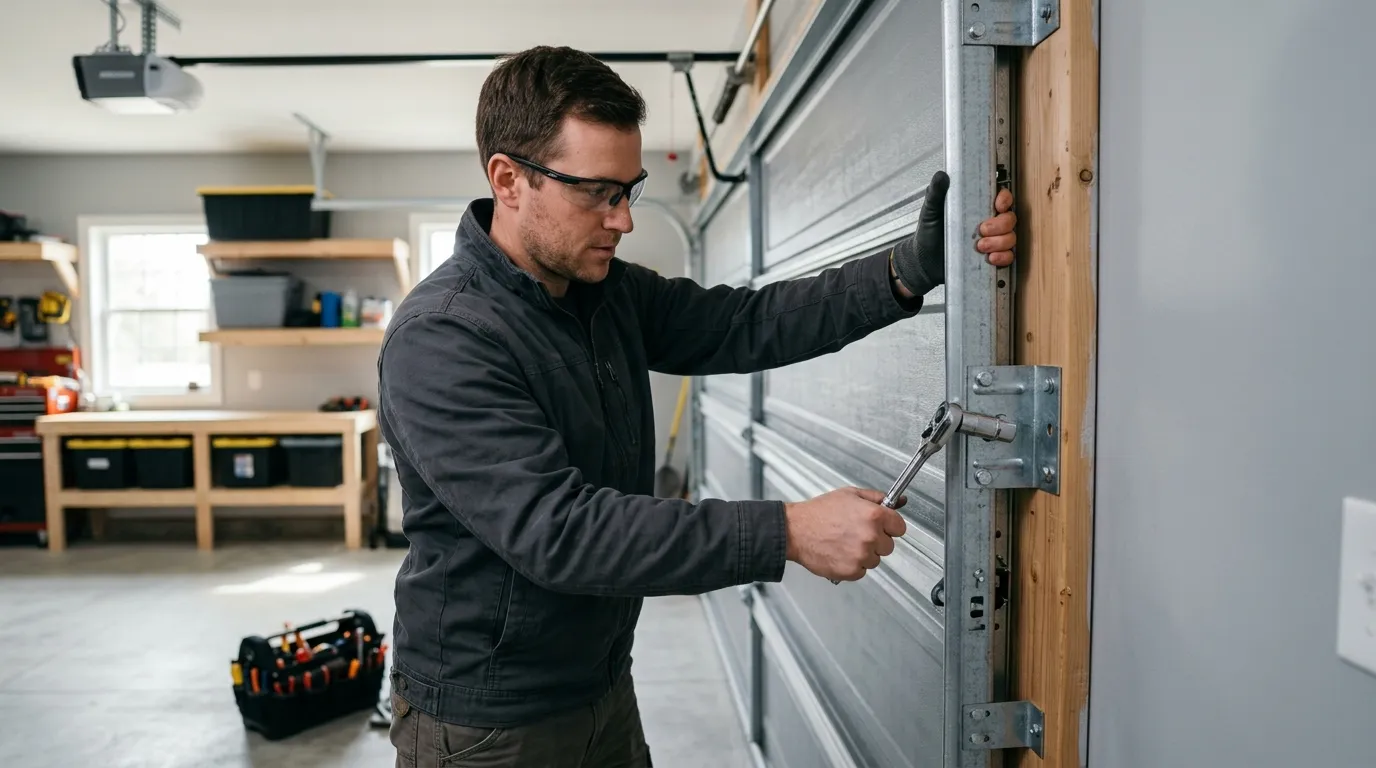
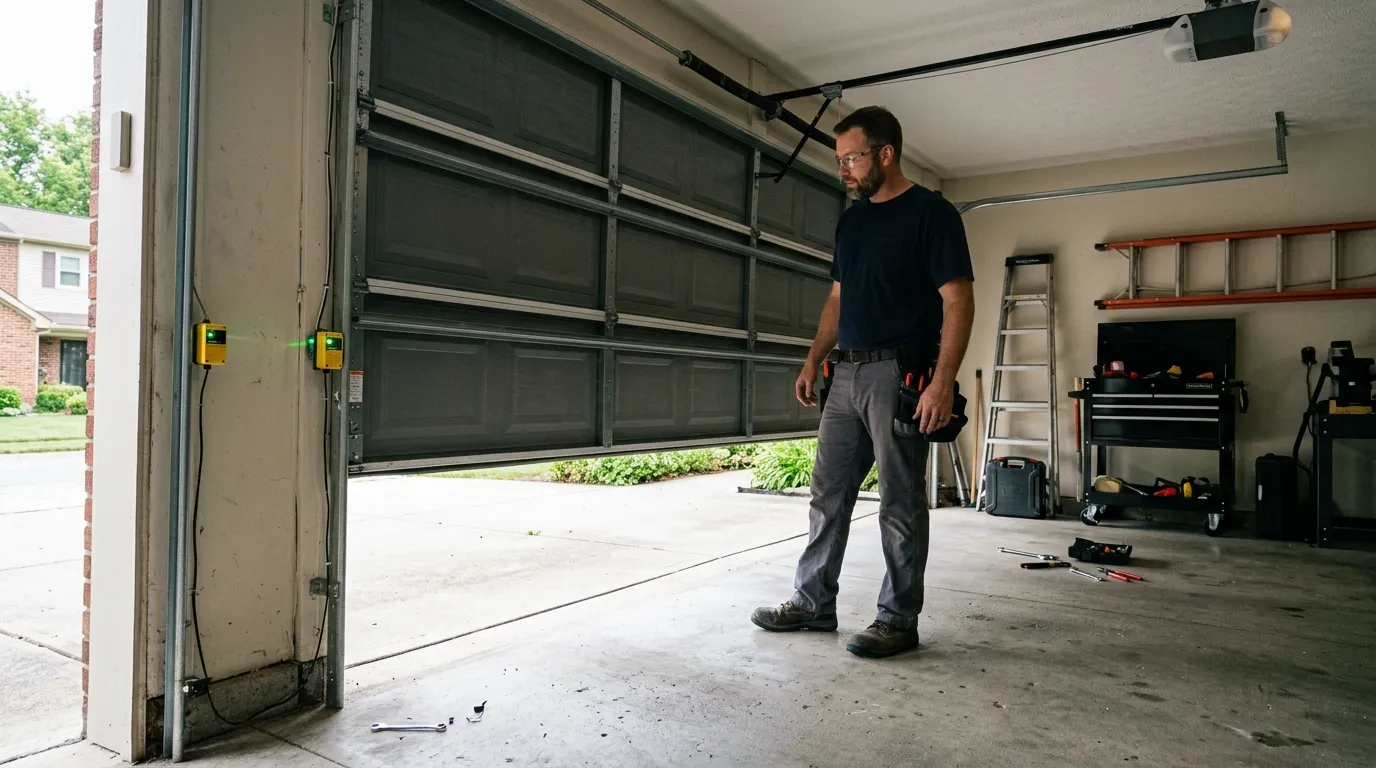
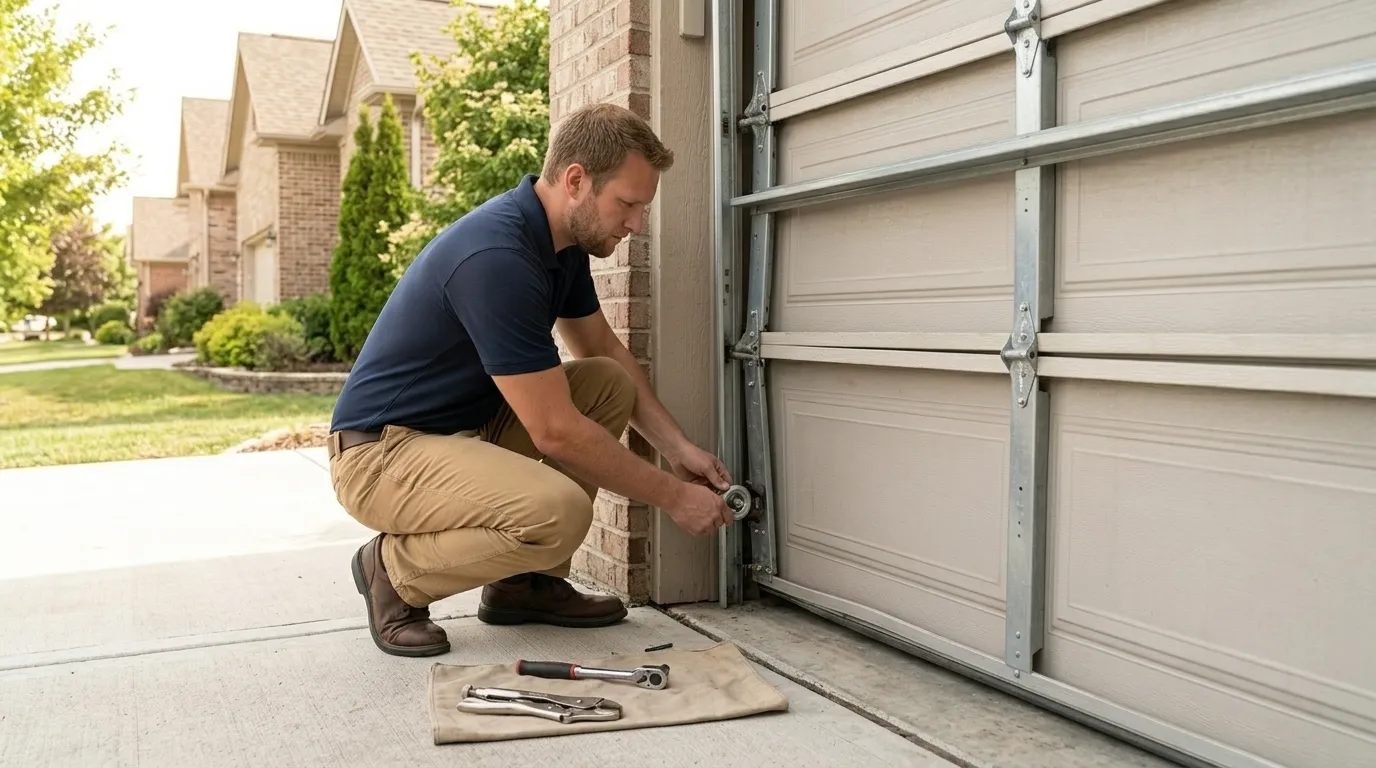
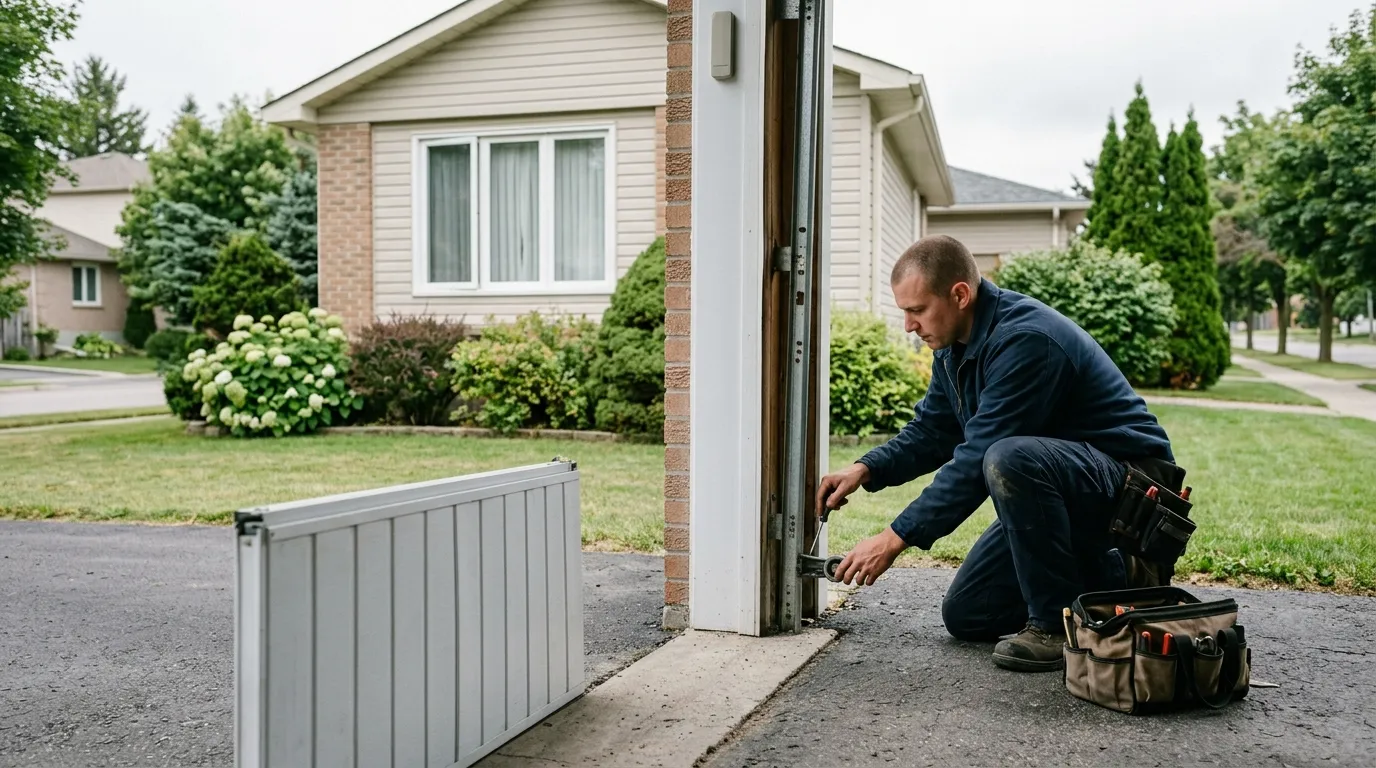
Once we've got the right panel, the swap itself is straightforward: pull the section, transfer or replace the rollers and hinges, reseat it in the track, and check the door balances the same way it did before. If the door has a torsion spring system, we verify spring tension hasn't shifted from the added or removed weight of a new panel versus the old damaged one, since insulated and non-insulated panels don't weigh the same.
One limitation worth saying up front: if a door is old enough or unusual enough that the manufacturer no longer makes a matching panel, full replacement of the door is sometimes the more honest answer than forcing a mismatched panel onto it.
What You Are Seeing
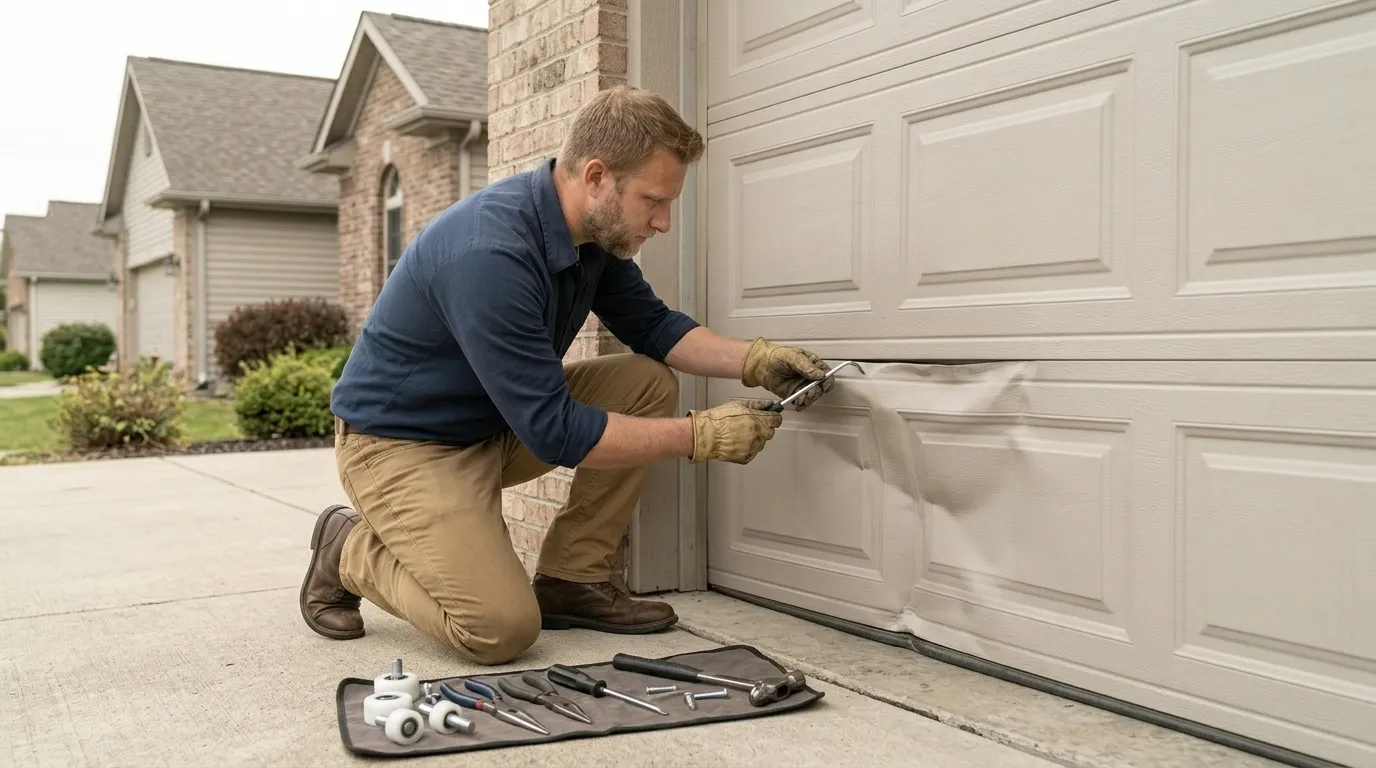
The panel damage we get called for here usually falls into a few patterns tied directly to the age of the housing stock. Doors installed when a neighborhood was built in the 1980s or 90s are now 25 to 40 years old, and steel panels from that era fatigue, rust at the bottom seam, and crack at the hinge stress points long before the opener or springs give out. You'll see a bowed section where a lower panel has taken repeated impact - a bumper, a trash can, a mower - and steel that's thinned enough to dent doesn't flex back.
On newer builds, closer to the 1998 median year for this area, panels are more likely insulated composite or steel-and-foam sandwich construction. Damage there tends to show up as a crushed or delaminated section rather than a crack, usually from one hard impact rather than years of fatigue.
Cold-climate stress is the other driver. In a severe cold climate band like this one, panels that flex in freeze-thaw cycles develop hairline cracks at the seams over several winters, and a panel that looked fine in October can split the first time it's forced open against ice buildup at the bottom track in January.
What It Costs
We don't quote panel replacement cost sight unseen, and we're not going to put a number on this page that doesn't hold up once we're standing in front of the actual door. What we can tell you is what drives the cost up or down: how many panels need matching (a single bottom panel is a different job than three), whether the panel is insulated or plain steel, and whether the door's manufacturer still stocks that profile or whether we're sourcing a close match.
Median household income across this service area runs around $104,583, and homeowners here tend to ask the same question up front: is it worth matching one panel, or does the whole door need replacing. That's a fair question and the honest answer depends on the door's age and how many other panels are showing the same fatigue. A door with one bad panel and three others close behind it isn't a good candidate for a single-panel fix - you'd be paying for labor twice within a year or two.
We give a real number after we've seen the door, the track, and the spring setup, not before.
Why It Happens Here
This service area covers roughly 27,557 owner-occupied houses out of about 49,905 households, spread across towns like Mapleton, Springville, Salem, Payson, Santaquin. That's a lot of doors built in a narrow window - mostly the 1980s and 90s - which means a lot of panels hitting the same fatigue point at roughly the same time.
The cold climate band this area sits in is the other half of the story. Severe cold means real freeze-thaw cycling on garage doors every winter, and steel panels that flex against ice or a frozen bottom seal take on stress that a milder climate wouldn't put on them. Combine a 25-to-45-year-old panel with a winter that puts it through that cycle every year, and cracking at the seams or hinge points isn't random - it's predictable, and it clusters in exactly the housing stock this area has the most of.
We see the same failure pattern repeat house after house on these streets, which is part of why we can usually tell what we're dealing with before we even open the door.
How it works
From “it’s stuck” to “it’s fixed”
01
Tell us what’s wrong
Describe the symptom - won’t open, loud bang, opener runs but the door won’t move.
02
On-site diagnosis
A technician tests the door under power and by hand and finds what actually failed.
03
Clear, up-front plan
You get the fix that’s needed and what drives the cost - before any work starts.
04
Repaired & tested
The repair is done, the door is set true and tested, and the work area left clean.
Serving Spanish Fork, UT - tell us what your door’s doing and we’ll take it from there.
01Can you match a panel on an older door or do I need a whole new door?
It depends on whether the manufacturer still makes that panel profile. Doors from the 1980s and 90s sometimes have discontinued lines, in which case we source the closest match or recommend full replacement if the fit won't be right. We tell you which situation you're in before we order anything.
02Why did my panel crack in the winter with no new impact?
Cold-climate freeze-thaw cycling stresses panel seams over time, especially on older steel panels. A panel that's been quietly fatiguing for years can split the first time it's forced against ice at the bottom track, even with no new dent or hit.
03Does an insulated panel cost more to replace than a plain steel one?
Insulated composite panels are heavier and often pricier to source than plain steel, and replacing one can shift the door's balance enough to need a spring adjustment. We check both when we quote the job, not just the panel itself.
04Is it cheaper to replace one panel or the whole door?
If one panel is bad and the rest are sound, a single-panel swap is usually the cheaper move. If several panels show the same wear, replacing them one at a time over a year or two usually costs more than replacing the door once.
Ready to get your garage door sorted?
Tell us what it’s doing and where you are in Spanish Fork - we’ll take it from there.