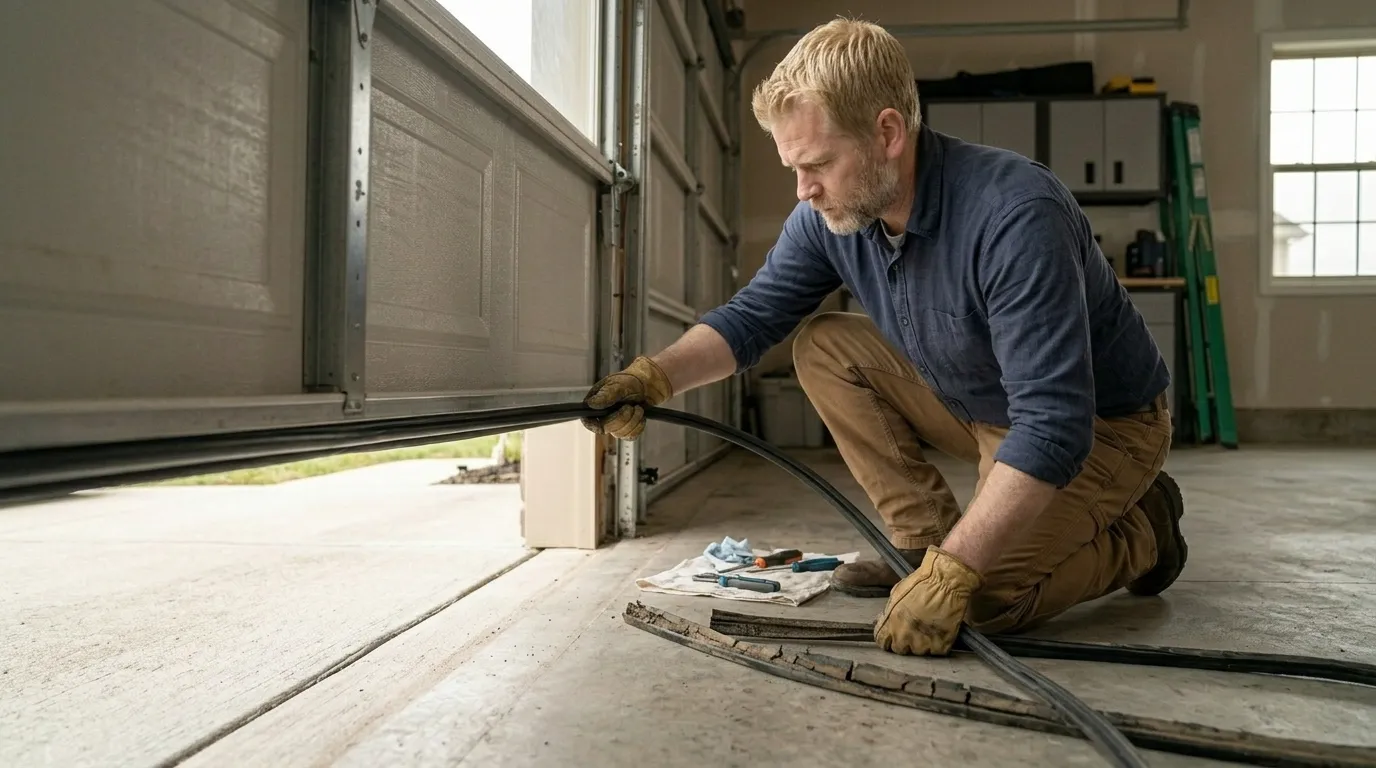
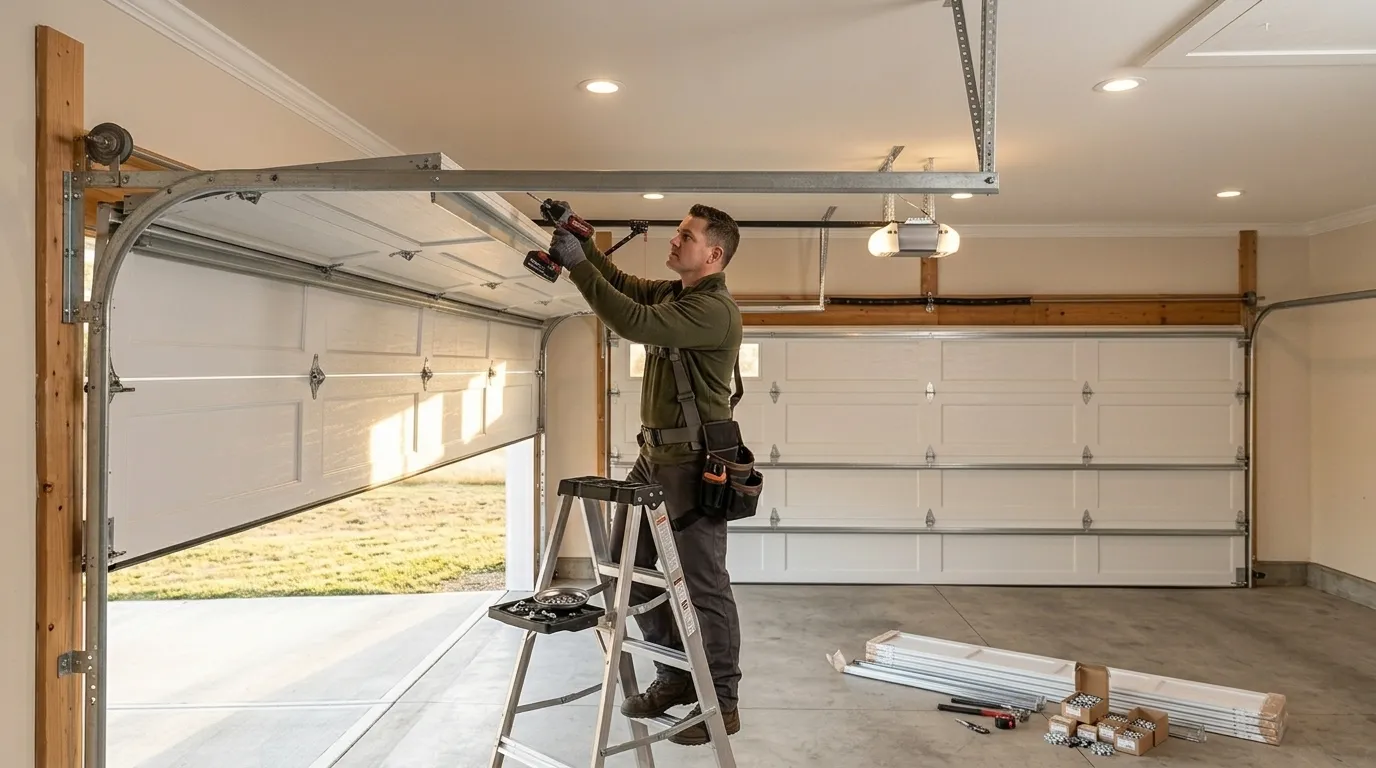
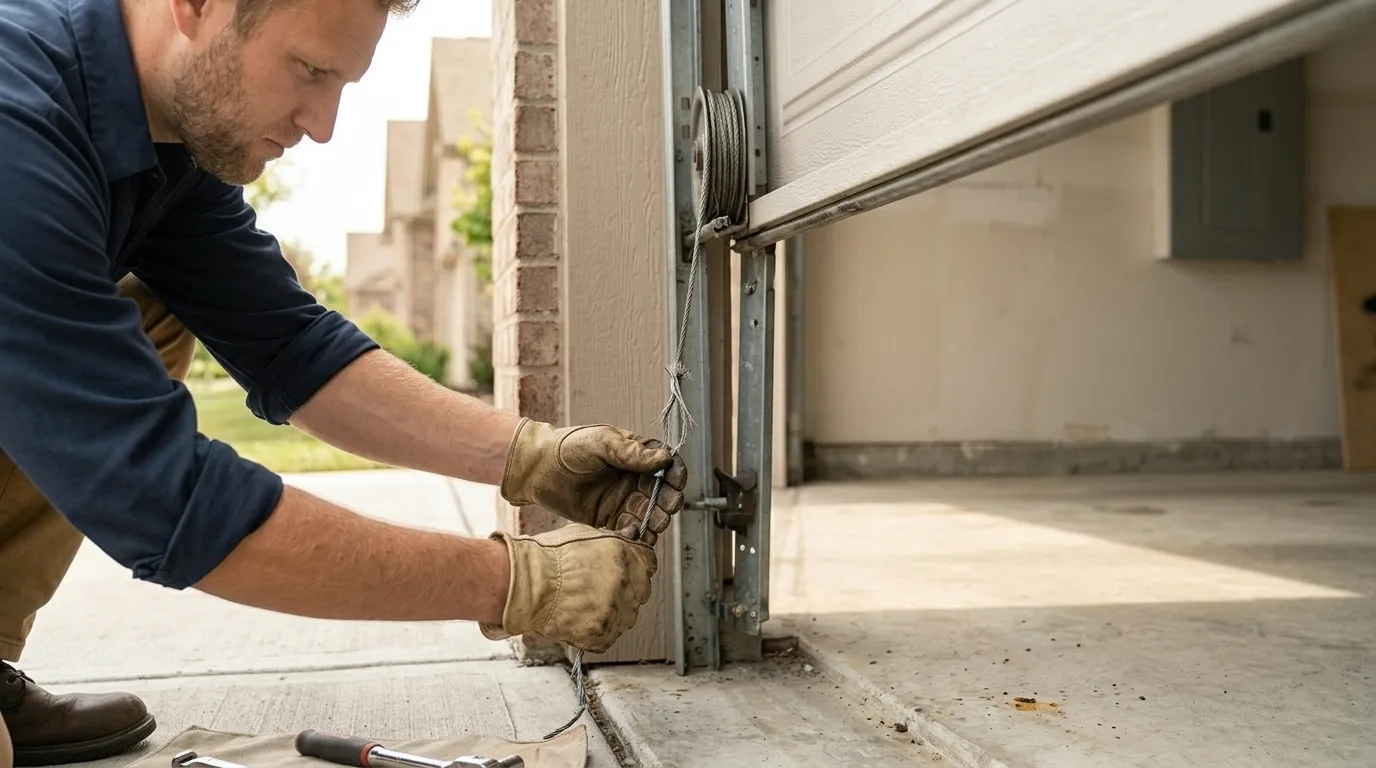
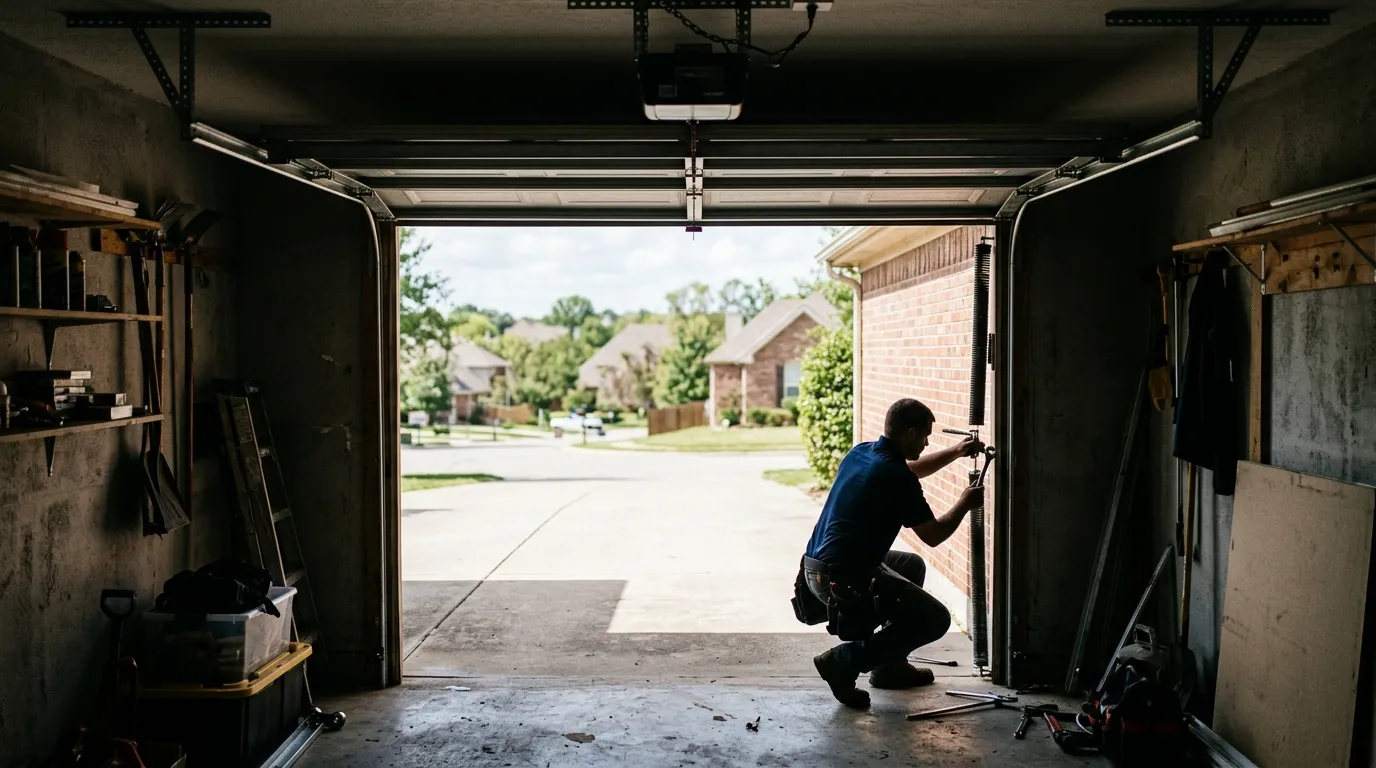
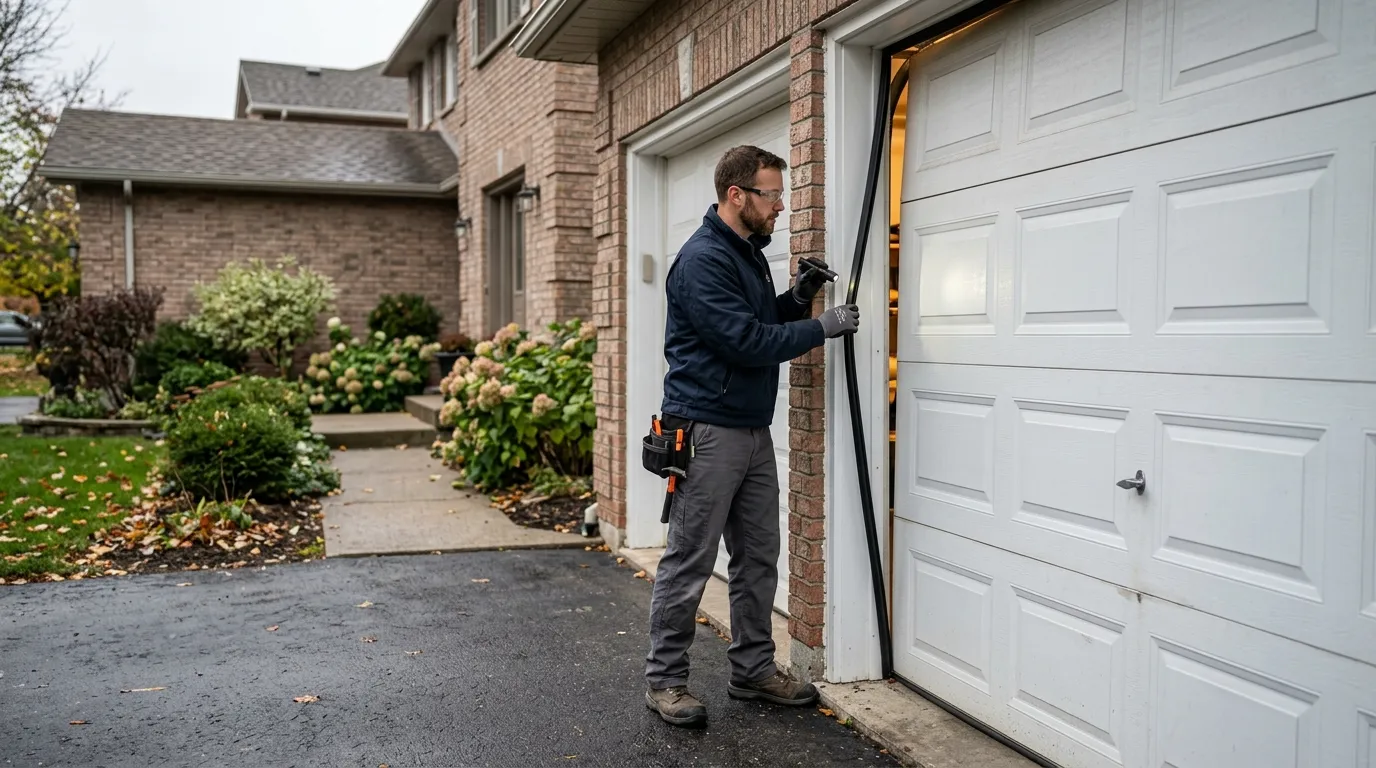
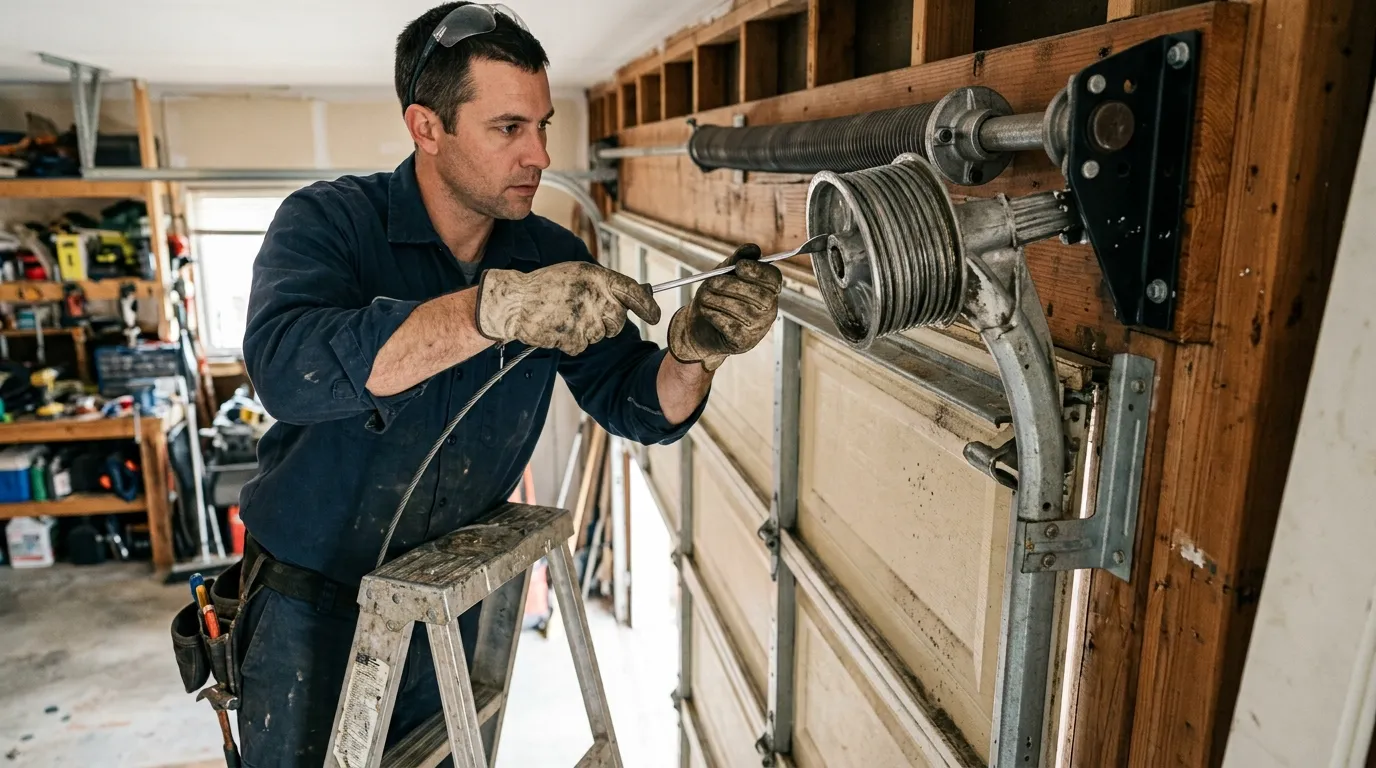
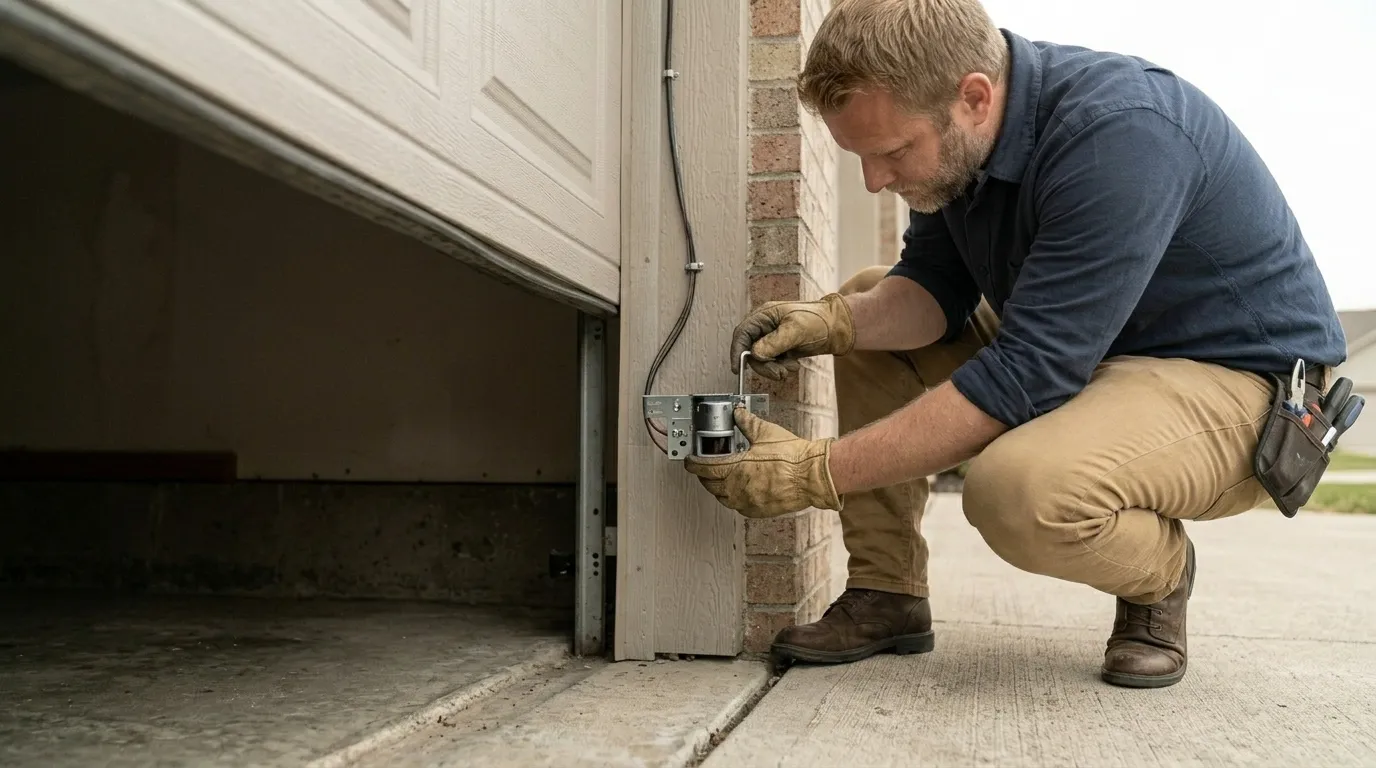
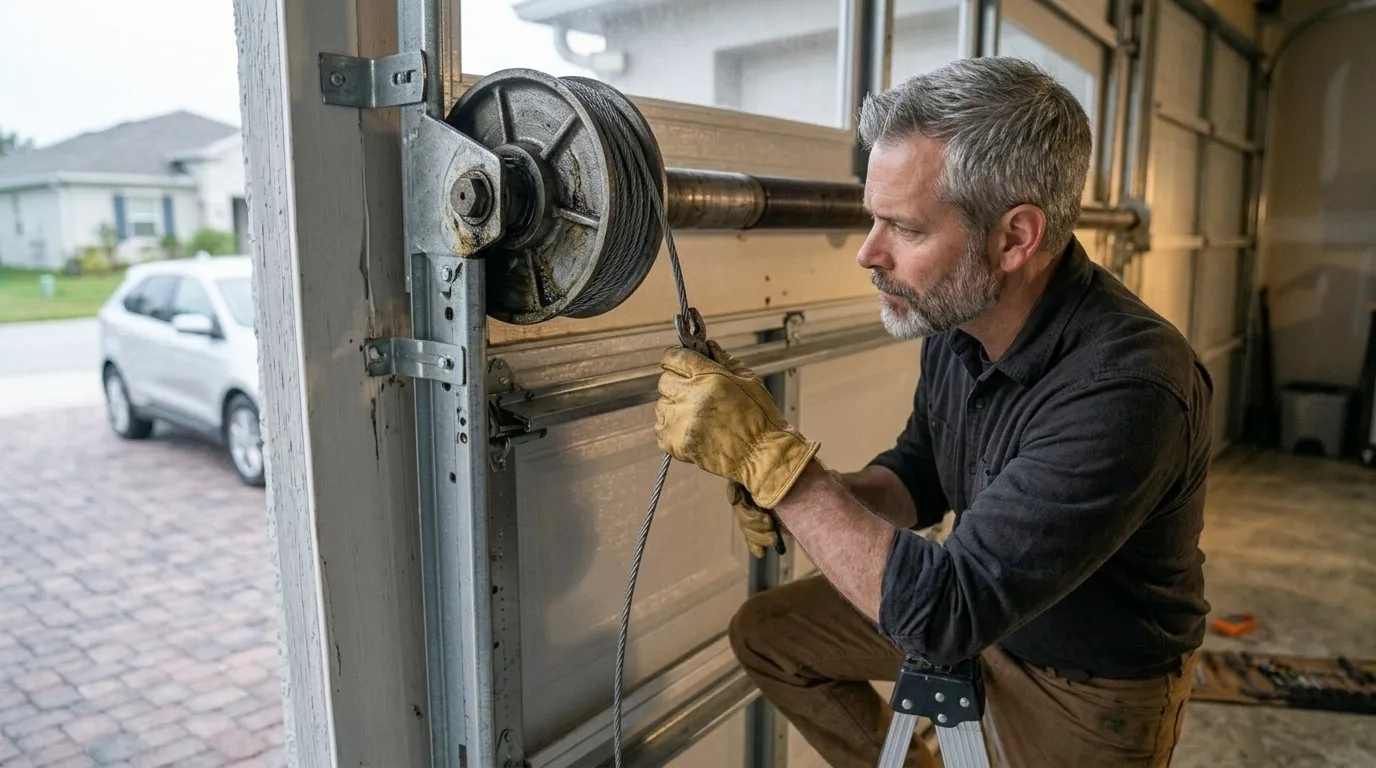
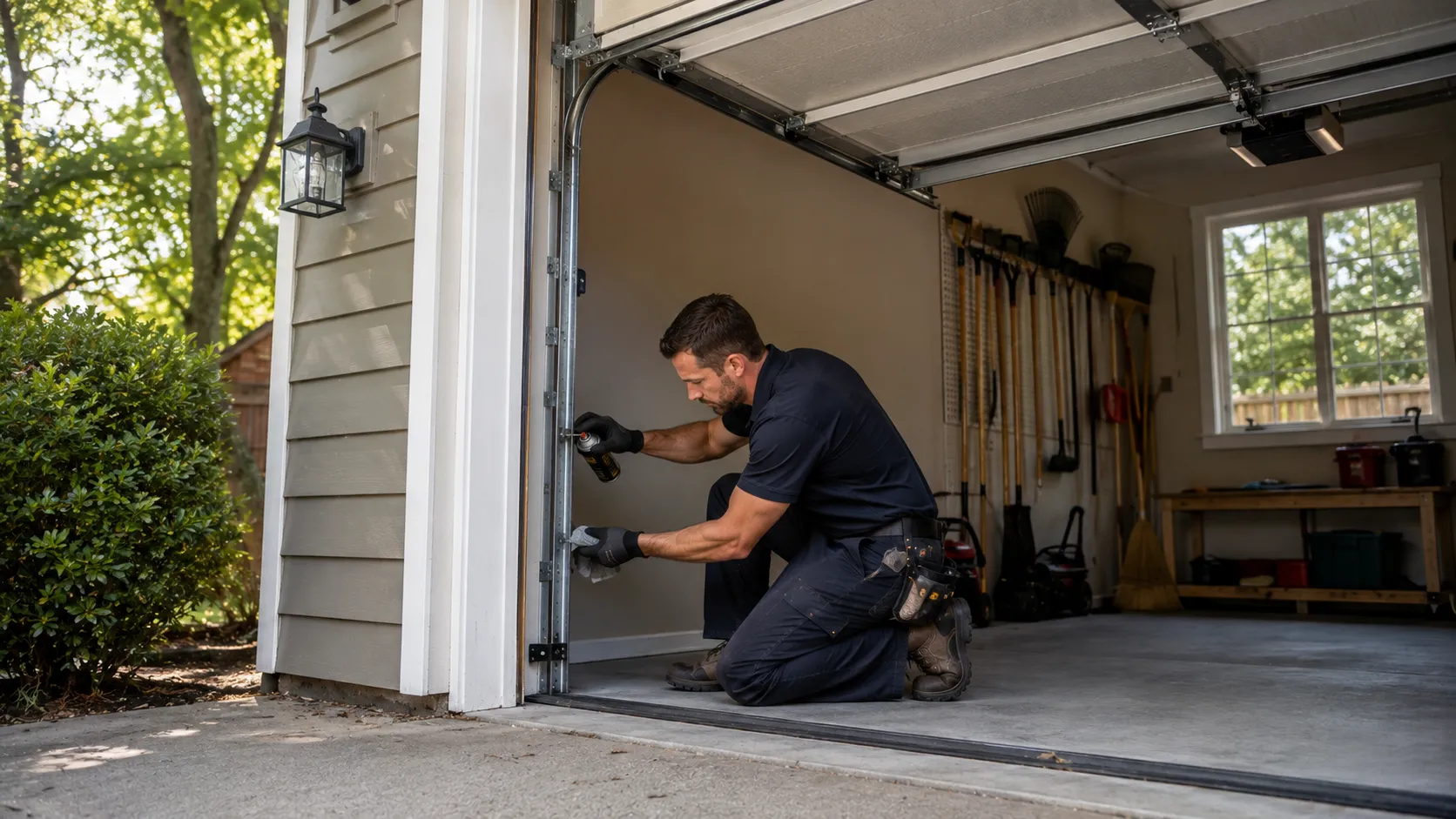
Rollers that grind, hop, or jump the track are the most common call we get across Spanish Fork's service area. Here's what the repair takes, what you'll see, and why it happens here.
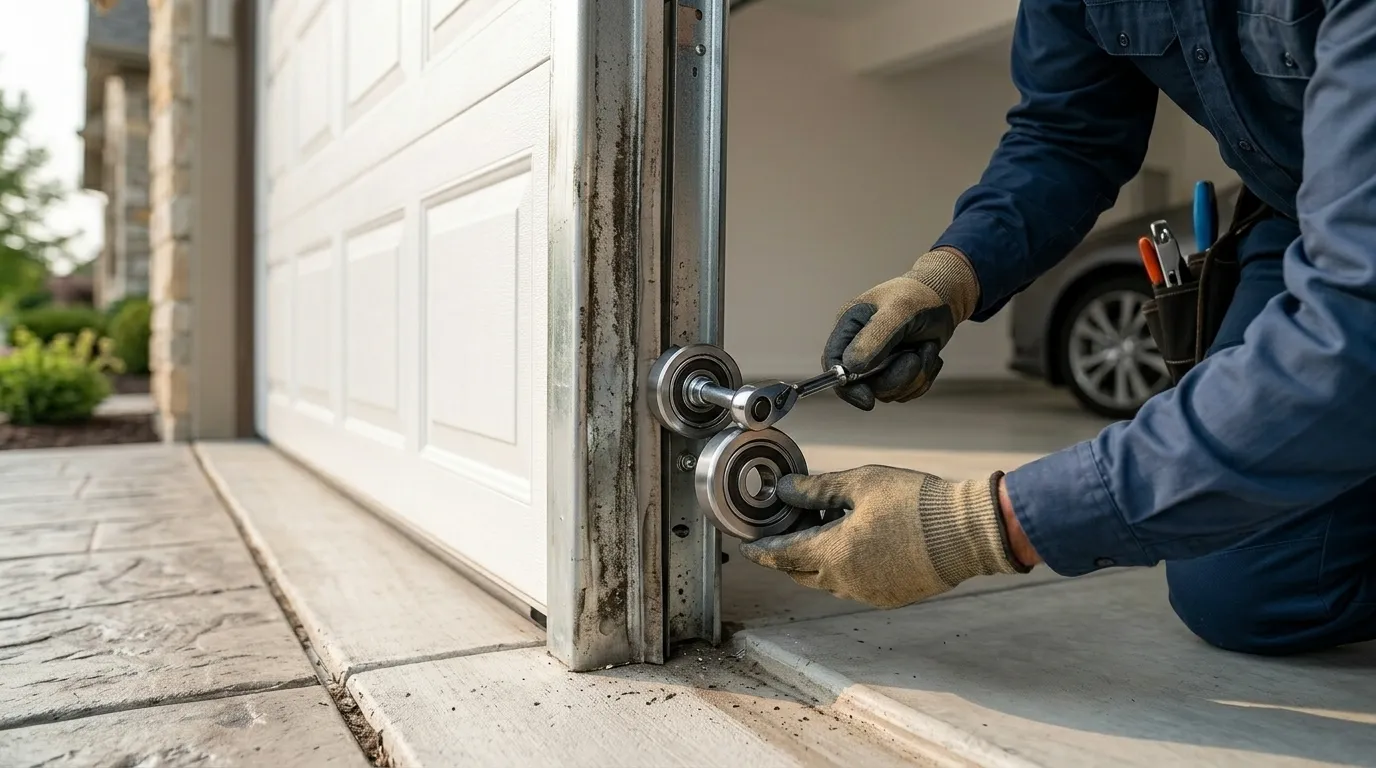
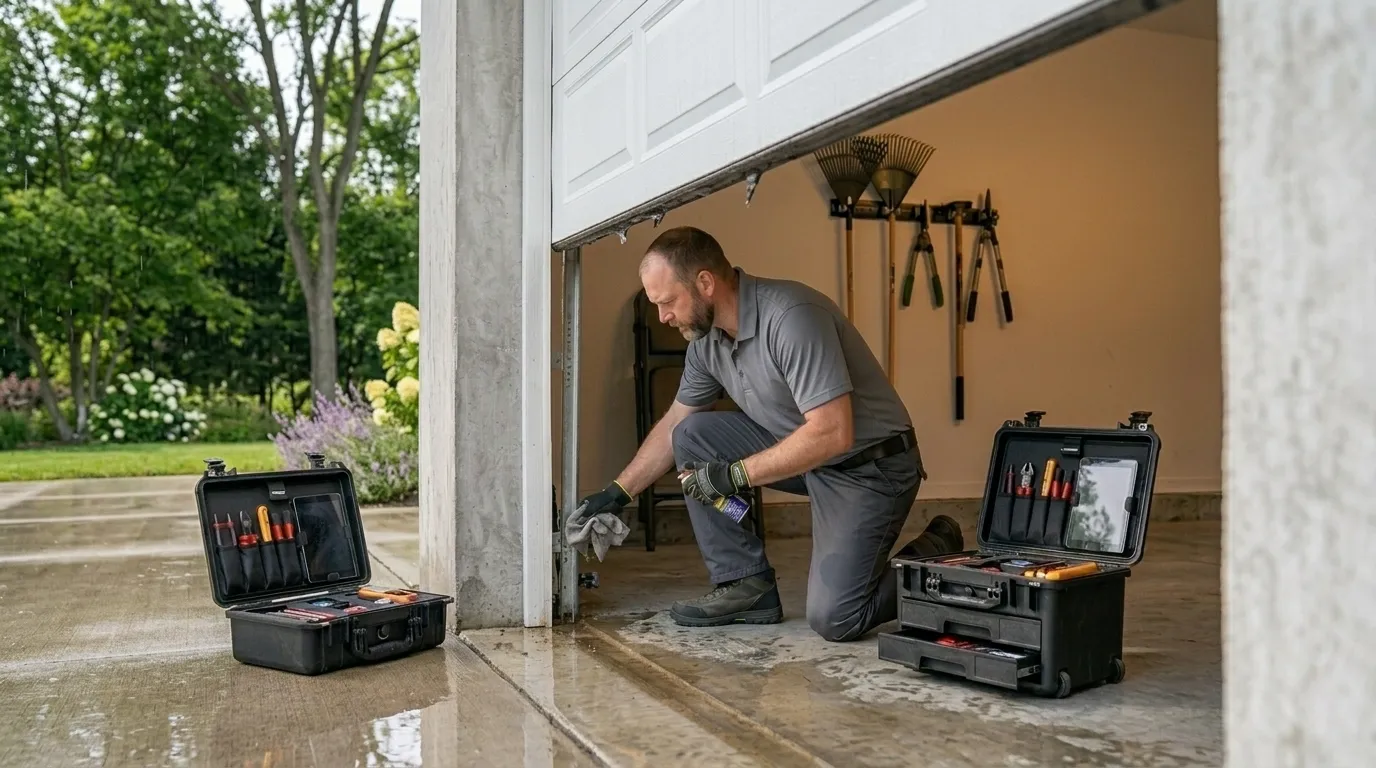
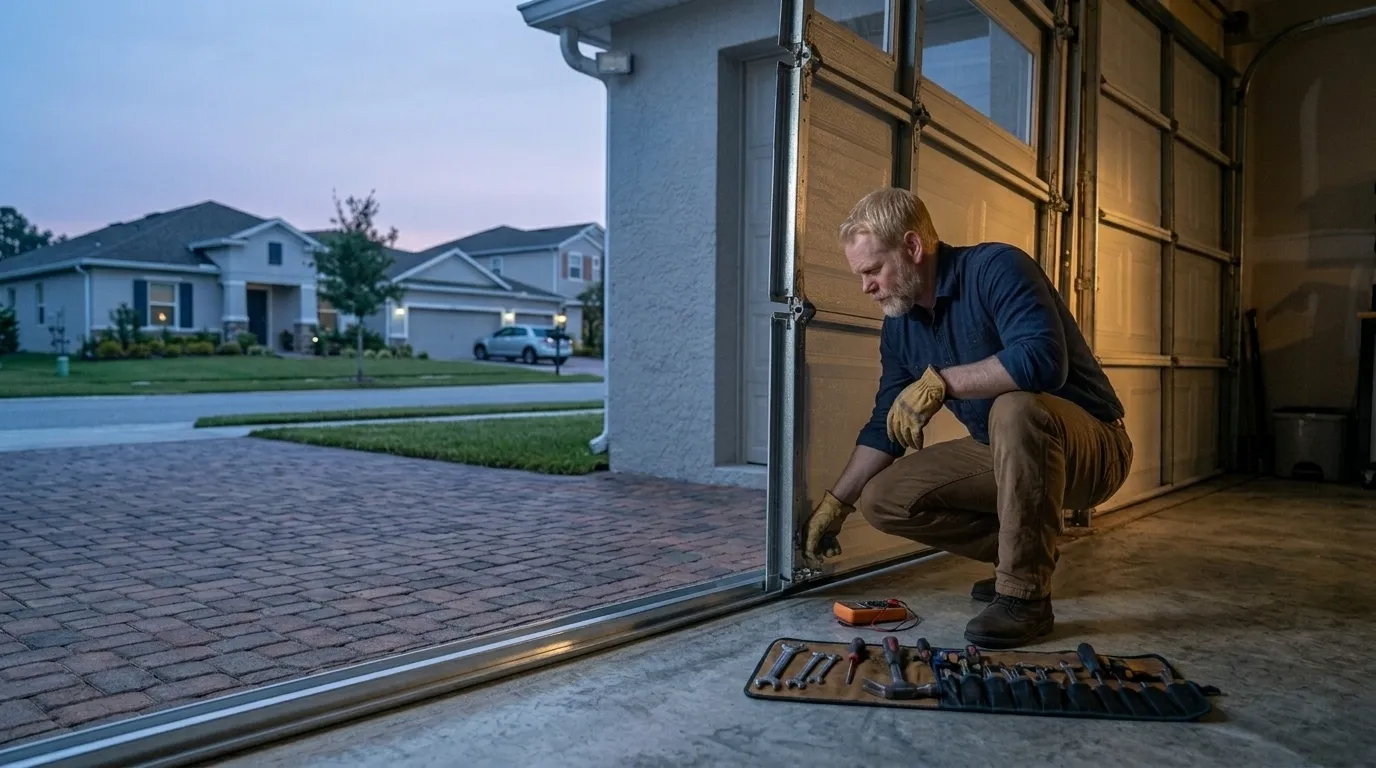
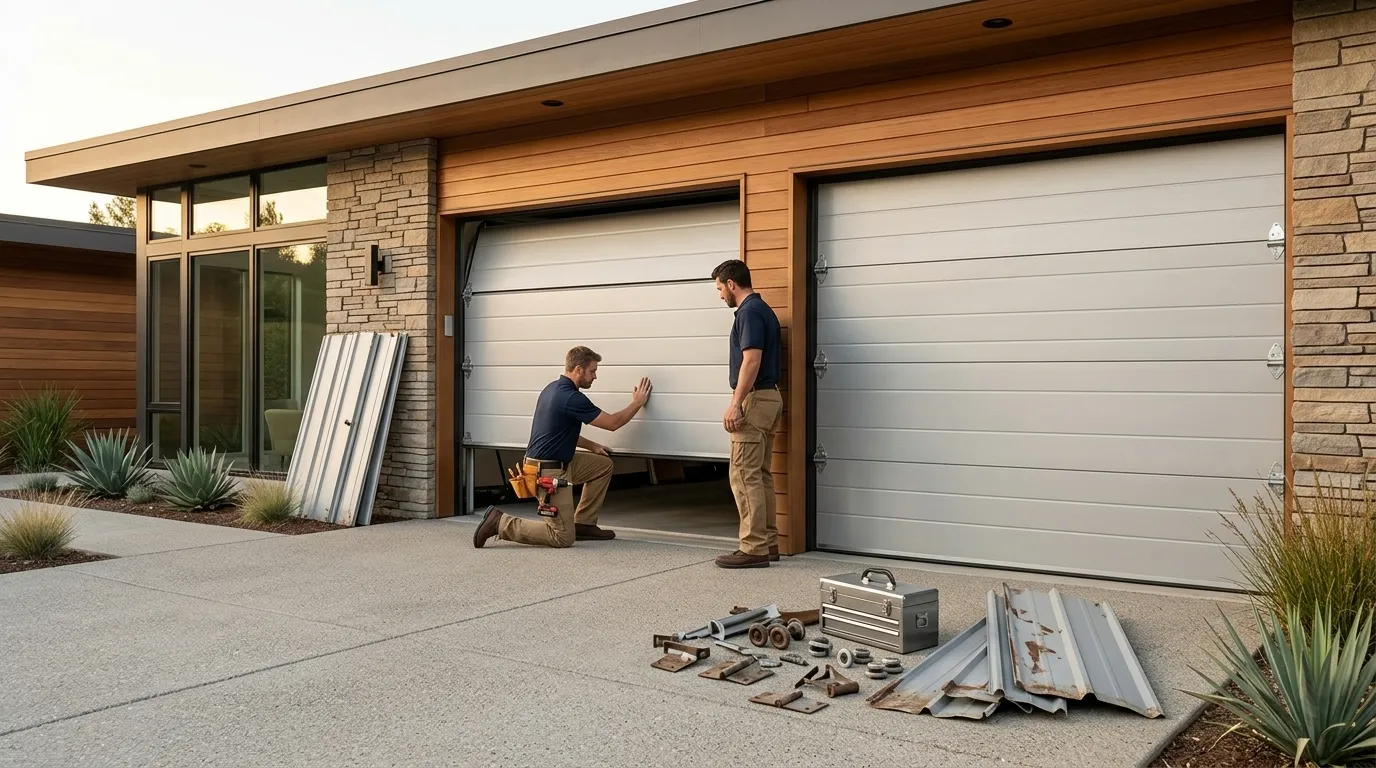
Roller replacement is a track-out job. We disconnect the opener, secure the door with clamps so it can't drop on the track, and pull the rollers one at a time starting at the bottom bracket and working up. Each roller rides in a track wheel that's either riveted or bolted to the hinge - on older hardware we're usually dealing with riveted stems, which means drilling out the old rivet and bolting in the replacement rather than a straight swap.
Most double-car doors in this service area run 10 rollers per side; single-car doors run fewer. If one roller has failed, we check the rest, because a roller that's worn enough to bind or chip usually has three or four neighbors close behind it. On a standard job we're doing the full set, not just the bad one - patching a single roller into an otherwise worn set just moves the noise down the track a few months.
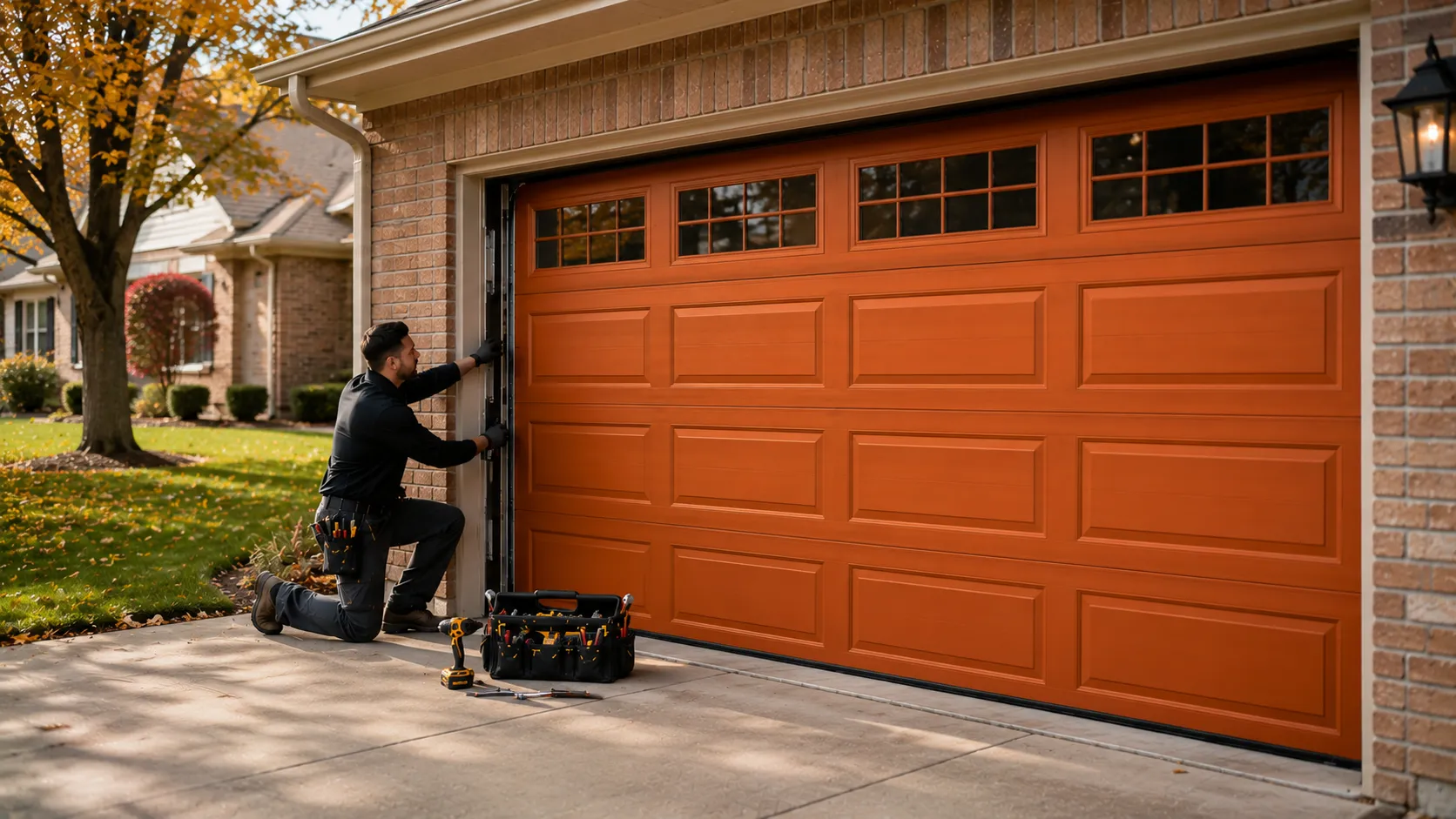
We also check the track itself while it's open. A bent or splayed track section is a different repair from a worn roller, and running new rollers through a track that's out of plumb just wears them out again fast. That's the one thing we won't skip, even on a quick call.
What You Are Seeing
A grinding or rattling sound as the door travels, especially near the top or bottom of the run, is the usual first sign. Nylon rollers wear at the wheel first - you'll see flat spots or chipped edges where the wheel no longer sits round in the track. Steel rollers wear differently: the bearing dries out, the roller stops spinning freely, and it starts to scrape and hop instead of roll, which chews a groove into the track over time.
A door that jumps or shudders at one specific point in its travel, every single time, is pointing at one bad roller in that section of track. A door that shakes or bangs the whole way up usually means several rollers have gone at once, which is common once a set gets old - they don't all fail on the same day, but they wear on the same schedule.
Don't confuse this with a spring problem. A door that's hard to lift by hand, or that won't stay up on its own, is a spring issue, not a roller issue - rollers affect how smooth the door travels, not how much it weighs to lift. If you're getting both noise and weight, tell us that on the call so we bring the right parts.
What It Costs
We don't have a set price to quote you here - it depends on whether you're running steel or nylon rollers, single or double roller sets, whether the stems are riveted or bolted, and whether the track needs adjustment while it's open. What we can tell you is the shape of the decision: nylon rollers cost more upfront and run quieter for longer; steel rollers are cheaper per roller but louder and shorter-lived in a cold climate, since the bearing grease stiffens up hard in winter.
Given the household incomes across this service area, most owners we work with choose a full sealed-bearing nylon set rather than patching one steel roller at a time - it's a one-time job instead of a callback every year or two. That's not a rule we enforce, just what most people end up choosing once they see both options side by side.
If your track or hinges are also bent, that adds to the job, and we'll tell you before we start, not after.
Why It Happens Here
Across the towns we cover - Mapleton, Springville, Salem, Payson, Santaquin - most of the housing stock went up between 1975 and 2015, with a heavy concentration in the 1980s and 90s and a median build year of 1998. That means a lot of original garage door hardware is now thirty-plus years old, and rollers are usually the first part to give out on a door that's otherwise held up fine.
The climate here is the other half of it. This is a cold, severe-winter band, and that yearly swing between hard freezes and hot summer days is rough on both roller types. Nylon gets brittle in the cold and can chip on a frozen morning start; steel bearings gum up with stiff grease in winter and dry out in summer heat, which speeds up wear on the wheel edge either way.
With roughly 49,905 households and 27,557 owner-occupied houses across this service area, roller wear isn't a rare call - it's one of the two or three most common reasons a garage door starts sounding rough.
How it works
From “it’s stuck” to “it’s fixed”
01
Tell us what’s wrong
Describe the symptom - won’t open, loud bang, opener runs but the door won’t move.
02
On-site diagnosis
A technician tests the door under power and by hand and finds what actually failed.
03
Clear, up-front plan
You get the fix that’s needed and what drives the cost - before any work starts.
04
Repaired & tested
The repair is done, the door is set true and tested, and the work area left clean.
Serving Spanish Fork, UT - tell us what your door’s doing and we’ll take it from there.
01How many rollers does a typical garage door have?
Most double-car doors in this area run about 10 rollers per side, and single-car doors run fewer. If one has failed, we check the whole set - rollers wear on roughly the same schedule, so a single bad one is often an early warning for the rest, not an isolated fluke.
02Can I just replace the one roller that's making noise?
You can, but it's rarely worth it. If one roller failed from age, the rest are usually close behind. Most owners here end up doing the full set once, rather than paying for a callback in six months when the next one goes.
03Are steel or nylon rollers better for this climate?
Nylon rollers run quieter and hold up better through the winter-to-summer swing here, though they cost more upfront. Steel rollers are cheaper per unit but the bearings stiffen in cold weather and wear faster over the year. We can walk you through both when we're at the door.
04Is a noisy door always a roller problem?
Not always. Noise and rough travel usually point to rollers, but a door that's hard to lift by hand or won't hold its position is a spring issue instead. Tell us what you're seeing on the call so we bring the right parts on the truck.
Ready to get your garage door sorted?
Tell us what it’s doing and where you are in Spanish Fork - we’ll take it from there.